A simple, single-skillet arroz con pollo with tender chicken, fluffy rice, and real Mexican flavor. Tips, swaps, and foolproof steps for a weeknight favorite.
The Mexi Plate
Authentic Mexican Red Rice (Arroz Rojo)

Elena Valdés
Elena Valdés is a Mexican-American home cook and the culinary heart behind MexiPlate. Inspired by the bustling kitchens of her childhood in Jalisco and Texas, she specializes in translating authentic Mexican flavors into approachable recipes for everyday cooks. Whether she is sharing her grandmother's secret for the perfect tamale masa or a quick 30-minute weeknight enchilada bake, Elena believes that good food is the best way to bring people together.
Published October 17, 2026
Updated October 17, 2026
If you have ever wondered why restaurant arroz rojo is fluffy, separate, and perfectly seasoned, it is not magic. It is technique. In my family’s kitchen in Jalisco and later in San Antonio, the secret was always the same: toast the rice until it smells nutty, blend a smooth tomato base, then leave it alone long enough to steam properly.
This is the everyday red rice I make for carne asada nights, caldo days, and busy Tuesdays when beans and rice save the whole meal. Follow the steps exactly the first time, then you can adjust it to your taste.
What makes rice fluffy
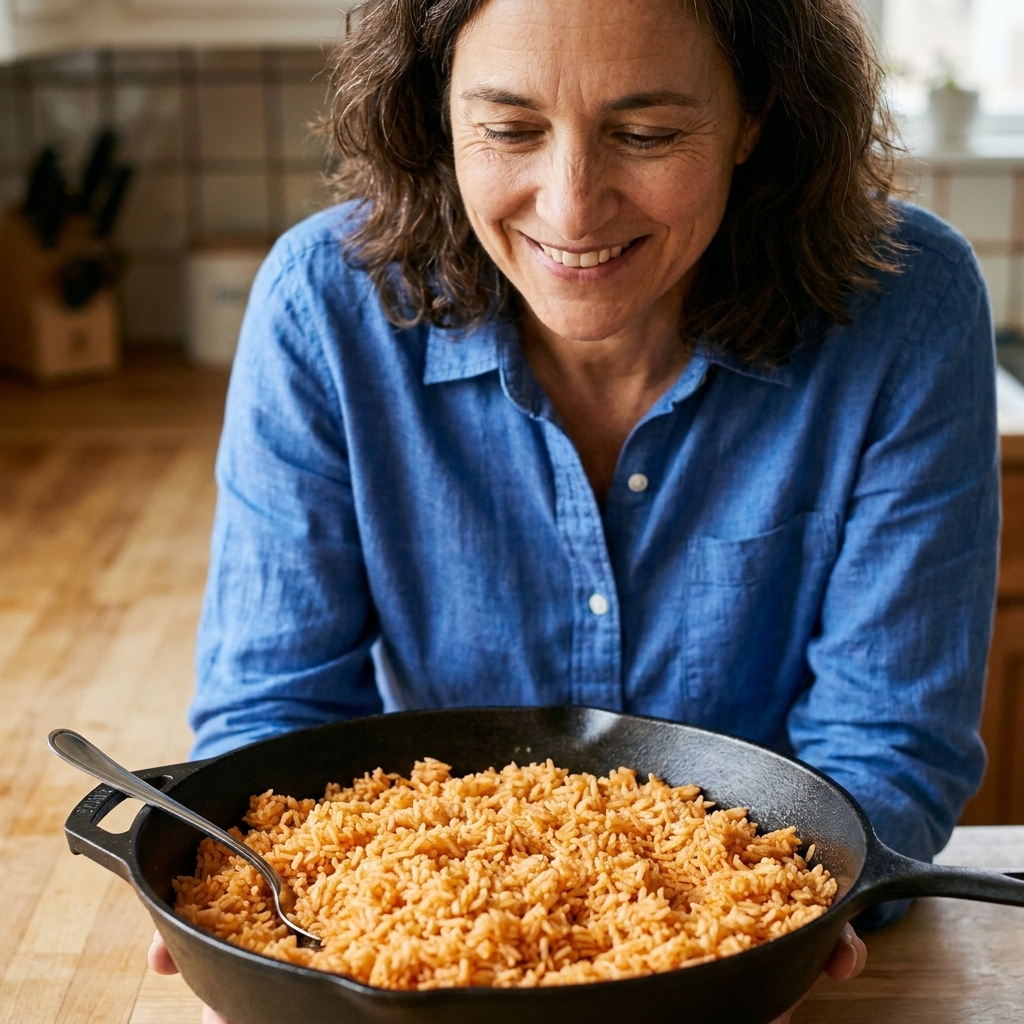
Let me translate “restaurant-style” into home-cook language. Fluffy arroz rojo comes from three things:
- Rinsing (sometimes): Rinsing removes surface starch that can make rice gluey. Some Mexican cooks skip it, but I prefer a quick rinse for reliable results.
- Toasting in oil: This coats the grains, adds flavor, and helps the rice stay separate.
- Correct liquid and gentle steaming: Too much liquid or too much stirring is what turns rice mushy.
Once the lid goes on, we do not babysit. We let steam do its job.
Ingredients
This recipe is built for classic long-grain white rice, the kind most Mexican restaurants use. Jasmine or basmati changes the aroma and texture, so stick to long-grain for that familiar vibe.
Pan note: A 10 to 12 inch deep skillet or a medium Dutch oven is the sweet spot. Very wide pans evaporate faster and can leave rice dry before it finishes cooking.
For the rice
- 1 1/2 cups long-grain white rice
- 3 tablespoons neutral oil (canola, avocado, grapeseed)
- 1/4 cup white onion (a small piece is fine)
- 1 small garlic clove
- 2 medium Roma tomatoes (raw, not roasted) (or 1 cup canned tomato sauce, see swaps below)
- 2 1/4 to 2 1/2 cups warm chicken broth (or warm water + bouillon)
- 1/2 teaspoon kosher salt, plus more to taste (see note below)
- 1/2 teaspoon ground cumin (optional but very common in Tex-Mex style)
- 1/2 cup frozen mixed vegetables (optional: peas and carrots)
- 1 to 2 serrano chiles (optional, whole, for gentle heat)
Note on broth: Warm broth helps the pot return to a simmer faster after you add liquid, which keeps cooking time more predictable.
Note on salt: Broths and bouillon vary a lot. If you are using bouillon or a salty boxed broth, start with less salt and adjust after you taste the simmering liquid.
Step-by-step arroz rojo
1) Rinse and drain the rice
Place the rice in a fine-mesh strainer and rinse under cool water for about 20 to 30 seconds, moving the rice with your hand. Shake the strainer well, then let it drain for a minute. You want it damp, not dripping.
2) Blend the tomato base smooth
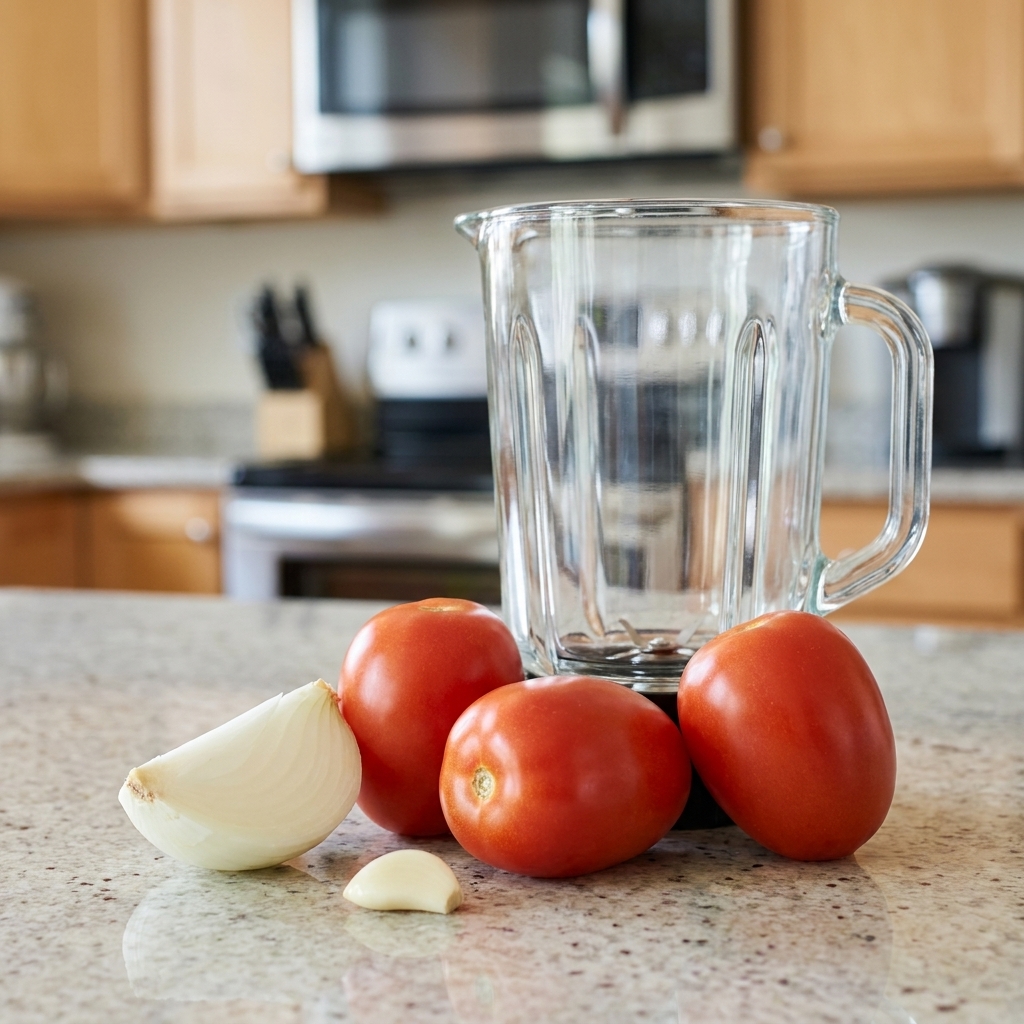
In a blender, combine the tomatoes (raw), onion, garlic, cumin (if using), and 1/2 cup of the warm broth. Blend until very smooth.
Why this matters: Little tomato chunks can sit on the rice and cook unevenly. A smooth base gives you that consistent red color and clean flavor.

3) Toast the rice
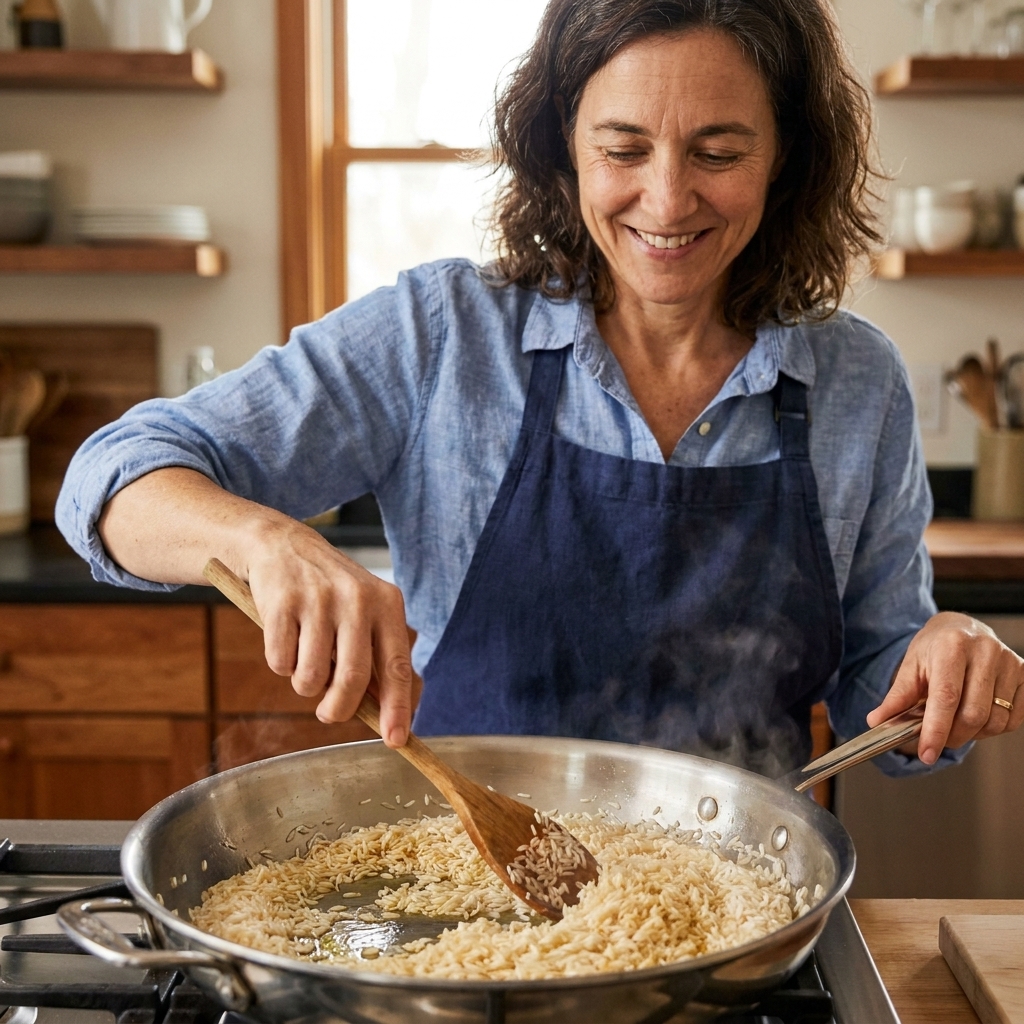
Heat the oil in a heavy pot or deep skillet over medium heat. Add the drained rice and stir frequently for 6 to 10 minutes. You are looking for:
- A nutty, toasted smell
- Grains turning from bright white to a light golden color
- Some grains looking translucent on the edges
Do not rush this step. In my abuela’s kitchen, this was the make-or-break moment.
4) Add the tomato mixture carefully
Pour in the blended tomato base. It will sizzle. Stir for about 30 seconds to coat every grain.
5) Add broth, salt, and extras
Add 2 1/4 cups warm broth to start (you can use up to 2 1/2 cups if your rice runs thirsty). Add the salt. If you are using mixed vegetables, add them now. If you like gentle chile flavor, tuck in a whole serrano or two (do not slice, keep them whole).
Bring to a gentle simmer. Taste the liquid. This is your best chance to fix seasoning early. It should taste slightly salty, like a light soup.
6) Cover and cook
Once it is simmering, reduce heat to low, cover with a tight-fitting lid, and cook for 18 minutes. No stirring. No peeking if you can help it.
Doneness cues: The liquid should be absorbed, you may see little steam holes on top, and the rice on the surface should look dry (not wet). If it still looks soupy at 18 minutes, give it 2 to 4 more minutes on low.
7) Rest, then fluff
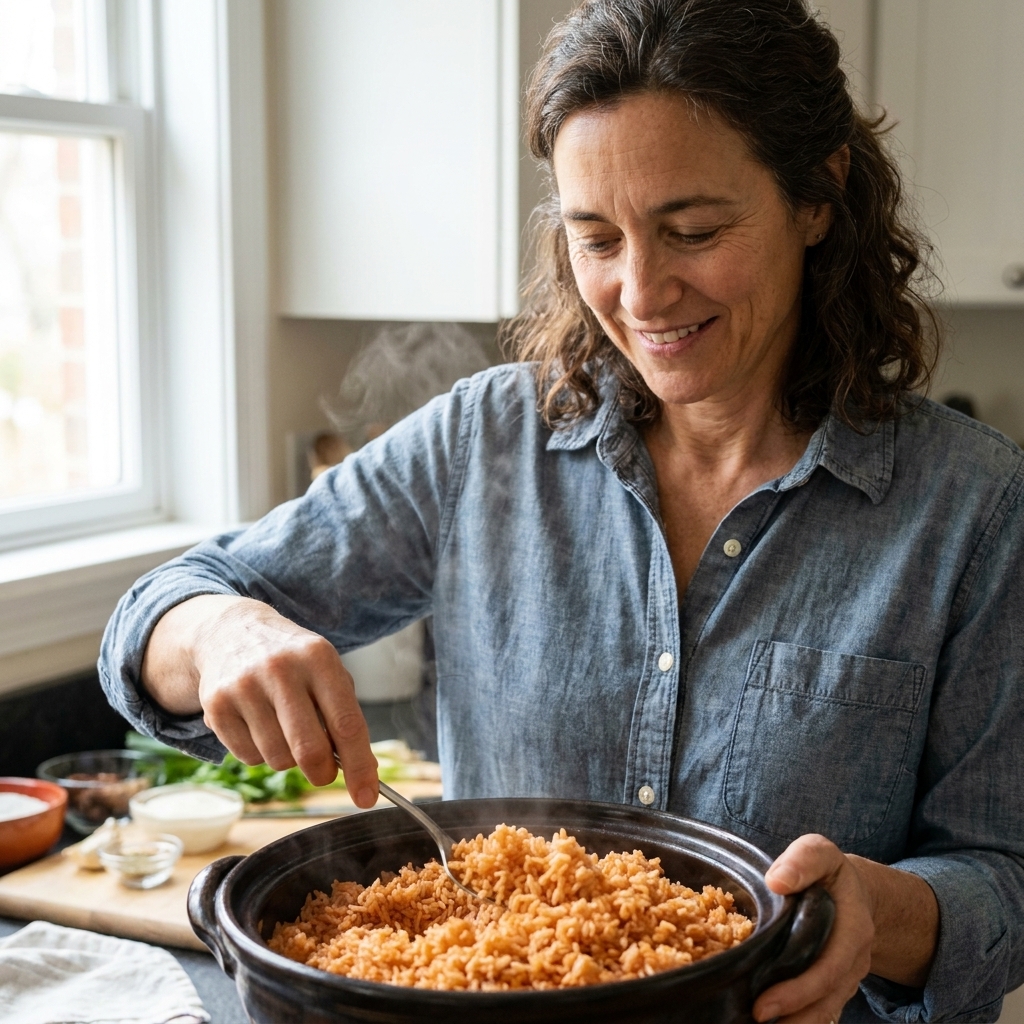
Turn off the heat and let the rice rest, covered, for 10 minutes. This finishes the steaming and firms up the grains.
Fluff gently with a fork, lifting and turning (not mashing). If you added whole serranos, remove them or leave them on top as a warning to the spice-sensitive.
Tips for not mushy
- Use a heavy pot: Thin pots create hot spots that scorch the bottom before the top cooks.
- Drain the rice well: Extra rinse water throws off your liquid ratio.
- Toast longer than you think: That light golden stage is what keeps grains separate.
- Keep the simmer gentle: A hard boil can make the surface gummy and cook unevenly.
- Do not stir after the lid goes on: Stirring releases starch and turns rice creamy.
- Let it rest: The rest is when the rice becomes restaurant fluffy.
Easy swaps
No fresh tomatoes?
Use 1 cup canned tomato sauce plus the onion and garlic. Blend it with 1/2 cup broth just like the recipe. Tomato sauce gives very consistent color and is a classic shortcut in many home kitchens.
Vegetarian option
Use warm vegetable broth or warm water plus a good bouillon. Add a pinch of oregano if you like a slightly more caldo style flavor.
Brown rice?
You can, but it will not taste like restaurant arroz rojo. Brown rice needs more liquid and a longer cook time, and the texture is chewier. For best results, use a method written specifically for brown rice.
Want it more red?
Add 1 to 2 tablespoons tomato paste to the blender. This deepens color without adding too much extra liquid.
Problems and fixes
My rice came out mushy
- Too much liquid, or the rice was not drained well after rinsing.
- Heat was too low and it steamed too long, or you stirred during cooking.
Next time: Start with 2 1/4 cups broth (not the full 2 1/2) and toast the rice well. Also make sure your lid fits tight.
My rice is crunchy
- Heat was too high and liquid evaporated too fast.
- Lid was loose and steam escaped.
Fix right now: Sprinkle 2 to 4 tablespoons hot broth over the top, cover, and steam on low for 5 more minutes. Rest 5 minutes, then fluff.
It is bland
Arroz rojo should taste like something all by itself. If it is flat, it usually needs more salt or a stronger broth. You can also brighten it by serving with a squeeze of lime on the plate.
The bottom burned
Your pot runs hot or the heat was too high. Next time, drop the heat one notch after it reaches a simmer, and use a heavier pot if you can.
What to serve with it
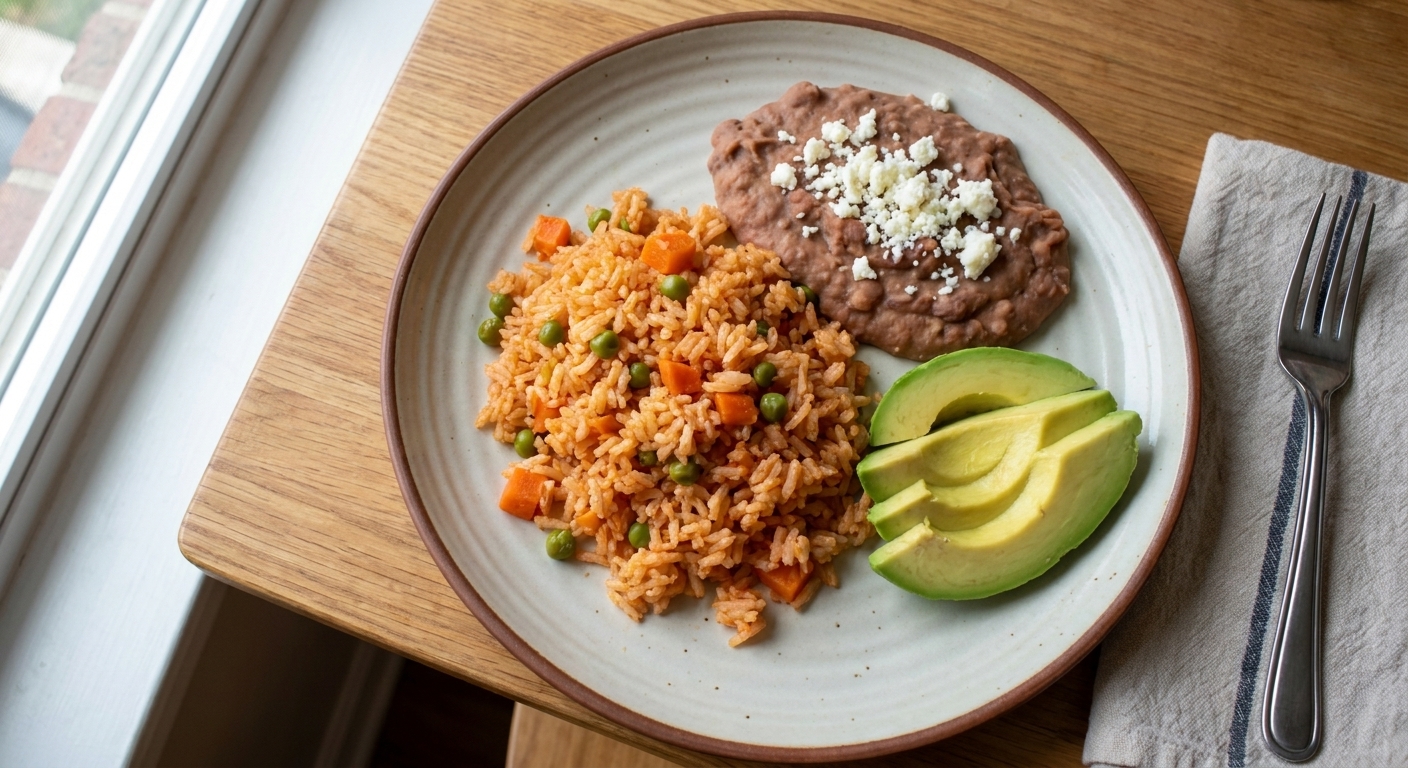
In my house, red rice is the side that makes everything feel like a full plate. Try it with:
- Chicken tinga
- Carnitas
- Carne asada
- Picadillo
- Frijoles de la olla or refried beans
- A simple lettuce and avocado salad with lime and salt
Storage and reheating
Refrigerate: Store in an airtight container for up to 4 days.
Reheat (best method): Add a small splash of water or broth, cover, and warm in a skillet over low heat until steamy. Fluff with a fork.
Freezing: You can freeze it, but the texture softens. If you do freeze, cool completely first and thaw overnight in the fridge before reheating.
FAQ
Do I have to rinse the rice?
No, but it helps. If you want the most foolproof fluffy texture, do a quick rinse and drain well. If you skip rinsing, toast the rice thoroughly and do not stir after adding liquid.
Why do some recipes add tomato sauce instead of fresh tomatoes?
Because it is consistent and fast. Many Mexican home cooks use tomato sauce on weekdays, especially when tomatoes are pale or out of season. Both are authentic. Choose the one that fits your kitchen that day.
Can I make arroz rojo in a rice cooker?
Yes, with one rule: still toast the rice first in a pan. Toast the rice, stir in the blended tomato base for 30 seconds, then carefully transfer to the rice cooker, add the remaining broth and salt, and cook on the white rice setting.
Quick caution: Rice cookers vary, and some run hotter on the bottom than others. Do not overfill past your cooker’s capacity line, and if your cooker tends to scorch, stick with the stovetop method.
Let it rest 10 minutes before fluffing.
Is Mexican rice the same as Spanish rice?
In many parts of the US, Spanish rice is what restaurants call arroz rojo. In my kitchen, I call it Mexican red rice because the flavor base is tomato and aromatics, and it is a staple across Mexican home cooking.
Recipe summary
Mexican Red Rice (Arroz Rojo)
Makes: about 4 to 6 servings
Time: 10 minutes prep, 18 minutes cook, 10 minutes rest
- Rinse 1 1/2 cups long-grain rice briefly and drain well.
- Blend 2 raw Roma tomatoes, 1/4 cup onion, 1 garlic clove, optional 1/2 tsp cumin, and 1/2 cup warm broth until smooth.
- Toast rice in 3 tbsp oil over medium heat until lightly golden, 6 to 10 minutes.
- Stir in tomato mixture 30 seconds.
- Add warm broth (start with 2 1/4 cups, up to 2 1/2 cups as needed), 1/2 tsp salt (adjust to broth), optional vegetables and whole serranos. Bring to a gentle simmer and taste the liquid for seasoning.
- Cover and cook on low 18 minutes, until liquid is absorbed and the top looks dry. Do not stir.
- Rest covered 10 minutes, then fluff with a fork.