A cozy, cinnamon-kissed Mexican arroz con leche you can make on the stovetop in about 40 minutes. Creamy texture, simple pantry ingredients, and foolproof tips.
The Mexi Plate
Mexican-Style Vanilla Flan (With Troubleshooting)

Elena Valdés
Elena Valdés is a Mexican-American home cook and the culinary heart behind MexiPlate. Inspired by the bustling kitchens of her childhood in Jalisco and Texas, she specializes in translating authentic Mexican flavors into approachable recipes for everyday cooks. Whether she is sharing her grandmother's secret for the perfect tamale masa or a quick 30-minute weeknight enchilada bake, Elena believes that good food is the best way to bring people together.
Published October 17, 2026
Updated October 17, 2026
Flan was the dessert that showed up when my family wanted something that felt special but still familiar. Someone would pull a pan from the back of the cabinet, and suddenly the whole kitchen smelled like warm vanilla and caramelized sugar. If you have ever unmolded a flan and found bubbles, rubbery edges, or a custard that looks a little… scrambled, you are in the right place.
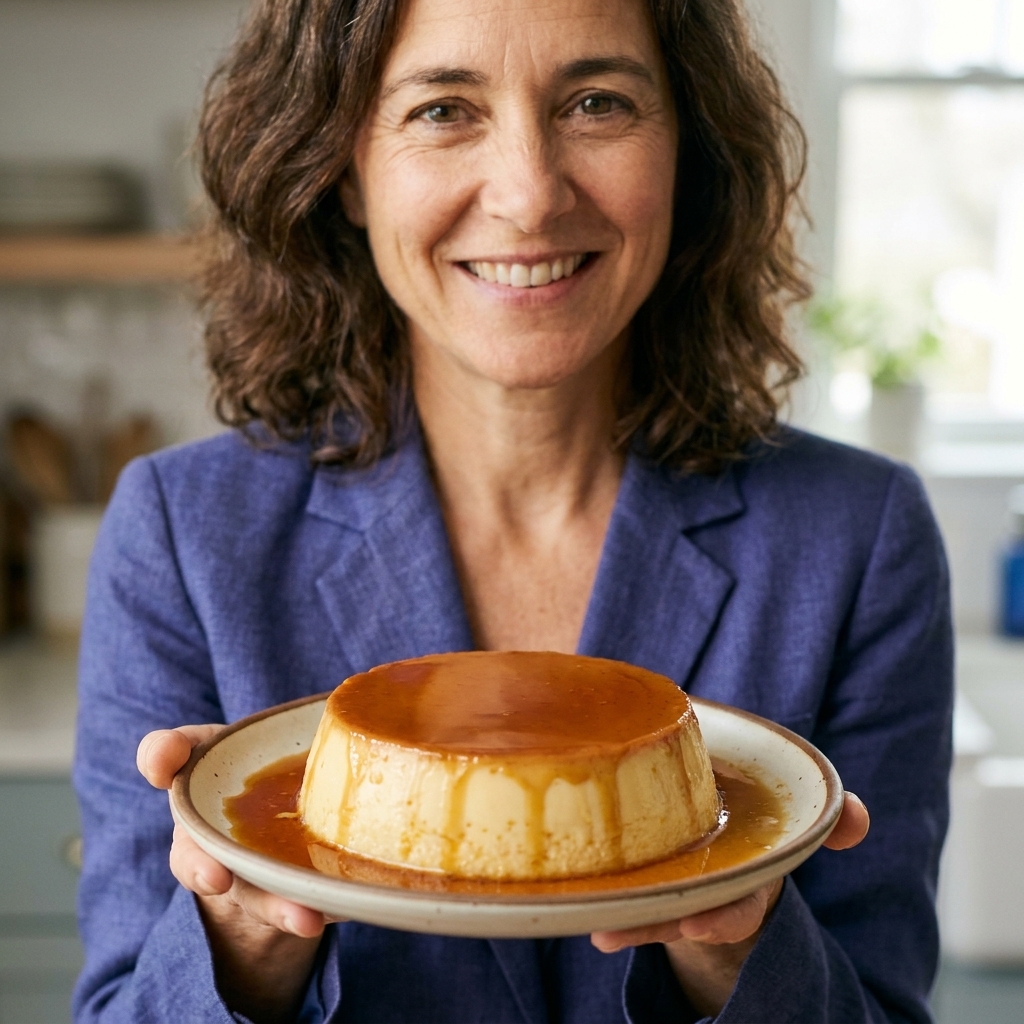
This is my go-to way to make Mexican-style (home-style) vanilla flan: smooth, creamy, not too sweet, with a deep amber caramel that turns into a glossy sauce the moment it flips. Like most family recipes, it lives inside a thousand small variations, but the spirit stays the same.
Yield: One 10-cup flan (about 10 to 12 slices).
What makes it taste right
Across Mexico, flan changes from home to home, but the classic flavor profile is pretty consistent: eggs, dairy, vanilla, and caramel. In many Mexican kitchens (including mine), sweetened condensed milk and evaporated milk are common because they create that signature rich, creamy body with very little fuss.
- Silky texture comes from gentle heat and a proper water bath.
- Clean vanilla flavor comes from good vanilla extract, or even better, Mexican vanilla.
- Caramel that turns into sauce comes from taking your sugar to the right color and giving it time to melt back down after baking.
Ingredients
This recipe is designed for a 10-cup bundt pan or a deep 9-inch round cake pan.
For the caramel
- 1 cup granulated sugar
- 2 tablespoons water (optional but helpful for beginners)
For the custard
- 5 large eggs
- 1 can (14 oz) sweetened condensed milk
- 1 can (12 oz) evaporated milk
- 1 cup whole milk (or half-and-half for extra richness)
- 1 tablespoon vanilla extract (Mexican vanilla is wonderful here)
- Pinch of salt
Optional (common in many homes): 1 to 2 teaspoons orange zest for a faint citrus perfume, or a small cinnamon stick warmed in the milk then removed.
Equipment
- 10-cup bundt pan or 9-inch round cake pan
- Large roasting pan (for the water bath)
- Kettle or pot to heat water
- Fine-mesh strainer
- Whisk and mixing bowl
- Foil
- Heatproof gloves or thick towels (highly recommended)
How to make flan
1) Preheat and set up
Heat oven to 325°F. Put a kettle of water on to heat. You want the water steaming hot, but not violently boiling.
Set your roasting pan on the oven rack now if it is heavy. It is safer and easier to pour water into it once it is already in the oven.
2) Make the caramel (safety first)
Caramel is extremely hot. Use a stable surface, keep kids and pets out of the kitchen, and have heatproof gloves or thick towels ready.
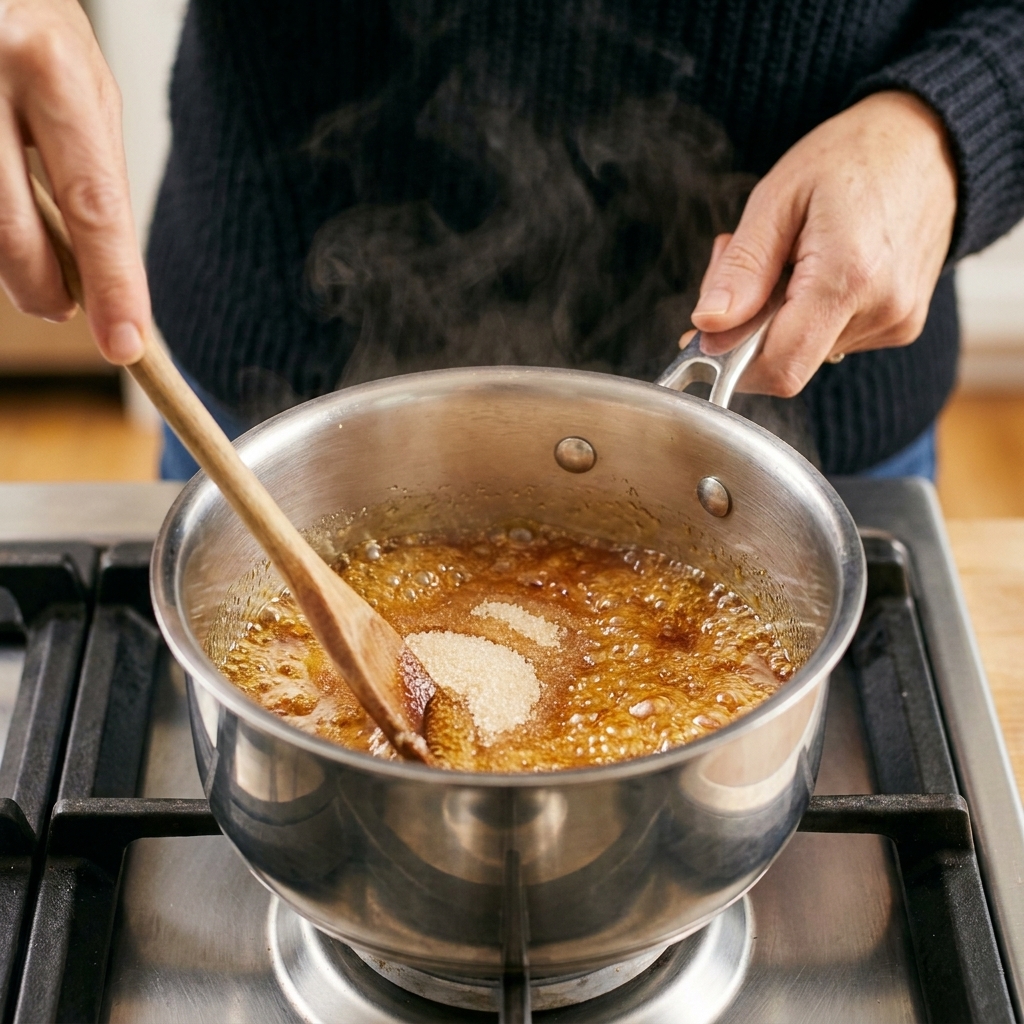
Default method (recommended): Add the sugar (and the 2 tablespoons water, if using) to a small saucepan over medium heat.
- Swirl the pan gently as it melts. Avoid stirring with a spoon, which can encourage crystallization.
- Cook until it turns a deep amber, like a shiny copper penny. If it gets too dark, it will taste bitter.
Immediately pour the caramel into your bundt pan or cake pan and tilt carefully to coat the bottom and a little up the sides. Set aside to harden.
Option: If your bundt pan is clearly stovetop-safe, you can melt the caramel directly in it over medium heat, but most lightweight and nonstick bundt pans are not meant for the burner.
3) Mix the custard gently
In a bowl, whisk the eggs just until blended. You are not trying to whip in air. Add condensed milk, evaporated milk, whole milk, vanilla, and salt. Whisk slowly until smooth.
Strain the mixture through a fine-mesh strainer into a pitcher or bowl. This catches any eggy bits and helps guarantee a smooth flan.
4) Pour and cover
Pour the custard into the caramel-lined pan. Cover the top with foil, but do not press it onto the custard surface. The foil helps the flan bake gently and reduces browning and bubbles.
5) Bake in a water bath
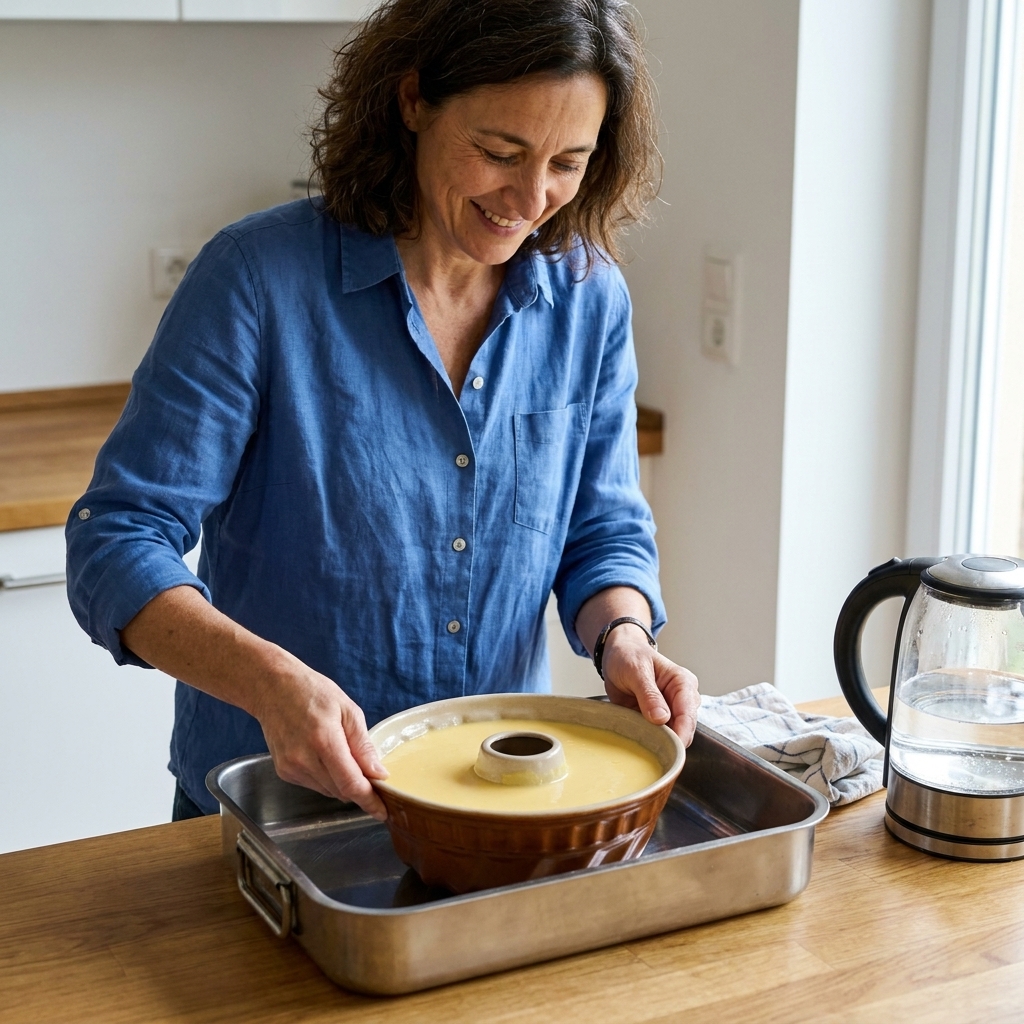
Place the flan pan inside the roasting pan. Pull the oven rack out a few inches and carefully pour hot water into the roasting pan until it comes about halfway up the sides of the flan pan. Do not overfill.
Bake at 325°F until the flan is set around the edges with a slight jiggle in the center, usually 50 to 80 minutes depending on your pan and oven.
Doneness cues I trust: When you nudge the pan, the center should wobble like gelatin, not slosh like liquid. If you like a number, an instant-read thermometer in the center should read about 170 to 175°F.
6) Cool, then chill
Remove the flan from the water bath and cool at room temperature about 45 minutes. Then refrigerate at least 6 hours, ideally overnight. Chilling finishes the set and makes unmolding clean.
7) Unmold calmly
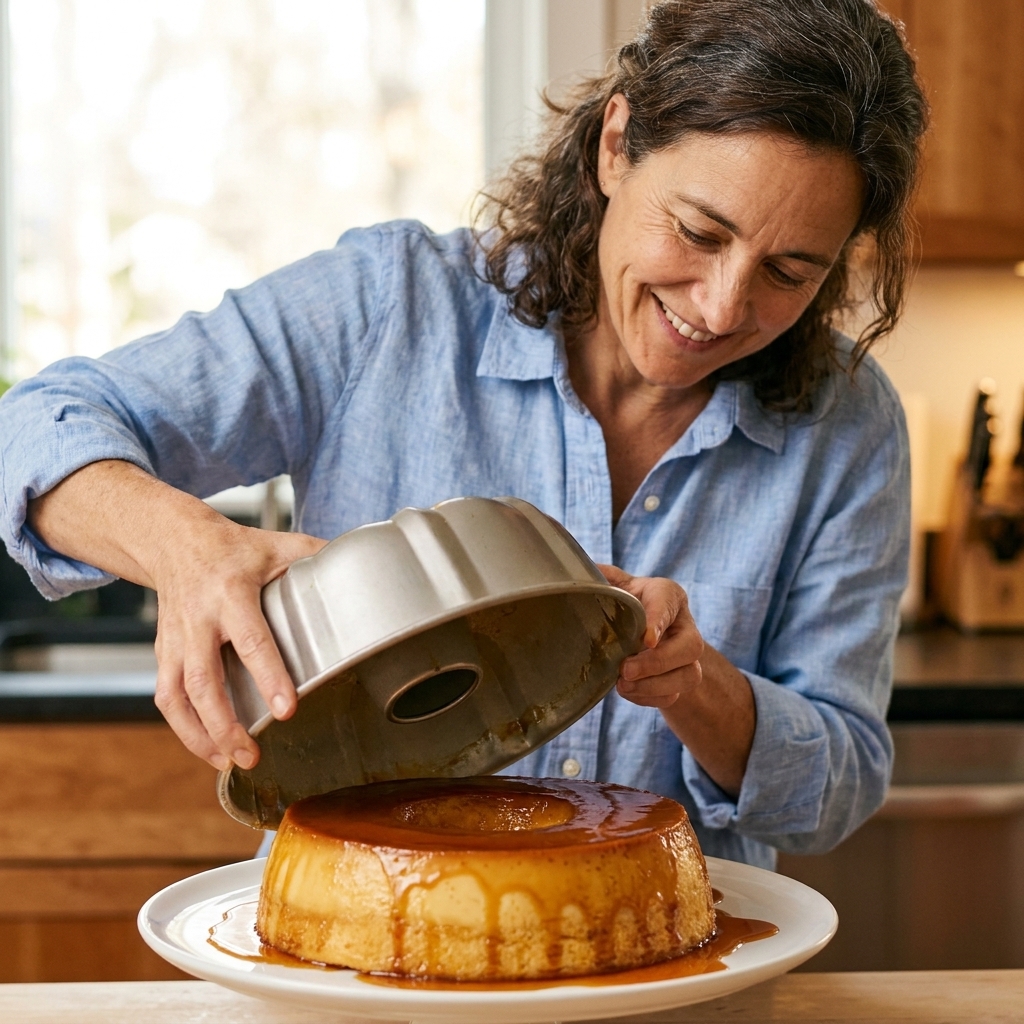
Run a thin knife around the edges. Set a serving plate on top, then flip confidently in one motion.
If it does not release right away, that is normal. Set the pan bottom in a shallow dish of warm water for 20 to 30 seconds, then try again. You can also gently loosen the edges once more with the knife. The caramel will often start flowing gradually as it warms.
Caramel tips
How dark should it be?
For flan, I go for deep amber. Too light and the sauce tastes like plain sugar. Too dark and it turns bitter fast. The caramel keeps cooking for a moment after you turn off the heat, so stop just before you think it is perfect.
Why did it turn grainy?
That is crystallization. It can happen if sugar crystals cling to the sides or if the caramel is stirred aggressively.
- Swirl the pan instead of stirring.
- If using a saucepan, you can brush down the sides with a lightly wet pastry brush early in cooking.
- If it crystallizes badly, it is usually faster to start over than to fight it.
It hardened into a rock. Did I ruin it?
No. It is supposed to harden. In the oven and during chilling, it melts back into sauce. If it stays hard after unmolding, it can mean the caramel was cooked very dark, the flan did not chill long enough, or the pan just needs that quick warm-water dip to loosen and melt the caramel.
Troubleshooting
Problem: bubbles all over the flan
What it means: Air got whipped into the custard, or the flan baked too hot.
How to prevent it:
- Whisk eggs gently, just to combine. No frothy foam on top.
- Strain the custard before pouring.
- Keep the oven at 325°F and use a water bath.
- Do not let the water bath boil aggressively. Steaming-hot water is perfect.
Problem: scrambled or curdled egg texture
What it means: The custard overheated.
Common causes: Oven temperature running hot, skipping the water bath, or baking too long.
Fix for next time: Check your oven with an inexpensive thermometer, keep the water bath at halfway up the pan, and pull the flan when the center still jiggles.
Problem: a crack across the top
What it means: Usually overbaking, or the flan cooled too abruptly.
- Start checking 10 minutes early.
- Let it cool at room temp before refrigerating.
- Keep foil on during baking for gentler heat.
Good news: A crack is mostly cosmetic. Once you unmold, the top becomes the bottom.
Problem: watery caramel or watery custard
Watery caramel: This can happen if the caramel was cooked too light, if steam or condensation diluted it (foil and water baths create a lot of moisture), or if the flan did not chill long enough. Overnight chilling helps a lot.
Watery custard (weeping): Usually overbaked. A custard that gets too hot squeezes out moisture.
Problem: flan will not release
- Run a thin knife around the entire edge, taking your time.
- Warm the bottom of the pan briefly in warm water.
- Make sure it chilled long enough. A warm flan is fragile and sticks more.
Problem: rubbery texture
This is almost always heat related: too hot, too long, or no water bath. Flan wants a low, slow bake.
Problem: lumps in the custard
Strain it. Even experienced cooks strain flan custard. It is not a beginner step. It is a silky texture step.
My best tips
- Foil helps. It keeps the bake gentle and reduces foam and bubbles on top.
- Use hot water in the baño María. Cold water slows baking and can lead to uneven set.
- Do not overmix. Air equals bubbles.
- Chill overnight if you can. Flavor improves and unmolding is cleaner.
- Use the pan you grew up with. In my family, a bundt pan was the one that always came out for flan, and it gives you lots of caramel surface area.
Ingredient swaps
- No whole milk? Use 2 percent. The flan will be slightly lighter, still delicious.
- Want it richer? Swap the whole milk for half-and-half.
- No Mexican vanilla? Use a good pure vanilla extract. Avoid imitation if you can. Vanilla is the main flavor here.
- Prefer less sweet? You can reduce condensed milk a bit, but know the texture will be slightly less lush. If you reduce it, add a splash more regular milk.
Storage and make-ahead
- Refrigerate: Keep covered for up to 4 days.
- Make ahead: Flan is even better the next day, so it is perfect for parties.
- Freezing: Not my favorite. The texture can turn slightly grainy after thawing.
FAQ
Can I make flan without a water bath?
You can, but it is much easier to end up with bubbles, curdling, and rubbery edges. The water bath gives you the calm, even heat flan likes.
How do I know it is done if I do not want to poke it?
Look for set edges and a gentle jiggle in the center when you nudge the pan. If the whole surface ripples like liquid, it needs more time.
Why does my flan taste eggy?
Usually it is either overbaking or not enough vanilla. Pull it when it still jiggles in the center, and use a full tablespoon of vanilla extract.
Can I bake flan in ramekins?
Yes. Divide caramel and custard among ramekins, set them in a water bath, and start checking around 25 to 35 minutes. They bake faster and unmold beautifully.
A sweet final note
If flan has ever intimidated you, I want you to know this: it is not about being fancy. It is about being gentle. Gentle whisking, gentle heat, gentle patience while it chills. Do that, and you will get that classic slice that holds its shape but melts on your tongue, with caramel that tastes like home.
When you make it, take a second before you flip it. That little pause, that deep breath, that confident turn of the plate, it is part of the ritual.