A traditional tres leches cake recipe with tips for a light sponge, an even soak, and flavor twists like chocolate, mocha, and coconut.
The Mexi Plate
Quick and Creamy Stovetop Arroz con Leche

Elena Valdés
Elena Valdés is a Mexican-American home cook and the culinary heart behind MexiPlate. Inspired by the bustling kitchens of her childhood in Jalisco and Texas, she specializes in translating authentic Mexican flavors into approachable recipes for everyday cooks. Whether she is sharing her grandmother's secret for the perfect tamale masa or a quick 30-minute weeknight enchilada bake, Elena believes that good food is the best way to bring people together.
Published October 17, 2026
Updated October 17, 2026
Arroz con leche has always felt like a hug in a bowl to me. In my family, it was the “something sweet” that didn’t require turning on the oven, and it could stretch a small scoop of rice into dessert for everyone at the table. This version is my weeknight-friendly, stovetop method: creamy, cinnamon-forward, and typically ready in about 40 minutes using pantry staples (a few extra minutes is normal depending on your rice and stove).
Makes: about 6 servings (roughly 5 to 6 cups)
Equipment: a 3-quart or larger pot, fine-mesh strainer, and a wooden spoon or heatproof spatula

Why this arroz con leche works fast
Traditional arroz con leche can take its sweet time, especially if you start with raw rice and low heat. My shortcut is simple: rinse the rice well, simmer it first in water just until it turns tender, then finish by gently thickening with milk and sweetened condensed milk. You get that classic creamy texture without standing at the stove for an hour.
- Rinsing the rice helps keep the grains more distinct and less gummy.
- Two-stage cooking lets the rice soften quickly before the dairy goes in.
- Cinnamon + citrus peel makes the flavor taste slow-cooked, even when it is not.
Ingredients (pantry-friendly)
This is the cozy core recipe. From here, you can dress it up with raisins, toasted nuts, or a splash of vanilla.
- 1 cup long-grain white rice (jasmine works too, but cooks a touch softer)
- 4 cups water
- 1 cinnamon stick (Mexican canela is ideal if you have it)
- 1 strip orange peel (about 2 inches, just the orange part, optional but wonderful)
- 3 cups whole milk
- 1 (14 oz) can sweetened condensed milk
- Pinch of salt
- 1 teaspoon vanilla extract (added at the end)
- Optional: 1/3 cup raisins, ground cinnamon for serving
About the cinnamon: If you grew up with Mexican canela, you know it is softer and sweeter than the hard cassia sticks commonly sold in U.S. supermarkets. Either works here. If using a very strong cassia stick, keep it to one and taste as it simmers.
How to make quick stovetop arroz con leche
I’m going to walk you through the “why” of each step so you can feel confident adjusting heat and thickness in your own kitchen.
1) Rinse the rice
Place the rice in a fine-mesh strainer and rinse under cool water until the water runs mostly clear, about 30 seconds to 1 minute. This washes off excess surface starch so the grains stay more separate instead of turning gummy.
2) Simmer the rice with cinnamon
In a medium to large pot (at least 3 quarts), combine the rinsed rice, water, cinnamon stick, and orange peel if using. Bring to a boil over high heat, then reduce to a steady simmer and cook uncovered for about 12 to 15 minutes, stirring occasionally, until the rice is mostly tender.
What you’re looking for: The rice should be close to done, and the pot should look like it has very little water left. If there is still a lot of water, simmer a few minutes longer. If your rice is tender but you still have a noticeable amount of water, carefully pour off the excess (leave the rice in the pot) before adding dairy.
Tip: If the pot looks dry but the rice is still slightly firm, add a splash of water and keep simmering for a few minutes.
3) Add milk and condensed milk, then thicken gently
Lower the heat to medium-low. Add the whole milk, sweetened condensed milk, and a pinch of salt. Stir well, scraping the bottom of the pot. Bring it to a bare simmer (you want small bubbles, not a rolling boil), then cook for 12 to 18 minutes, stirring often, until the mixture thickens and looks creamy. It should coat the back of a spoon, and the rice should feel tender and creamy.
Stirring matters here: Dairy plus sugar can scorch. Keep the heat gentle and stir every minute or so, then more frequently as it thickens.
4) Finish with vanilla
Turn off the heat and stir in the vanilla. Remove the cinnamon stick and orange peel. Taste and adjust with a pinch more salt or a little extra cinnamon on top when serving if you want it more cinnamon-forward.
5) Serve warm, or chill for later
Spoon into bowls and dust with ground cinnamon. If you love raisins, stir them in during the last 5 minutes of simmering so they plump up.
How thick should arroz con leche be?
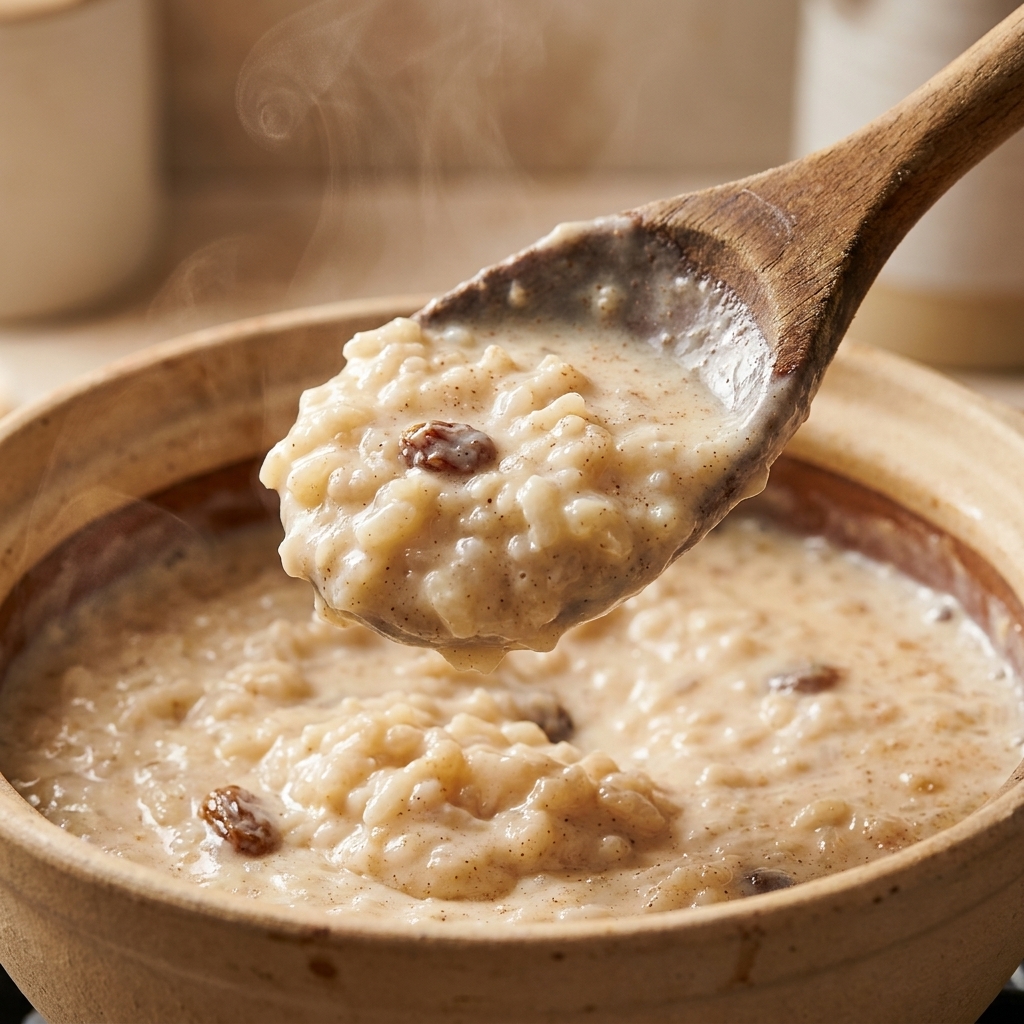
Here’s the little secret: arroz con leche thickens as it cools. On the stove, I stop when it looks like a loose porridge. After 10 to 15 minutes off the heat, it turns perfectly spoonable.
- Too thin? Simmer 3 to 5 minutes longer, stirring often.
- Too thick? Stir in a splash of warm milk until it loosens up.
- Want it extra creamy? Serve warm and add a drizzle of milk right before eating.
Flavor variations
Once you have the base down, you can make it feel brand new with one small change.
- Classic with raisins: Add 1/3 cup raisins in the last 5 minutes of cooking.
- Cajeta swirl: Drizzle cajeta over each bowl right before serving.
- Extra cinnamon: Add a second small cinnamon stick, then remove both at the end.
- Coconut touch: Replace 1 cup of whole milk with coconut milk for a subtle tropical note.
- Lechera and lime: Skip the orange peel and use a small strip of lime peel for a brighter aroma.
Ingredient swaps
- No sweetened condensed milk? Use 3/4 cup sugar instead, added with the milk. It will taste delicious but slightly less creamy and less rich. To bring back some body, add 2 tablespoons butter at the end, or swap in 1/2 cup half-and-half or a splash of cream if you have it. You may also need a few extra minutes of gentle simmering to thicken.
- Only 2 percent milk? Totally fine. It will be slightly less rich. If you have it, add 2 tablespoons of butter at the end for silkiness.
- Dairy-free? Use oat milk or almond milk plus coconut condensed milk. Keep the heat very gentle since plant milks can separate if boiled hard. Also note that coconut condensed milk brands vary in sweetness, so taste and adjust near the end.
- Short-grain rice? It works, but it gets softer and starchier. Rinse well and stir more often.
Storage and reheating
Arroz con leche stores beautifully, which is why I love making it a little ahead.
- Refrigerate: Cool promptly, then store in an airtight container for up to 4 days (kept cold at 40°F or 4°C or below).
- Reheat: Warm on the stovetop or in the microwave with a splash of milk, stirring until creamy again.
- Serve chilled: If you grew up eating it cold from the fridge, you are not alone. It gets thicker and tastes even more cinnamon-forward the next day.
Troubleshooting
- It scorched on the bottom: Next time, lower the heat and stir more often. If it happens, do not scrape the bottom. Carefully pour the unburnt portion into a clean pot.
- Rice is still firm: Add 1/4 cup water or milk and keep simmering until tender.
- It tastes flat: A tiny pinch of salt and a little more cinnamon wake everything up. Also try a small strip of citrus peel next time.
Quick recipe recap
Total time: about 40 minutes (give or take a few minutes depending on your stove and rice)
You’ll do: rinse rice, simmer in water with cinnamon, then thicken with milk and condensed milk
Best part: it tastes like abuela cooked it slowly, even when you did not.
FAQ
Can I make arroz con leche without cinnamon sticks?
Yes. Use 1 to 1 1/2 teaspoons ground cinnamon instead. For the smoothest result, whisk the cinnamon with a tablespoon of sugar first (or stir it into a splash of warm milk) before adding it to the pot. Stir it in during the last 5 minutes of cooking, then taste and adjust.
Do I have to rinse the rice?
I strongly recommend it. Rinsing removes excess surface starch, which helps you get a pudding with creamy liquid and more distinct rice grains instead of a gummy texture.
Is this served warm or cold?
Both are traditional. Warm is cozy and looser. Cold is thicker and tastes even more like cinnamon and vanilla.