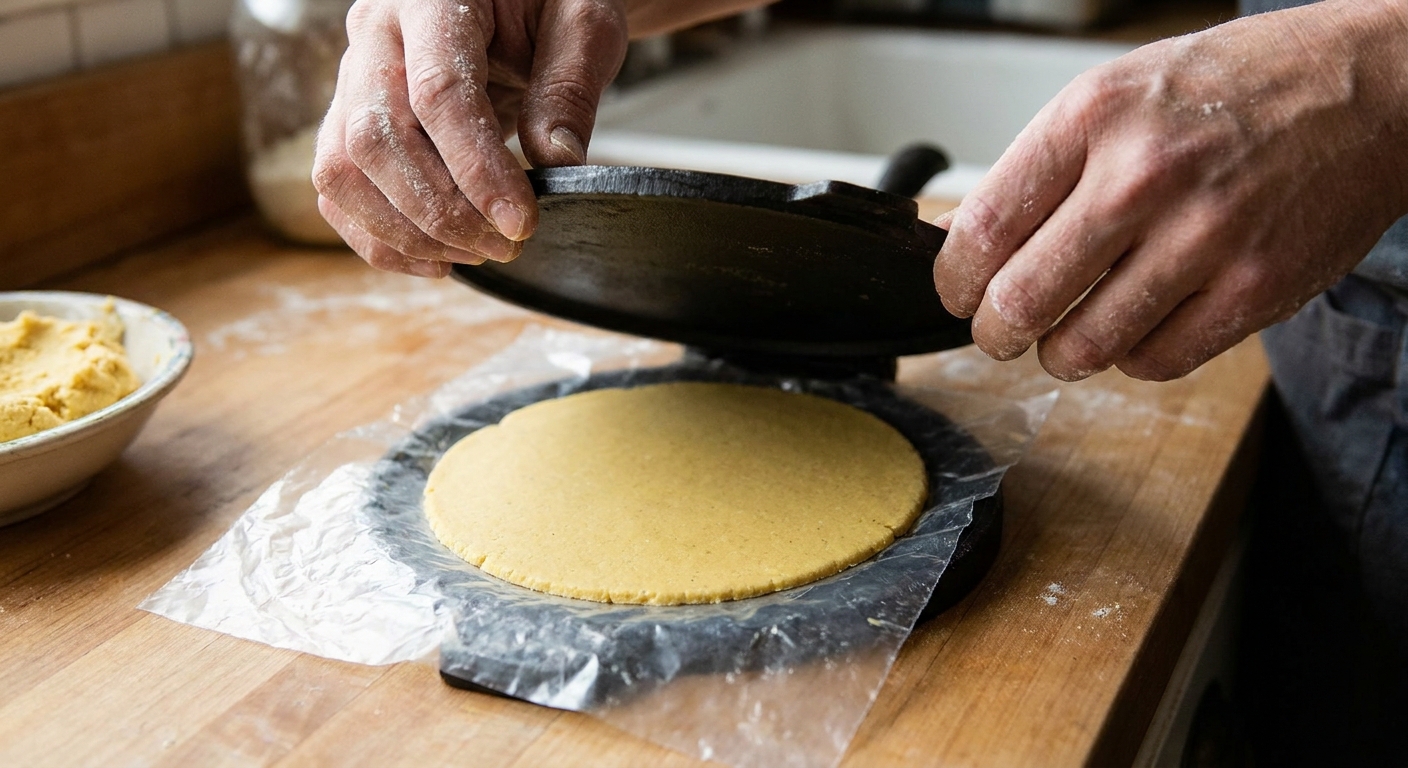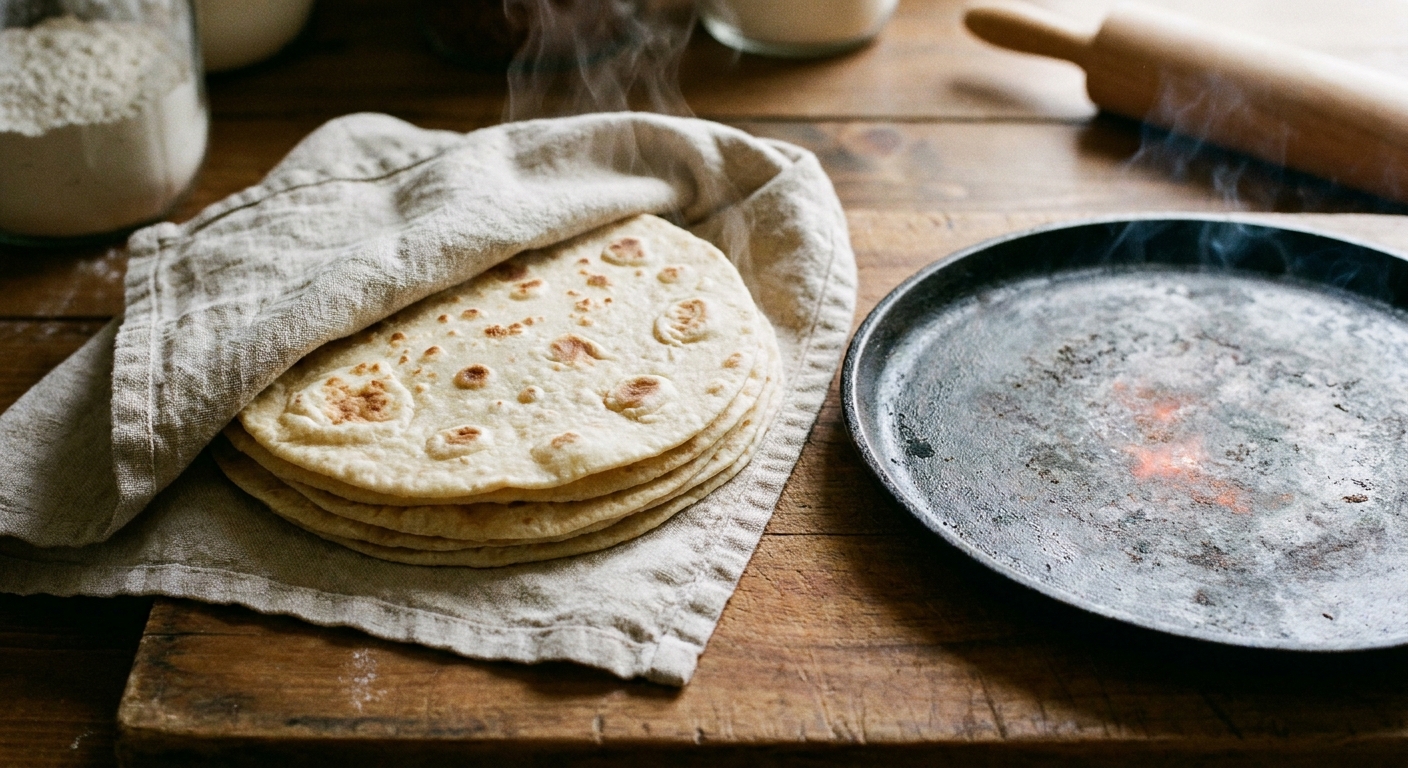
Soft, blistered flour tortillas made with pantry basics. I’ll show you the dough feel, how thin to roll, comal cooking tips, and the towel wrap trick that ke...
The Mexi Plate
Crispy Cheese Quesadillas on the Comal

Elena Valdés
Elena Valdés is a Mexican-American home cook and the culinary heart behind MexiPlate. Inspired by the bustling kitchens of her childhood in Jalisco and Texas, she specializes in translating authentic Mexican flavors into approachable recipes for everyday cooks. Whether she is sharing her grandmother's secret for the perfect tamale masa or a quick 30-minute weeknight enchilada bake, Elena believes that good food is the best way to bring people together.
Published November 15, 2026
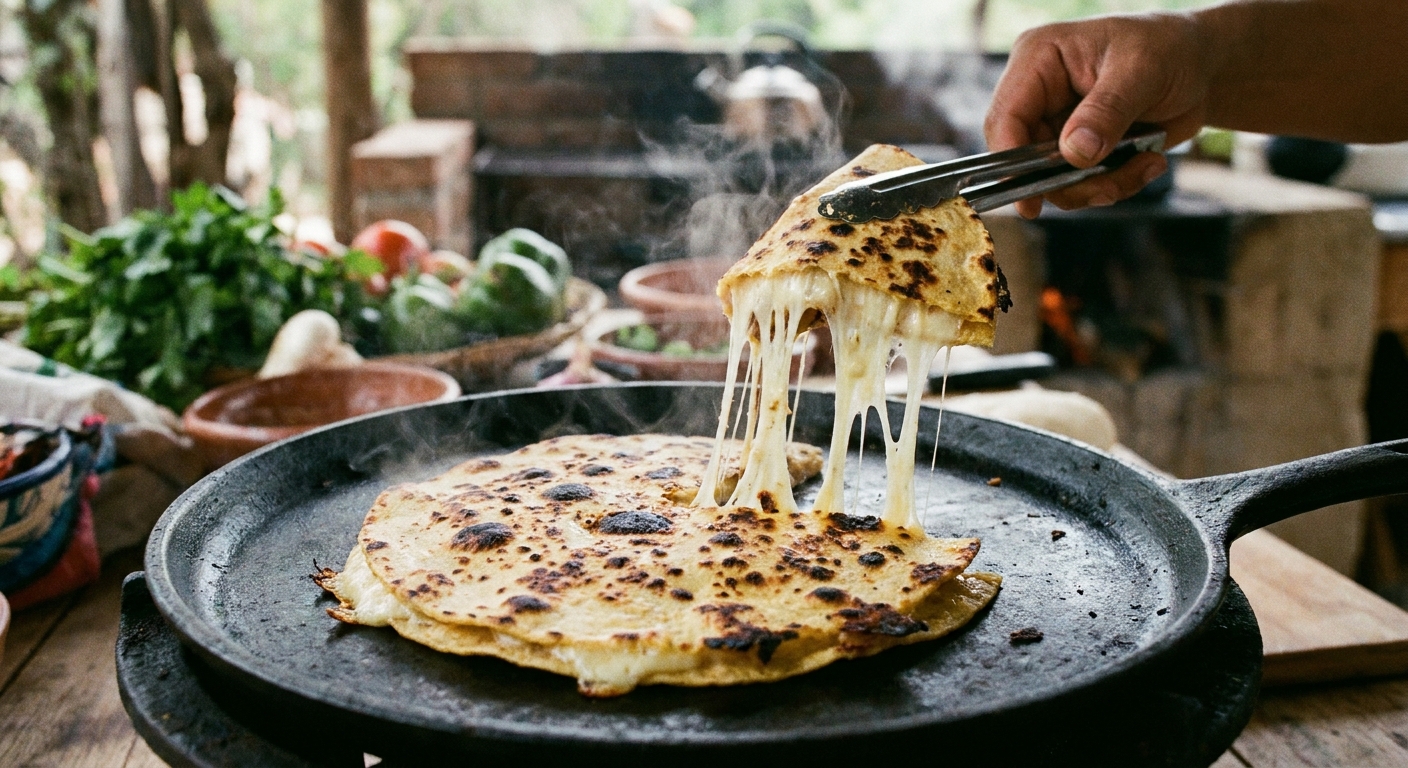
When I was a kid, the comal was always working overtime, warming tortillas, toasting chiles, and turning plain cheese into something you could smell from the other room. A good quesadilla is not complicated, but it is specific. You want a tortilla that blisters and turns a little crisp at the edges, and you want the center to stretch when you pull it apart. That only happens when the heat is right, the fat is light, and you flip at the exact moment the cheese is halfway melted.
This is my everyday method for crispy cheese quesadillas on a comal or skillet, the kind I make when I need something fast but still want that taquería-like bite at home. It is one common style, and it is the one I crave most.
What makes them crisp
Crisp quesadillas are all about managing moisture and timing. Here’s what we are aiming for:
- Medium to medium-high heat so the tortilla blisters before it dries out.
- A thin film of fat so the surface fries lightly instead of steaming.
- Cheese that melts fast so the tortilla does not have to sit too long on the comal.
- A confident flip once the cheese is soft and starting to bind the tortilla together.
If the heat is too low, the tortilla warms slowly and goes soft. If the heat is too high, you get a burnt outside and barely melted cheese. The sweet spot is where you hear a steady sizzle, not a roar.
Best cheese
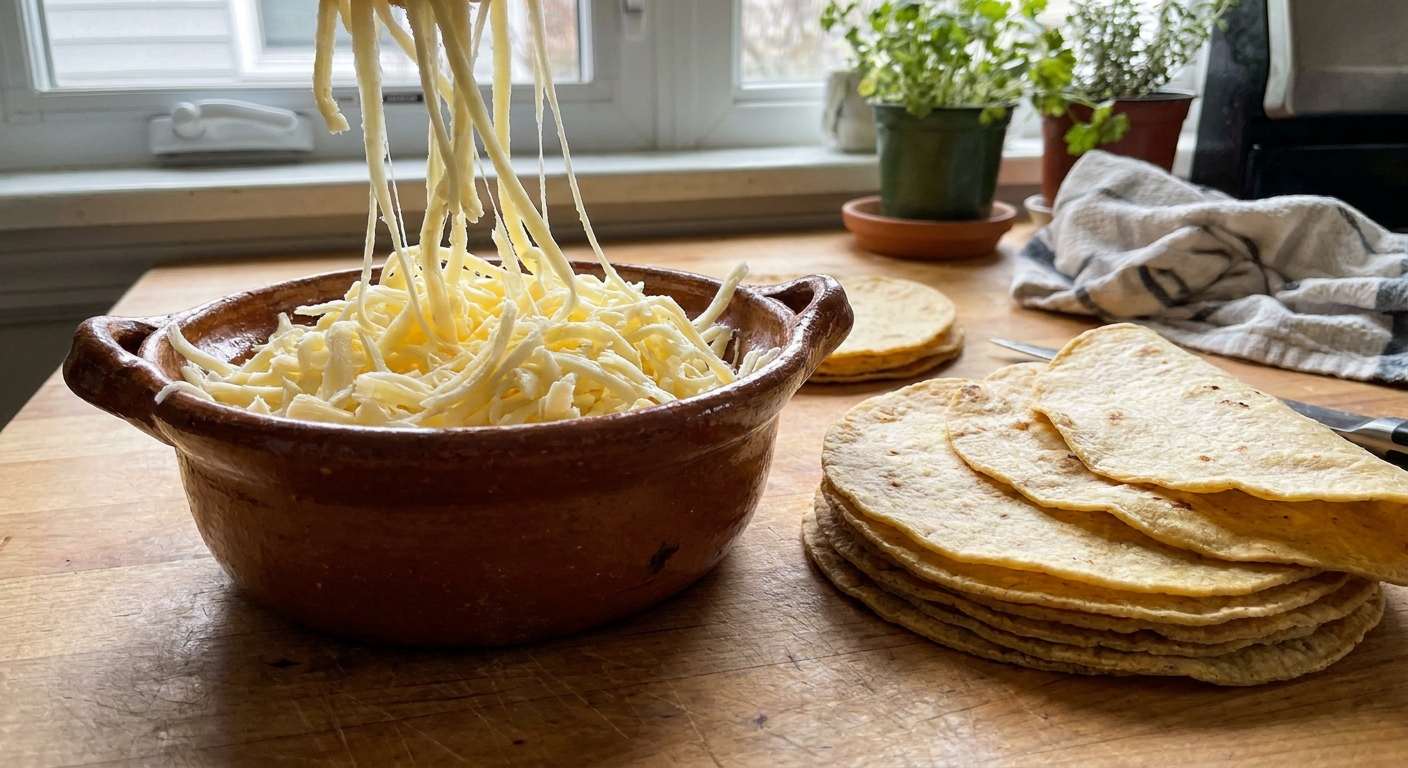
My first choice is Oaxaca cheese. It melts like a dream, pulls into strands, and tastes milky and clean. If you cannot find it, you still have great options.
Great melting cheeses (my go-to swaps)
- Oaxaca: classic stretch and mild flavor.
- Asadero: buttery, melts smoothly, very quesadilla-friendly.
- Chihuahua: slightly sharper, still excellent melt.
- Low-moisture mozzarella: closest in texture to Oaxaca, just a bit less flavorful.
- Monterey Jack: melts well, mild, easy to find.
A quick note on queso fresco: it is delicious, but it does not melt the way you want for a cheese pull. If you love the flavor, mix a little queso fresco with Oaxaca or mozzarella, but do not use it as the only cheese.
One more tip: if your cheese is not melting smoothly, skip pre-shredded bags and grate it yourself. The anti-caking powders can make the melt less stretchy.
Corn or flour
In my family, it depended on the day and what was on the counter. Both work beautifully, but they cook a little differently.
Corn tortillas
- More toasty, more comal flavor.
- Crisp faster, but can crack if overcooked or too dry.
- Best tip: warm them briefly first so they bend without breaking.
Flour tortillas
- Softer and chewier, with bigger blisters.
- Brown more evenly and tolerate a slightly lower heat.
- Best tip: use a light hand with fat because flour tortillas can get greasy fast.
My comal method
This method works with a traditional comal, a cast iron skillet, or a nonstick skillet. Cast iron gives the best blistering, but use what you have.
Yield: 1 quesadilla (serves 1)
Cook time: about 3 to 5 minutes per quesadilla
What you need
- 2 tortillas (corn or flour)
- Melting cheese (Oaxaca is my favorite)
- 1 to 2 teaspoons neutral oil, lard, or butter (just enough to film the surface)
- Salt (optional, but a tiny pinch on the cheese is lovely)
How much cheese to use
- 6-inch corn tortillas: about 1/3 to 1/2 cup shredded cheese total
- 8 to 10-inch flour tortillas: about 1/2 to 3/4 cup shredded cheese total
I like a generous center, but I still leave a small border so it seals and flips cleanly.
1) Preheat the comal
Set your comal or skillet over medium heat for a full 3 to 5 minutes. You want it evenly hot.
Heat check: on cast iron or a comal, flick a few drops of water onto the surface. They should dance and evaporate quickly. If they just sit there, it is too cool. If they flash off instantly and sputter hard, lower the heat a bit.
Nonstick note: do not overheat an empty nonstick pan. If you are using nonstick, skip the water test and just preheat on medium, then add your fat when the pan feels hot.
2) Add a light film of fat
Add just enough oil, lard, or butter to lightly coat the comal. Wipe with a folded paper towel if you accidentally add too much. We are not deep frying, we are crisping.
3) Warm the first tortilla
Lay down one tortilla and let it warm for about 10 to 20 seconds. This gives it flexibility and starts the toasting process.
4) Add cheese, then cover (optional)
Sprinkle cheese over the tortilla, leaving a small border so it does not spill everywhere. If you are using corn tortillas or your kitchen runs cool, cover the pan for 20 to 40 seconds. A lid traps heat and helps the cheese melt before the tortilla over-browns.
5) Top with the second tortilla (or fold)
You can do it two ways:
- Stacked: place the second tortilla on top for a neat, even quesadilla. If you want a more evenly toasted top tortilla, warm it for 5 to 10 seconds on the comal first, set it aside, then use it as the top.
- Folded: fold the tortilla in half for a faster melt and easier flip.
Both are common in Mexican home cooking and street stalls, depending on the cook and the region. Stacked is my go-to for a classic look and even browning.
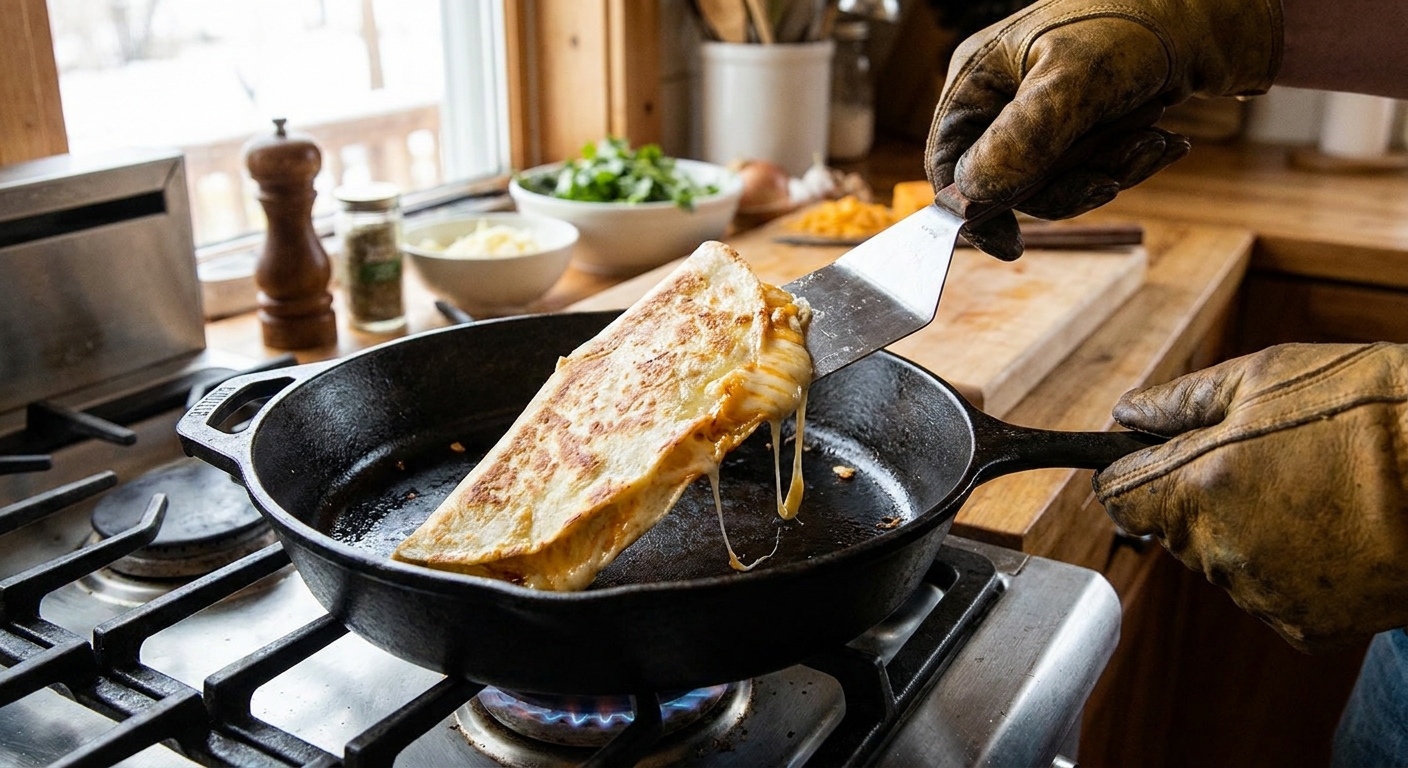
6) Flip at halfway-melt
Here is the moment that makes or breaks it. Flip when:
- the bottom tortilla has light brown spots and looks slightly dry at the edges
- the cheese is visibly soft and starting to glue the tortillas together
Use a wide spatula and flip confidently. If cheese escapes, just nudge it back in. It happens to all of us.
7) Finish and serve
Cook the second side until you get blistering and the cheese is fully melted, another 1 to 2 minutes. Transfer to a cutting board, rest for 30 seconds, then cut into wedges.
Heat and timing
- Start at medium for both corn and flour tortillas.
- Nudge hotter only if needed if your comal is thick and you are not getting any blistering.
- Cover briefly if the tortilla browns before the cheese melts.
- Uncover at the end for the last 30 to 60 seconds to drive off steam and keep it crisp.
Fix common problems
Burned tortilla, unmelted cheese
- Lower the heat.
- Use a lid for 20 to 40 seconds to help the cheese melt.
- Shred the cheese finer so it melts faster.
Soggy quesadilla
- Your heat is too low, or the pan was not preheated.
- You used too much fat.
- You covered it too long. Cover to melt, then uncover to crisp.
Tortilla cracked on the flip
- Warm corn tortillas briefly before filling.
- Use fresh tortillas if you can. Older corn tortillas are drier and crack more easily.
- Do a folded quesadilla next time, it is sturdier and easier to handle.
Cheese leaking everywhere
- Use slightly less cheese or keep it away from the edge.
- Wait 10 to 15 seconds longer before flipping so the cheese binds.
- If some cheese hits the comal and browns, that is not a tragedy. Those crispy bits are the cook’s treat.
Simple add-ins
This page is all about the classic cheese quesadilla, but if you want one extra step without turning it into a project, here are two easy additions:
- Rajas: add a few strips of roasted poblano (well drained) over the cheese.
- Ham: a thin layer of deli ham makes it extra comforting and still melts beautifully.
Tip: keep fillings dry and minimal. Too much moisture is the fastest way to lose that crisp tortilla.
How I serve them
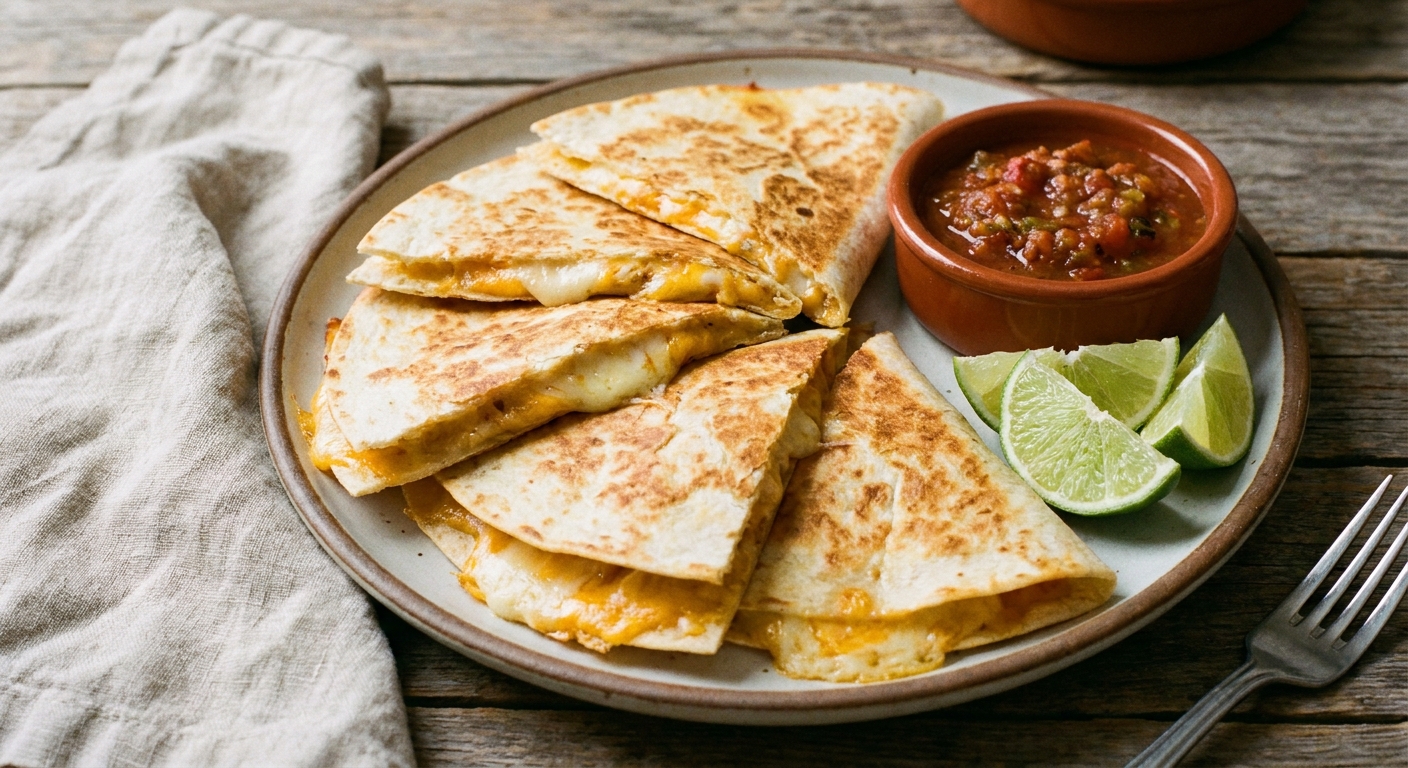
At my house, quesadillas hit the table the second they come off the comal. I usually add one or two of these on the side:
- Salsa verde or your favorite red salsa
- Lime wedges for a bright squeeze
- Guacamole or sliced avocado
- Crema for dipping
FAQ
Do I need oil on the comal?
You do not need it, but a tiny film helps the tortilla blister and crisp instead of drying out. If you prefer oil-free, cook on a dry comal and flip a little earlier so it does not get brittle.
What fat should I use?
Neutral oil is easy and clean. Butter tastes amazing, especially with flour tortillas. If you grew up with manteca (lard) in the kitchen, a small amount gives the most classic flavor and crunch.
How do I keep them warm for a family meal?
Keep them on a sheet pan in a 200°F oven while you cook the rest. For the best crispness, set them on a wire rack on top of the sheet pan and leave them uncovered.
Can I make them ahead?
They are best fresh, but you can reheat on a dry skillet over medium heat. Avoid the microwave if you want crispness.