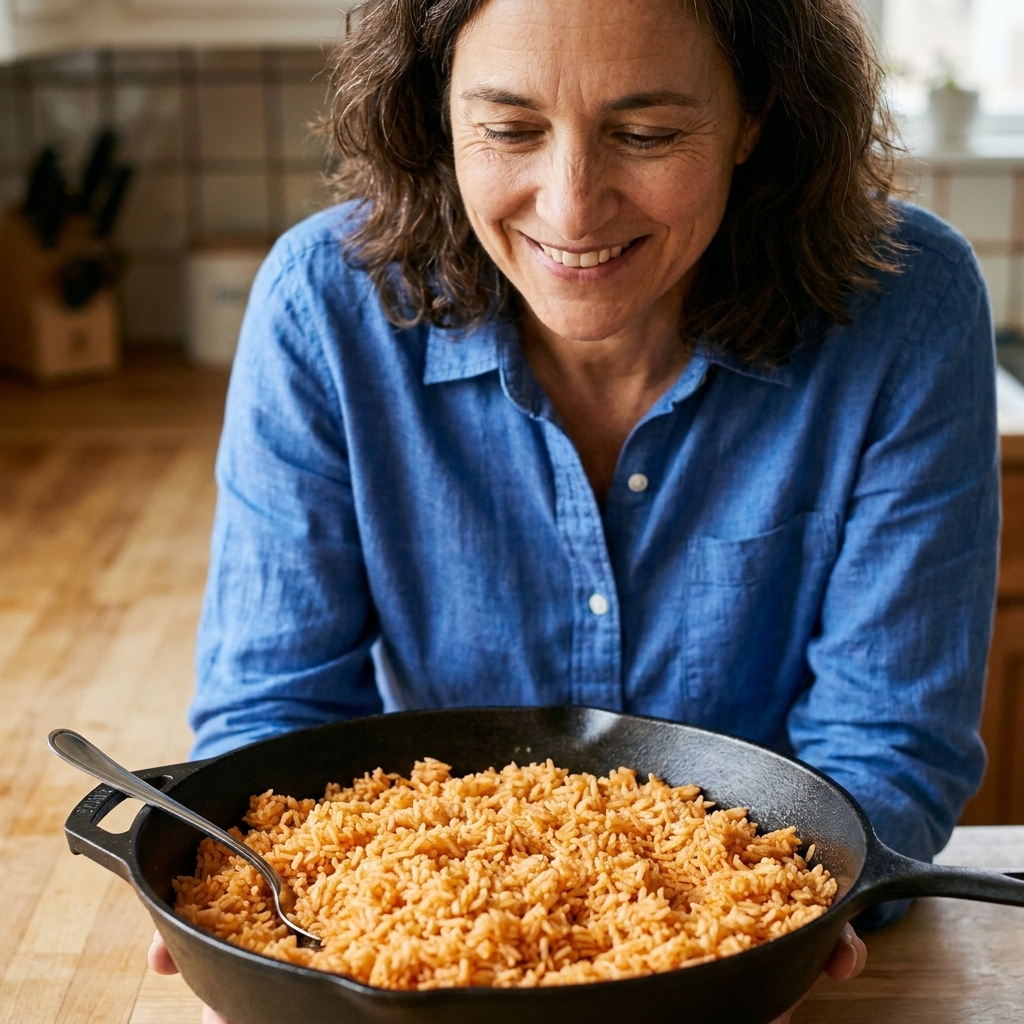
A step-by-step, home-cook friendly method for fluffy Mexican red rice like your favorite restaurant: properly toasted, perfectly seasoned, never gummy.
The Mexi Plate
Perfect Homemade Refried Beans (Frijoles Refritos)

Elena Valdés
Elena Valdés is a Mexican-American home cook and the culinary heart behind MexiPlate. Inspired by the bustling kitchens of her childhood in Jalisco and Texas, she specializes in translating authentic Mexican flavors into approachable recipes for everyday cooks. Whether she is sharing her grandmother's secret for the perfect tamale masa or a quick 30-minute weeknight enchilada bake, Elena believes that good food is the best way to bring people together.
Published October 17, 2026
Updated October 17, 2026
Refried beans are one of those humble foods that can taste like a warm hug or like a bland afterthought. The difference is not a secret ingredient, it is technique, patience, and knowing what you are aiming for: beans that are deeply seasoned, creamy, and glossy, with just enough texture to feel homemade.
I grew up eating frijoles refritos in both Jalisco and San Antonio, and every kitchen had its own rhythm. Some families liked them almost smooth, others kept them chunky with whole beans peeking through. What never changed was the method: well-cooked beans, a flavorful fat, and a good mash right in the pan.
What "refried" means
Despite the English name, frijoles refritos are not usually literally fried twice. In Spanish, refrito is often understood as "well-fried" or "thoroughly fried." You cook beans until tender, then fry and mash them in fat until they turn creamy and concentrated. That quick pan step is where the magic happens.
Choosing the best beans
You can refry almost any bean, but a few varieties consistently give the best texture and flavor.
Pinto beans (classic and creamy)
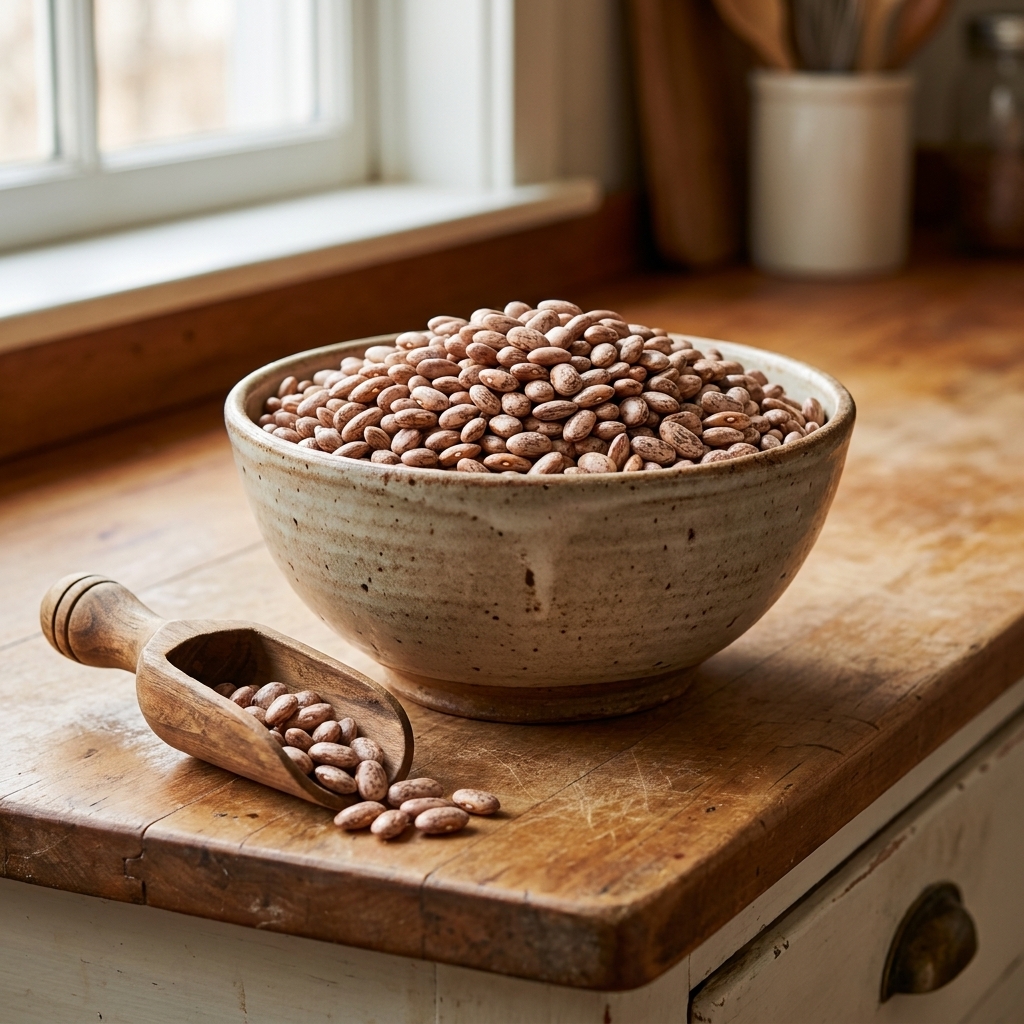
If you want the familiar restaurant style refried beans many of us grew up with in Texas and northern Mexico, pinto beans are the go-to. They mash easily and have a mild, nutty flavor that loves garlic and onion.
Peruano or canary beans (extra silky)
These yellow beans make incredibly creamy refried beans with a slightly buttery taste. If you have ever had ultra-smooth beans at a taquería and wondered why yours are a little grainy, try peruano beans.
Black beans (bold and earthy)
Black beans refry beautifully and keep a deeper, earthier flavor. They are amazing with a squeeze of lime and a little epazote or oregano.
Do canned beans work?
Yes. And I use them on busy weeknights. The tradeoff is that you lose some of the flavor and body that come from cooking beans in their own broth. If you use canned, choose low-sodium, rinse lightly, and save a little bean liquid from the can to adjust texture.
Soaking vs no soaking
Here is my practical rule: if your beans are very fresh and you have time, you can skip soaking. If you are not sure how old they are or you want more even cooking, soak them.
- Overnight soak: Cover with plenty of water and soak 8 to 12 hours. Drain and cook in fresh water.
- Quick soak: Boil beans for 2 minutes, turn off the heat, cover, and rest 1 hour. Drain and cook.
Soaking helps beans cook more evenly and can reduce splitting, but it is not required for great refried beans if you cook them gently until truly tender.
Cooking beans for refrying
Refried beans are only as good as the beans you start with. If the beans are undercooked, no amount of mashing will make them creamy. You will get a gritty texture instead.
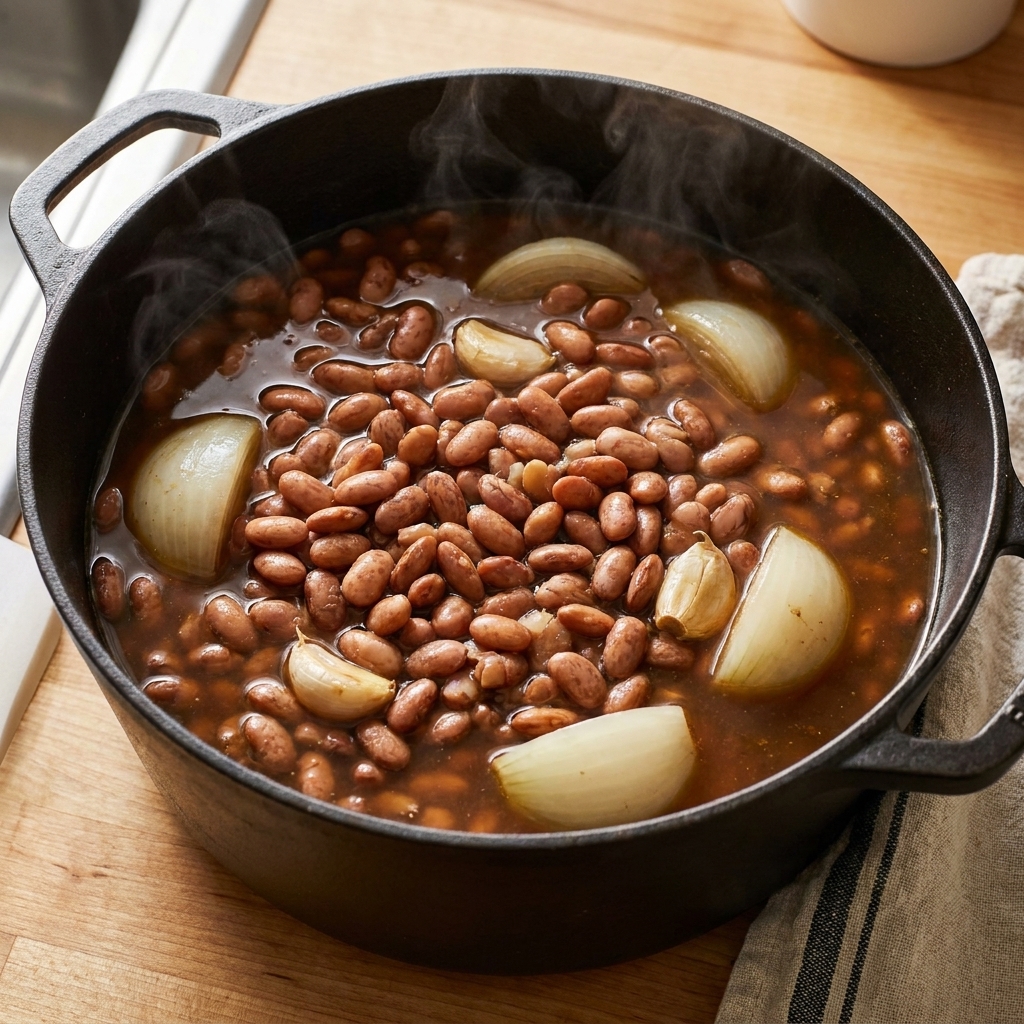
What goes in the pot
- Beans: 1 pound dry beans
- Water: enough to cover by 2 to 3 inches
- Aromatics: 1 small onion (halved) and 3 to 4 garlic cloves
- Optional but traditional: 1 to 2 sprigs epazote, or a small pinch of Mexican oregano
- Salt: I like to add it once the beans are starting to soften, usually after 45 to 60 minutes of simmering, but you can also salt earlier if you prefer
Stovetop method
Bring to a boil, then immediately reduce to a gentle simmer. Partially cover and cook until the beans are very tender. For pintos, that is often 1 1/2 to 2 1/2 hours depending on age. The broth should be flavorful because you will use it to loosen and season your refried beans.
Instant Pot shortcut
For 1 pound unsoaked pinto beans, try 35 to 45 minutes on high pressure with a natural release. If your beans are soaked, you will usually need less time, often 15 to 25 minutes. Timing can vary with bean age and altitude, so treat these as starting points and adjust. Use enough water to cover by about 1 1/2 inches. Add salt after cooking, or keep it light before cooking if you prefer.
The fat
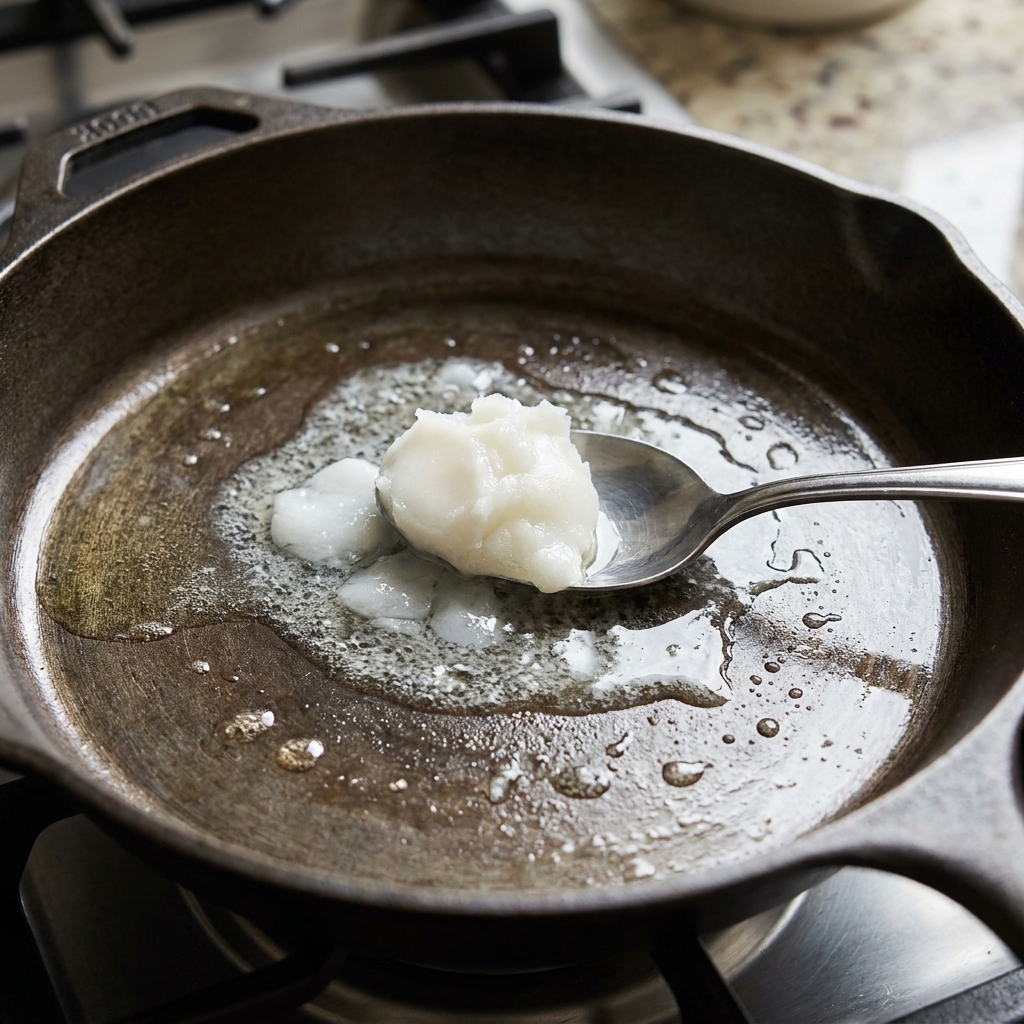
This is the part where refried beans go from "fine" to "I cannot stop eating this." In many Mexican home kitchens, the fat is what is on hand and what carries flavor: lard, bacon drippings, or oil.
Lard (manteca), the traditional choice
Lard gives the most authentic flavor and the silkiest mouthfeel. Use good-quality lard and start with a little. You can always add more.
Bacon drippings (smoky and rich)
If you have a jar of bacon drippings in the fridge, this is your moment. It makes refried beans taste like they have been simmering all day.
Oil (easy and still delicious)
Neutral oil or avocado oil works well. For more flavor, use a little olive oil, but keep it subtle so it does not overpower the beans.
Vegetarian flavor boost
If you are skipping animal fat, build flavor with a good sauté: onion, garlic, and a roasted chile like poblano or a little chopped serrano. A pinch of ground cumin can help, too, even though it is not traditional in every region.
Mashing for creamy beans
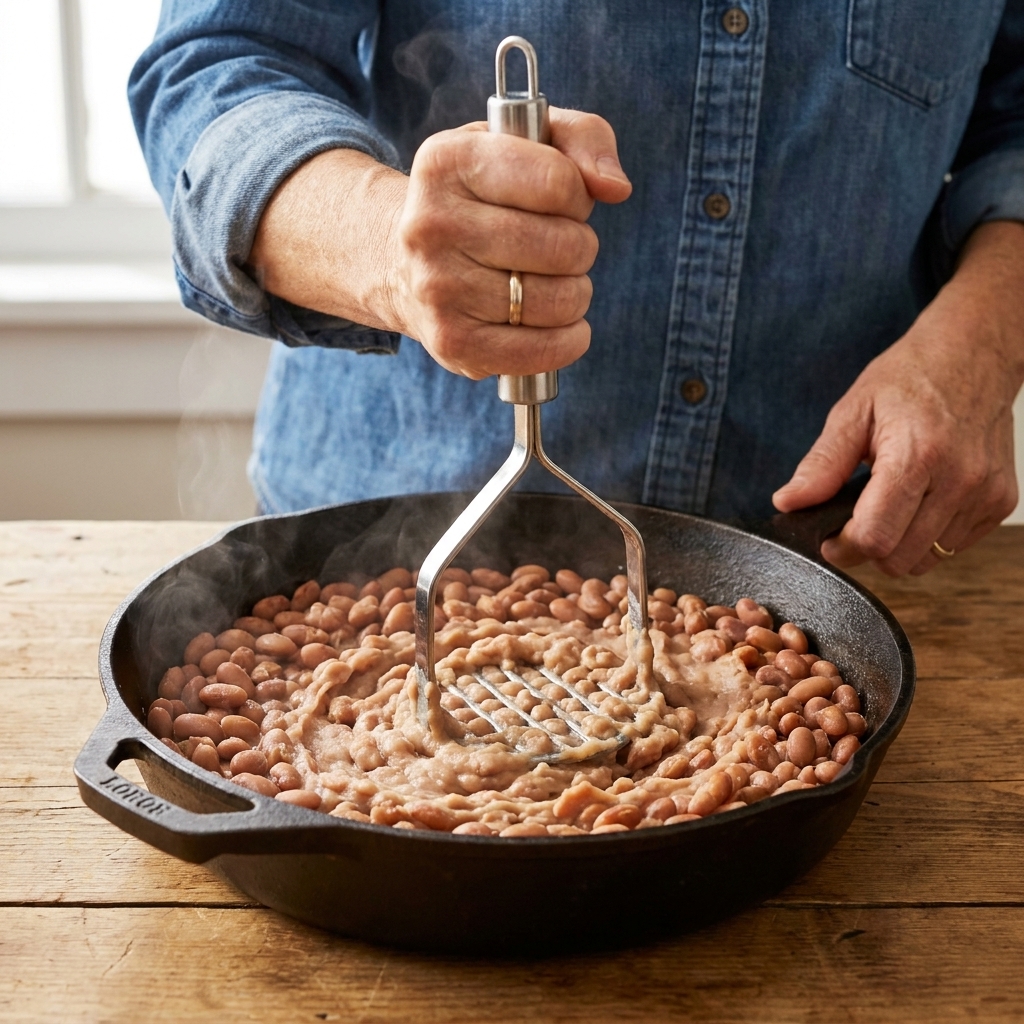
Texture is personal, but creaminess is technique. You want the beans hot, the fat hot, and the mashing to happen while everything is sizzling together.
Option 1: Potato masher (my everyday favorite)
This gives you control. Mash to your preferred texture, leaving some whole beans if you like. It is fast and low-mess.
Option 2: Spoon smash (rustic and traditional)
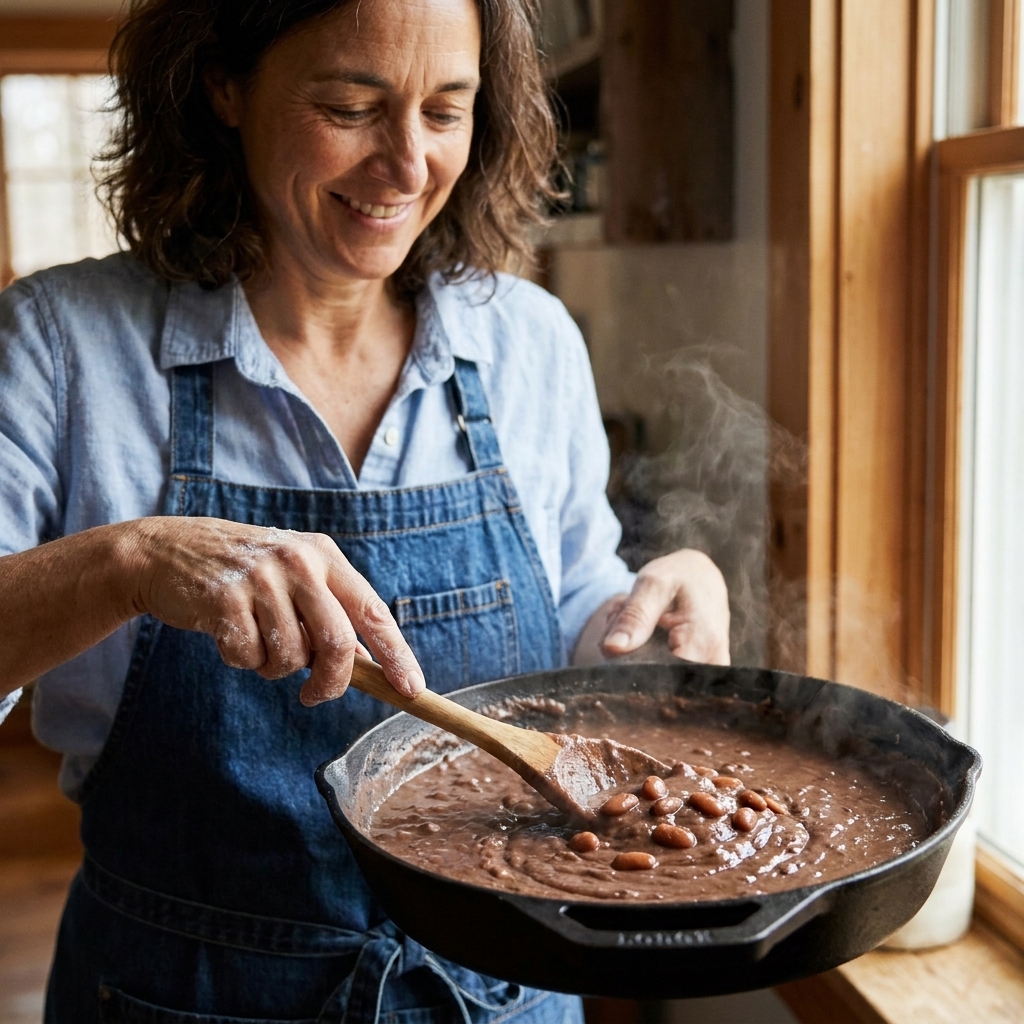
You can mash with a wooden spoon or spatula, pressing beans against the side of the pan. It is slower, but it creates a rustic texture that feels very homey.
Option 3: Blender (the smoothest result)
If you want perfectly smooth beans for party dips or tostadas, blend some of the beans with broth, then fry that puree in fat. Be careful: hot beans expand in a blender. Vent the lid and blend in batches.
My creaminess tip: always add warm bean broth a splash at a time while you mash. Warm liquid keeps the starches silky. Cold water can make beans tighten up and feel pasty.
My go-to recipe
This is the method I teach friends who swear they "cannot get beans right." Once you make them this way, you will feel the difference immediately.
Ingredients
- 3 cups cooked beans (pinto, peruano, or black), drained but reserve the broth (this is roughly what you get from about 1 cup dry beans, give or take)
- 2 to 4 tablespoons lard, bacon drippings, or oil
- 1/4 cup finely chopped white onion (optional but delicious)
- 1 to 2 garlic cloves, minced
- 1/2 to 1 teaspoon kosher salt, to taste
- 1/2 to 1 1/2 cups warm bean broth, as needed
Steps
- Heat the fat. In a wide skillet over medium heat, melt the lard or heat the oil. If using onion, cook 3 to 5 minutes until soft and sweet. Add garlic and cook 30 seconds.
- Add beans. Add the cooked beans. They should sizzle a little when they hit the pan. If they do not, let the pan heat another minute or nudge the heat up slightly.
- Mash. Mash with a potato masher directly in the skillet until you reach your preferred texture.
- Loosen and fry. Add warm bean broth a splash at a time, stirring and mashing, until creamy. Keep cooking 5 to 10 minutes, stirring often, until glossy and thick. Start at medium, then lower to medium-low if the beans begin to stick. They should mound softly on a spoon, not run like soup.
- Season. Taste and add salt. If you want more richness, add one more small spoon of fat and stir it in.
Yield: about 3 1/2 to 4 cups refried beans.
Common problems
My beans are gritty
- They were not cooked tender enough before refrying. Cook longer next time.
- Not enough liquid while mashing. Add warm bean broth gradually.
My beans taste flat
- Add salt, then add a little more fat. Fat carries flavor.
- Sauté onion and garlic in the fat first, then add beans.
- Add a spoonful of salsa, chile colorado, or a pinch of oregano.
My beans are too thick
- Thin with warm bean broth until creamy.
- Cover for 2 minutes to trap steam, then stir.
My beans are watery
- Keep frying and stirring until the moisture cooks off.
- Use a wider skillet to evaporate faster.
Flavor variations
Once you have the basic method, you can make them your own while still keeping the soul of the dish intact.
- Frijoles refritos con chile: sauté chopped serrano or jalapeño with the onion, or stir in a spoonful of salsa verde at the end.
- Smoky taquería-style: use bacon drippings and add a pinch of ground cumin.
- Ranchero: stir in a few spoonfuls of pico de gallo and cook 2 minutes more.
- Extra creamy: finish with a small knob of butter if you are not strictly traditional. It is not abuela-approved in every house, but it is delicious.
How to serve
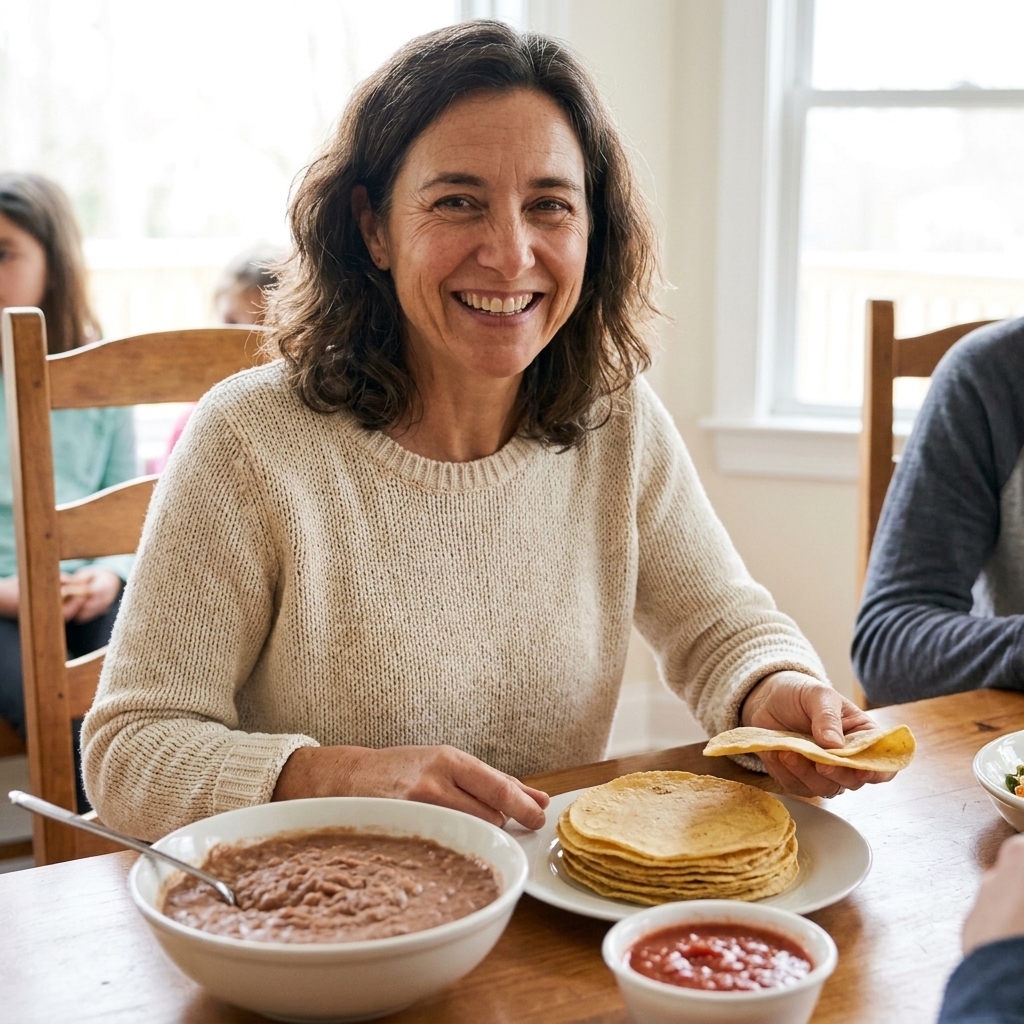
Refried beans are a side dish, a filling, a dip, and sometimes dinner. Here are my favorite ways to use them:
- Spread on tostadas with lettuce, crema, queso fresco, and salsa
- As the base layer in a bean and cheese burrito
- Alongside arroz rojo, carne asada, or pollo asado
- With chilaquiles for a weekend breakfast plate
- As a dip topped with crumbled cheese and chopped cilantro
Storage and reheating
Refrigerator
Store in an airtight container for 3 to 5 days. A thin layer of fat on top is a good sign. It helps protect flavor.
Freezer
Freeze for 2 to 3 months for best quality. Cool completely, then pack into freezer bags and press flat so they thaw quickly.
Reheating
Reheat in a skillet over medium-low heat. Add a splash of warm water or broth and stir until creamy again. If they taste a little muted after chilling, a pinch of salt and a tiny spoon of fat brings them back to life.
FAQ
Do I have to use lard?
No. Lard is traditional and very flavorful, but oil works well. If you want a similar richness without lard, use avocado oil and sauté onion and garlic for extra depth.
Why are restaurant refried beans so smooth?
They usually start with very well-cooked beans, plenty of hot fat, and either a very thorough mash or a partial blend. Also, they are not shy about salt.
Can I make refried beans without onion and garlic?
Yes. Many home cooks keep them simple: beans, fat, salt, broth. If you skip aromatics, use a little more salt and make sure your bean broth is tasty.
How do I keep refried beans from drying out?
Keep extra bean broth on hand and stir in a splash whenever they look tight. Beans thicken as they sit, so a little liquid is normal.
A final abuela tip
If you want refried beans that taste like they came from someone’s well-loved kitchen, do not rush the last 5 minutes. Let them fry gently over medium-low, stir often, and listen for that soft sizzle. When the beans look glossy and pull away from the pan in thick waves, you are there.