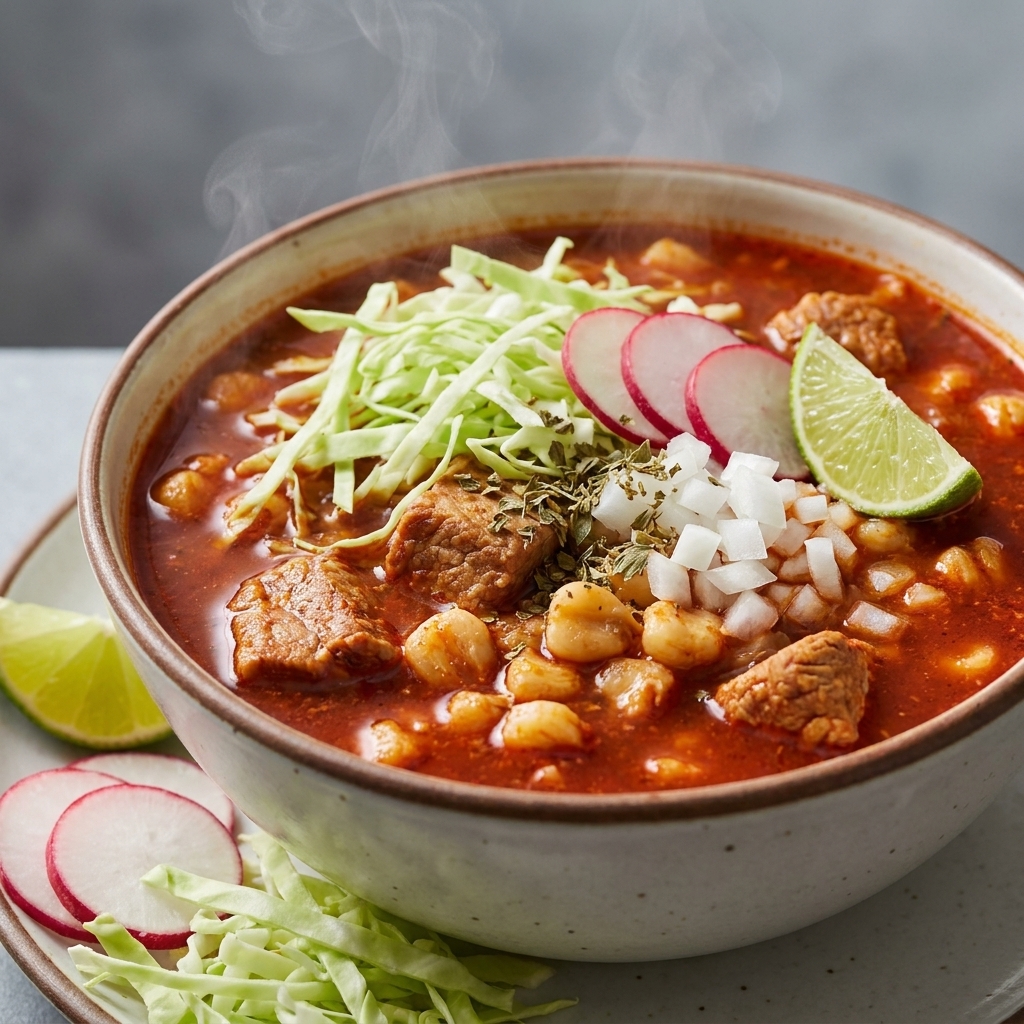
A cozy, from-scratch pozole rojo with real dried chiles, slow-simmered pork, and all the classic toppings. Step-by-step chile prep and timing tips included.
The Mexi Plate
Perfect Menudo Starts With Clean Tripe

Elena Valdés
Elena Valdés is a Mexican-American home cook and the culinary heart behind MexiPlate. Inspired by the bustling kitchens of her childhood in Jalisco and Texas, she specializes in translating authentic Mexican flavors into approachable recipes for everyday cooks. Whether she is sharing her grandmother's secret for the perfect tamale masa or a quick 30-minute weeknight enchilada bake, Elena believes that good food is the best way to bring people together.
Published October 17, 2026
Updated October 17, 2026
Menudo is one of those dishes that feels like a hug and a reset button at the same time. In my family, it showed up for big mornings, long nights, and any Sunday that needed a little extra comfort. And I will tell you the truth: the difference between “wow, this is the best menudo” and “why does this smell like a barn?” almost always comes down to how you clean and prep the tripe.
Once you nail the prep, everything else gets easier: the broth turns clean and deep, the chile flavor shines, and your kitchen smells like toasted guajillo, oregano, and hominy, not funky off-notes. Let’s do it together.
Quick note on scale: This workflow assumes about 3 to 4 pounds of tripe (enough for a family-size pot) and a 10 to 12-quart pot. If you are making a smaller batch, scale the salt, vinegar, and water accordingly.
What tripe to buy
In Mexico, we often say “menudo” and “pancita” like cousins. Some regions use a mix of stomachs, some keep it simple. In most US grocery stores and carnicerías, you will see these options:
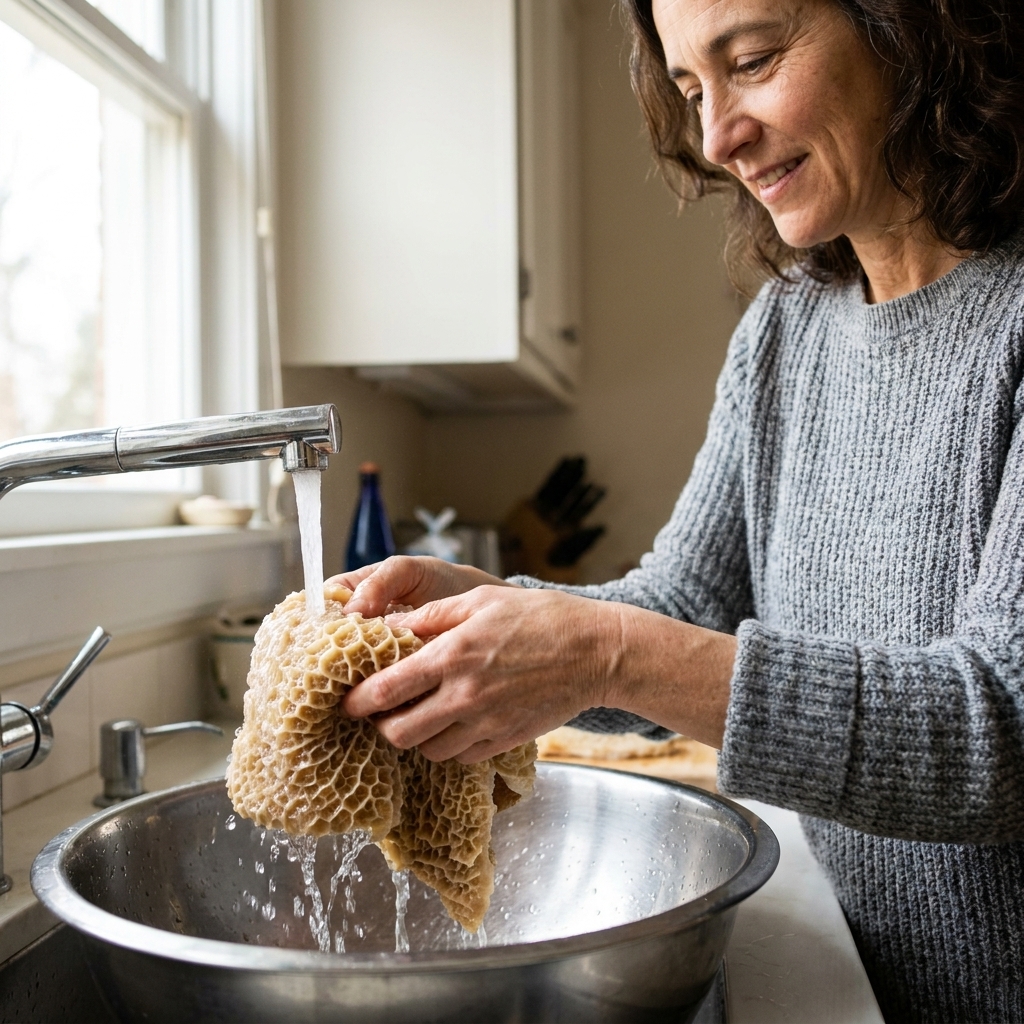
- Honeycomb tripe (panal): My favorite for texture. It stays pleasantly chewy and holds onto the red chile broth.
- Flat or smooth tripe: Often sold simply as “beef tripe,” but it can come from a different part of the stomach than honeycomb. Softer texture, still delicious, but it can feel a little less “bouncy.”
- Bleached vs. unbleached: Bleached looks very white and tends to have less initial odor, but some people find it tastes a bit flatter. Unbleached can have more “beefy” personality, but it needs more careful cleaning.
My suggestion: If you are new to menudo, start with honeycomb tripe from a carnicería you trust, or packaged honeycomb tripe labeled “beef tripe.” Ask if it is pre-cleaned. Even when it is, I still do a quick rinse and a short blanch.
Cleaning tripe, keeping texture
There are a million home methods for tripe cleaning. Some work, some overdo it. My goal is always the same: remove residue and strong odors while keeping that classic tender-chewy bite.
Step 1: Rinse well
Set the tripe in a big bowl or directly in a clean sink. Rinse under cool running water, rubbing the surface with your fingers. Pay attention to folds and pockets in honeycomb tripe. That is where bits can hide.
- Trim off any tough, thick edges or excess fat if needed.
- Cut into large, manageable sheets while cleaning. I like to cut final bite-size pieces later, after blanching, because it is easier to handle.
Step 2: Salt scrub for stubborn tripe
If the tripe smells strong even after rinsing, do a salt scrub.
- Sprinkle a generous handful of kosher salt over the tripe.
- Rub for 2 to 3 minutes, focusing on folds.
- Rinse very well until the water runs clear.
Salt acts like a gentle abrasive. It helps pull away surface residue without adding extra flavors.
Step 3: Short acid soak (optional)
For extra assurance, especially with unbleached tripe, soak it briefly.
- Fill a bowl with cool water.
- Add either 1/2 cup white vinegar or the juice of 2 to 3 limes.
- Soak 10 to 15 minutes, then rinse very well.
Tip from my abuela’s kitchen: Keep it brief. A short soak freshens the tripe. A long soak can soften it and leave an acid tang if you do not rinse thoroughly.
Step 4: Blanch for a cleaner-smelling pot
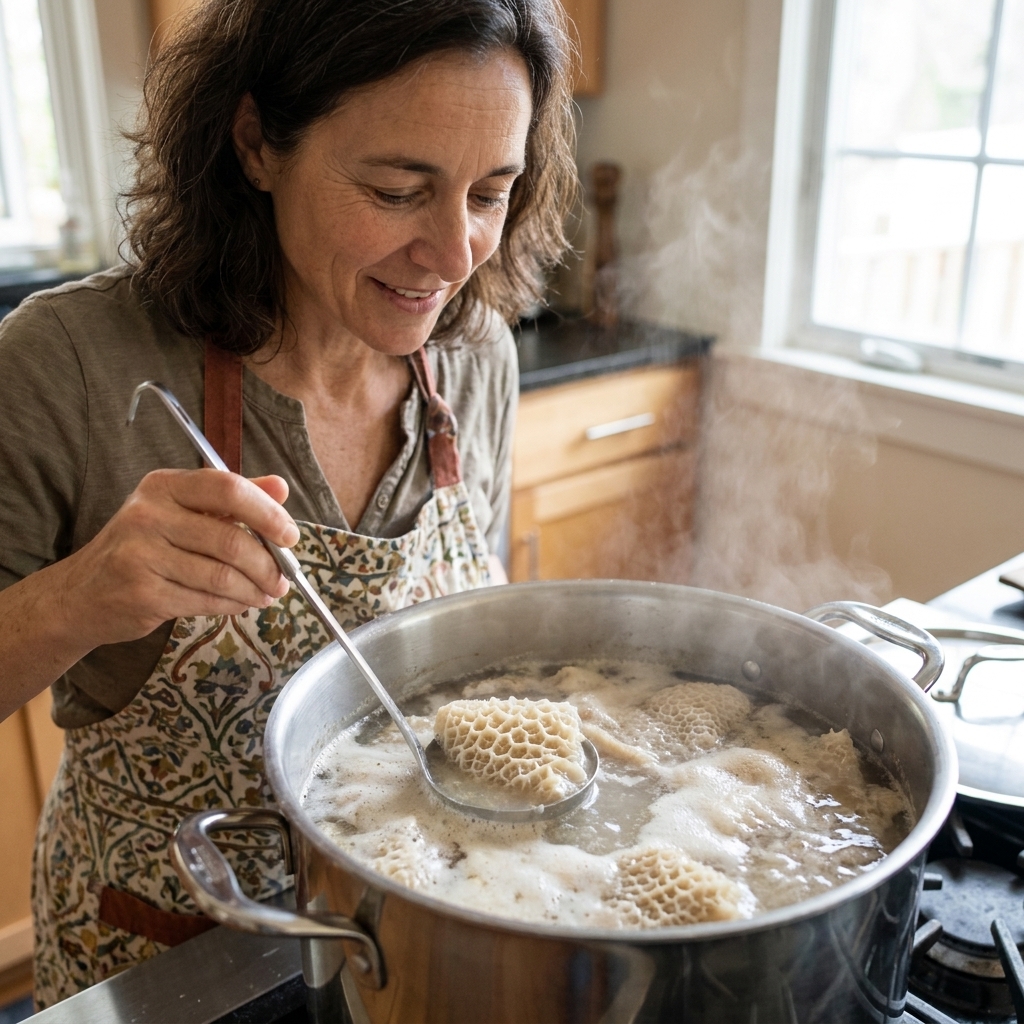
Blanching is my non-negotiable when I want menudo that smells clean and tastes pure. It will not erase every hint of tripe, but it makes a huge difference. It also helps remove foam and impurities before your “real” simmer begins.
- Place tripe in a large pot and cover with water by at least 2 inches.
- Add 1 tablespoon salt and 2 bay leaves (optional but nice).
- Bring to a strong boil for 10 to 15 minutes. If foam rises fast, skim once or twice.
- Drain and rinse the tripe and pot. Yes, rinse the pot too.
After blanching, the tripe should smell neutral to lightly beefy. If it still smells very strong, repeat a shorter 5 to 8 minute blanch once more.
Food safety, quickly
Tripe can be messy, and that is normal. While you prep, keep raw tripe and its juices away from ready-to-eat foods, and wash your hands often. When you are done, sanitize the sink, cutting board, and knife with hot soapy water (and a disinfecting spray if that is your routine). Clean prep makes for cleaner flavor, too.
For leftovers, cool menudo quickly. For a big pot, I like to portion it into shallow containers (or set the pot in an ice bath and stir) before refrigerating.
Cutting tripe
Once blanched, the tripe is easier to slice evenly.
- Classic bite: Cut into strips about 1/2 inch wide, then into 1-inch pieces.
- More tender feel: Slightly smaller pieces cook up softer and are easier for kids or first-timers.
- Even cooking: Try to keep pieces similar in size so the pot finishes together.
Building a clean broth
A clean broth is not only about tripe prep. It is also about how you layer flavors from the very beginning.
Start with aromatics
For the main simmer, I keep it simple and traditional:
- Onion (one half or one whole, depending on pot size)
- Garlic (4 to 6 cloves)
- Bay leaves
- Mexican oregano (crushed between your palms)
Some families add a carrot or celery for a rounder base. That is optional, but it can be helpful if you are making a big pot and want extra depth.
Simmer until tender, then add hominy
Tripe takes time. Rushing it makes it rubbery.
- Cover the blanched tripe with fresh water by about 1 to 2 inches.
- Bring it up to a gentle simmer, then keep it there. I like the pot partially covered so it stays steady without reducing too aggressively.
- Simmer until tender, usually 2.5 to 4 hours, sometimes longer depending on the cut and how it was processed. You are looking for pieces that are tender but still pleasantly chewy, not tough.
- Add hominy when the tripe is close to tender. For me that is usually the last 30 to 60 minutes, mostly as a texture preference.
Hominy note
Most home cooks in the US use canned hominy, and that is what the timing above is written for. If you are using dried hominy, plan for a much longer tenderizing step. Some cooks soak and cook it separately, and some cook it in the same pot. Either way, do not expect it to soften on the same quick timeline as canned.
The red chile sauce that tastes deep, not bitter
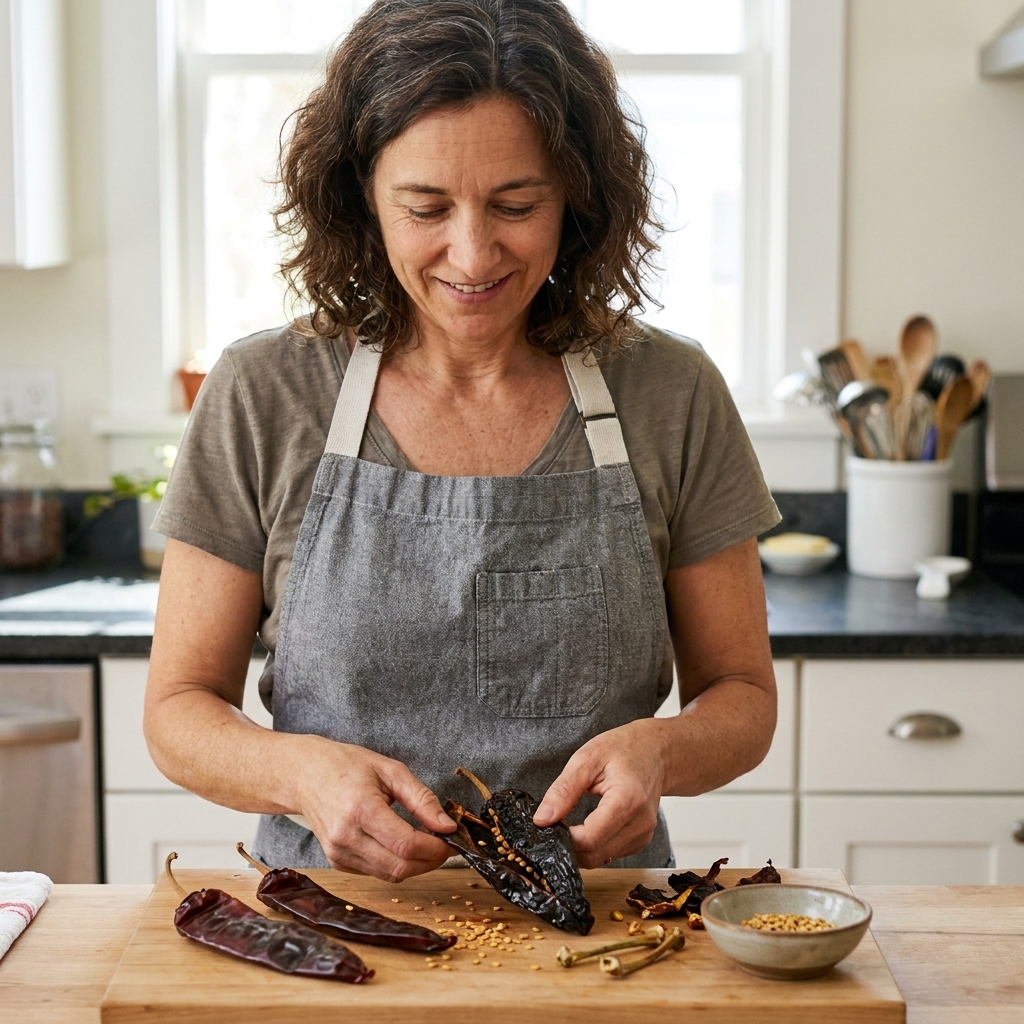
That classic rojo color comes from dried chiles. My go-to blend for an approachable, crowd-pleasing menudo is:
- Guajillo for body and a mild, warm chile flavor
- Ancho for sweetness and a darker, raisin-like depth
- Optional: A small piece of pasilla for extra richness
How to keep it smooth and bold:
- Remove stems and seeds.
- Toast lightly on a dry skillet for a few seconds per side, just until fragrant. Do not burn.
- Soak in hot water 15 to 20 minutes.
- Blend with garlic, a little onion, and some soaking liquid.
- Strain into the pot for a silky broth.
Important: If your chile sauce tastes bitter, the chiles were likely toasted too long. Also, do not feel like you have to use all the soaking liquid. If it tastes strong or a little tannic, blend with fresh hot water or broth instead.
Odor control
Let’s talk honestly. Tripe has a natural aroma. The goal is not to erase it completely. The goal is to remove “off” smells so the stew smells like chiles and spices.
Works well
- Blanching: The biggest difference-maker for a cleaner-smelling broth.
- Salt scrub: Great for surface residue.
- Short vinegar or lime soak: Helpful in small doses.
- Gentle simmer, not a rolling boil: Keeps broth clearer and cleaner tasting.
I usually skip
- Long vinegar soaks: Can soften texture and leave a sharp smell if not rinsed thoroughly.
- Perfume-y tricks like too many spices early on: Better to clean properly than to mask problems.
Common mistakes
- Skipping the blanch: This is where I notice the biggest drop in odor and scum before the real simmer.
- Boiling too hard for hours: It can make broth cloudy and push odors into the air. Keep it at a steady simmer.
- Burning the chiles: A bitter chile sauce can be mistaken for “off” flavors.
- Not salting in layers: Under-seasoned menudo tastes flat, and flat menudo makes tripe taste stronger.
My workflow
If you like a clear roadmap, here is the sequence I use on menudo days:
- Rinse tripe thoroughly.
- Salt scrub, rinse.
- Optional 10 to 15 minute lime or vinegar soak, rinse.
- Blanch 10 to 15 minutes, drain, rinse tripe and pot.
- Simmer tripe with onion, garlic, bay, oregano. Cover with water by 1 to 2 inches and keep the pot partially covered.
- Salt checkpoint: Add a light pinch of salt early in the simmer, then adjust again after the chile sauce goes in, and once more after the hominy has warmed through. Taste as you go.
- Blend and strain chile sauce, add to pot.
- Add hominy when the tripe is close to tender.
- Taste and salt, then rest 15 minutes before serving.
Serving
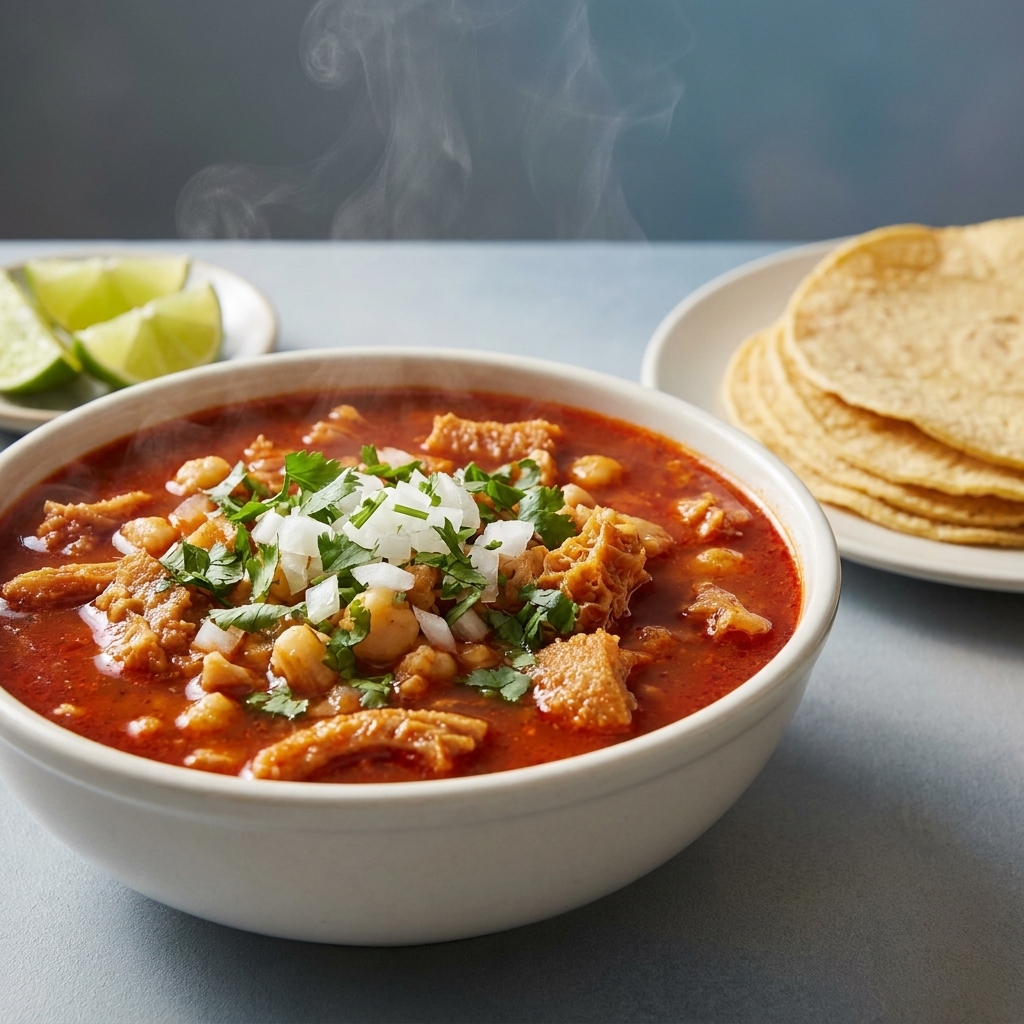
Menudo is a “build your own bowl” moment. Set out toppings and let everyone make it theirs.
- Diced white onion
- Chopped cilantro
- Lime wedges
- Dried oregano (crushed in your hand right over the bowl)
- Crushed chile flakes or salsa macha for heat
- Warm corn tortillas or bolillos
FAQ
Do I have to use vinegar to clean tripe?
No. If your tripe is well-cleaned and you blanch it, you can skip vinegar. I use a short vinegar or lime soak only when the tripe has a stronger smell than usual.
Why is my menudo broth cloudy?
Cloudiness usually comes from boiling too hard, skipping the blanch, or not skimming foam early. Keep the pot at a gentle simmer and blanch first.
How do I make tripe tender, not rubbery?
Low and slow. A steady simmer is your friend. If it is still chewy in a tough way after a few hours, it simply needs more time.
Can I make menudo in a pressure cooker?
Yes. Pressure cooking can tenderize tripe beautifully. You can still blanch first, then pressure cook with aromatics until tender, and add the chile sauce and hominy after (or do a short simmer after pressure release to let flavors blend).
What if I cannot find Mexican oregano?
Use marjoram, or use a smaller amount of Mediterranean oregano. Some people like a mix of the two. Mexican oregano has a citrusy, slightly floral vibe, so go lighter if you substitute.
How do I store and reheat menudo?
Menudo is even better the next day. Cool it quickly, refrigerate up to 4 days, and reheat at a gentle simmer. If it thickens, add a splash of water or broth and re-salt to taste.
One last tip
If you are making menudo for the first time, plan it for a weekend morning when you can let it simmer without rushing. Put on music, set out your garnishes, and taste as you go. When the tripe is properly cleaned and the broth is built patiently, menudo stops being intimidating and becomes exactly what it is meant to be: a big, generous pot of comfort you can share.