A cozy, in-depth guide to Mexico’s three common pozoles: what goes in each pot, how they taste, where they come from, and how to top them like a pro.
The Mexi Plate
Pozole Rojo (Pork and Hominy)

Elena Valdés
Elena Valdés is a Mexican-American home cook and the culinary heart behind MexiPlate. Inspired by the bustling kitchens of her childhood in Jalisco and Texas, she specializes in translating authentic Mexican flavors into approachable recipes for everyday cooks. Whether she is sharing her grandmother's secret for the perfect tamale masa or a quick 30-minute weeknight enchilada bake, Elena believes that good food is the best way to bring people together.
Published October 17, 2026
Updated October 17, 2026
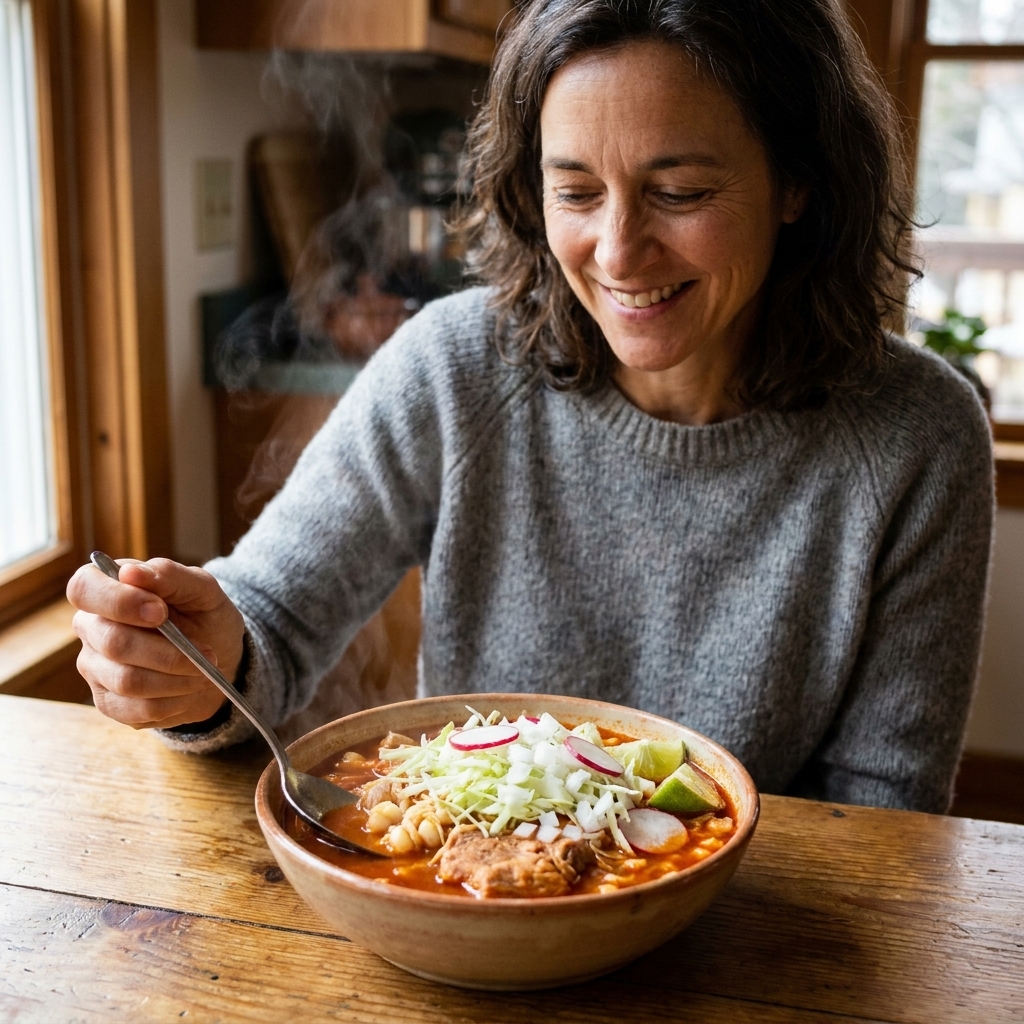
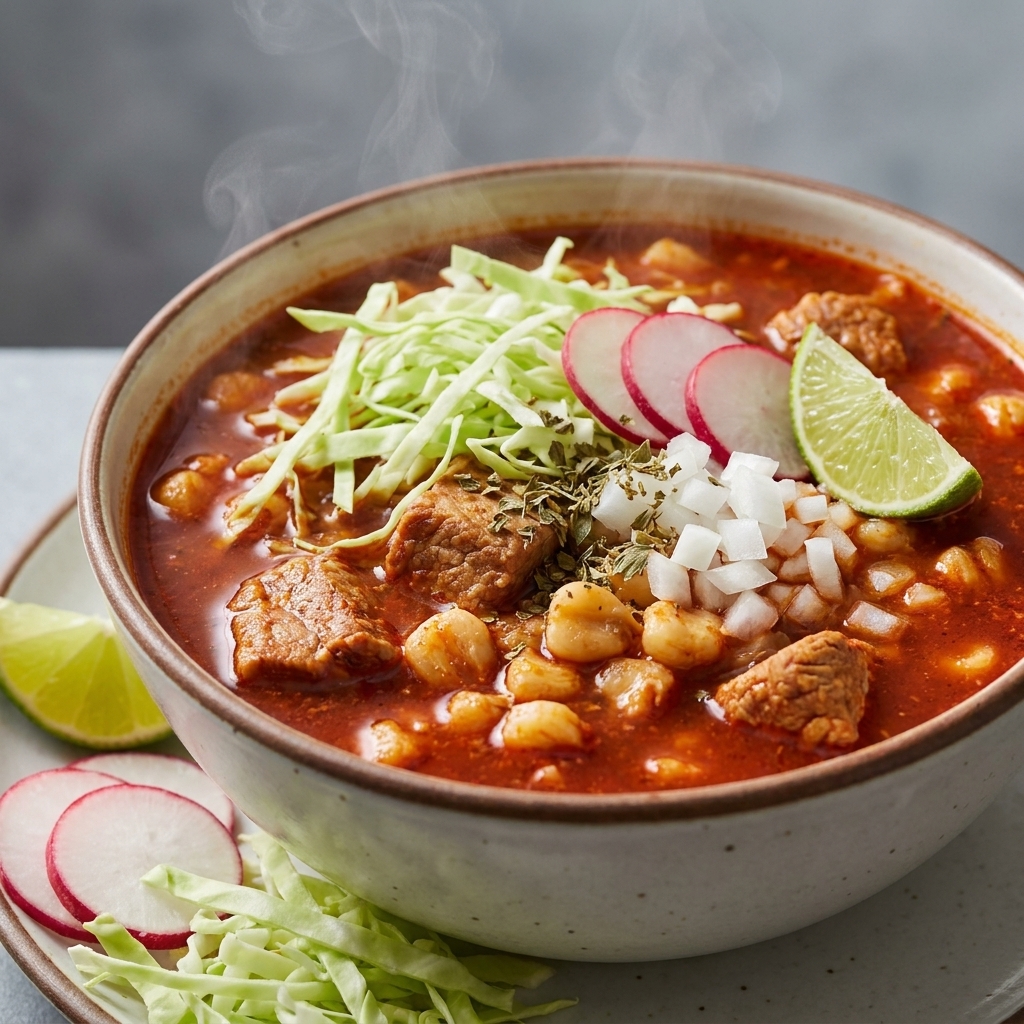
Pozole rojo is one of those dishes that feels like a celebration even on an ordinary Tuesday. It is a big pot of comfort: tender pork, chewy hominy, and a brick-red broth that tastes like dried chiles, garlic, and time. This is the version I grew up eating between Jalisco and San Antonio, the one that perfumes the whole house and practically begs for a mountain of shredded cabbage and a squeeze of lime.
Today I am going to walk you through my family-style pozole rojo from scratch, including how to prep the dried chiles so your broth comes out smooth, not bitter.
Servings: about 8 to 10
Makes: roughly 4 quarts, depending on how brothy you like it
What makes it classic
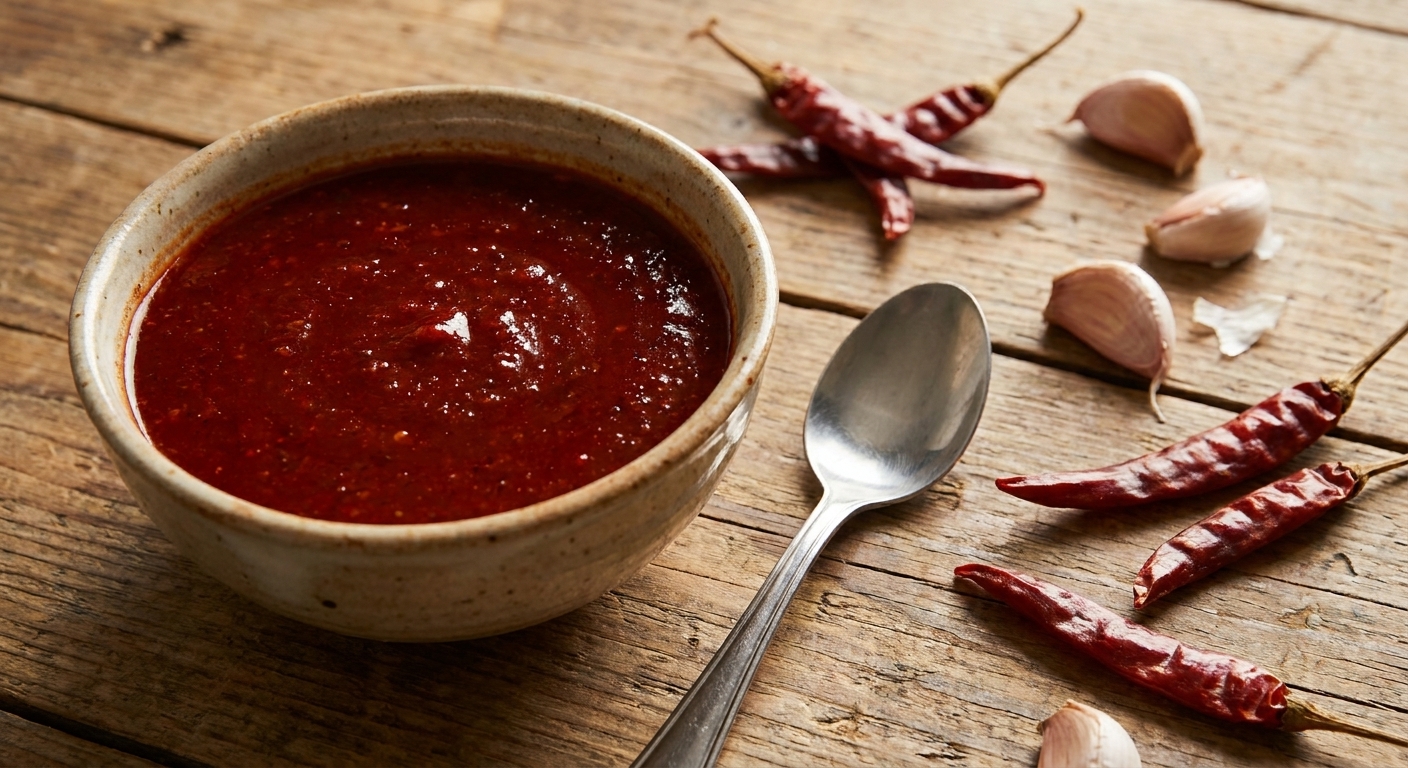
Classic pozole rojo gets its flavor and color from dried chiles, not chili powder. The broth is built in layers: pork simmered until it gives up a rich stock, then a blended chile sauce is stirred in and gently cooked so it tastes round and deep, not raw.
- Hominy (maíz pozolero): chewy, plump kernels that make pozole, pozole.
- Pork: usually shoulder or butt, plus a little bone for extra body if you have it.
- Dried chiles: often guajillo for body and color, and ancho for depth. Árbol is optional for heat.
- Classic garnishes: cabbage or lettuce, radishes, onion, oregano, lime, and tostadas.
Ingredients
For the pork and broth
- 3 to 3 1/2 lb pork shoulder (pork butt), cut into large 2-inch chunks
- 1 meaty pork bone (optional but wonderful), such as neck bone or a piece with a bit of rib
- Half a medium white onion
- 6 cloves garlic, peeled
- 2 bay leaves
- 2 1/2 tsp kosher salt, plus more to taste
- 10 to 12 cups water (start with 10, add as needed)
For the red chile sauce
- 6 guajillo chiles, stemmed and seeded
- 2 ancho chiles, stemmed and seeded
- 1 to 3 chiles de árbol (optional, for heat)
- 1/2 tsp Mexican oregano, plus more for serving
- 1/2 tsp ground cumin
- 1/4 tsp ground cloves (optional but traditional in many family pots)
- 1 tsp salt
- 2 cups hot chile-soaking liquid or broth, plus more as needed for blending
To finish
- 2 (25 oz) cans hominy, drained and rinsed (or about 6 cups cooked hominy)
- 1 to 2 tbsp neutral oil (avocado, canola, or vegetable)
Classic toppings
- Finely shredded green cabbage (or romaine lettuce)
- Sliced radishes
- Finely diced white onion
- Lime wedges
- Mexican oregano (crushed between your palms)
- Tostadas or tortilla chips
- Salsa macha or a simple chile de árbol salsa (optional)
Ingredient note: If you can find dried maíz pozolero and want the full from-scratch experience, you absolutely can use it. It needs an overnight soak and a long simmer until the kernels bloom and “flower.” Canned hominy is also very common and widely used in home kitchens, especially for weeknights or when you are cooking for a crowd.
Step-by-step
1) Simmer the pork
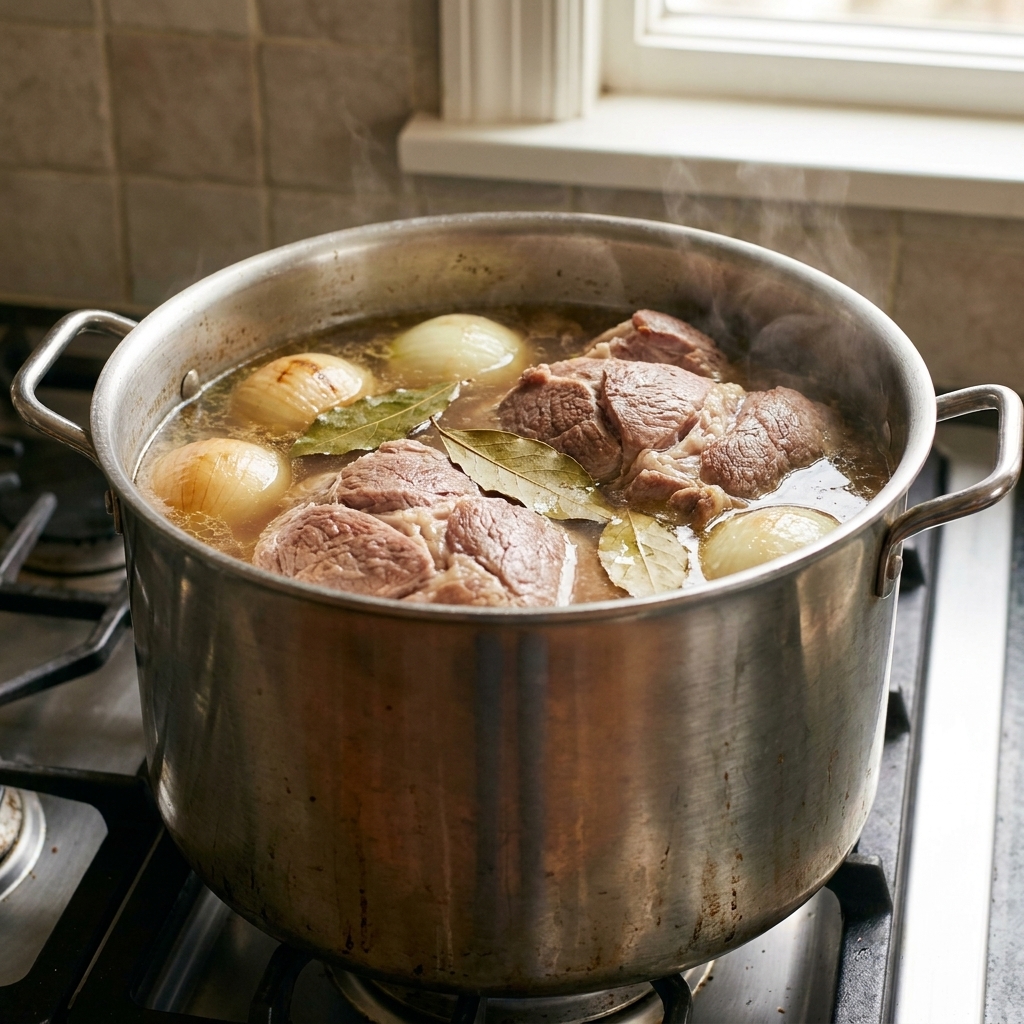
In a large pot (at least 8 quarts), add the pork, optional bone, onion, garlic, bay leaves, salt, and 10 cups water. Bring to a boil, then reduce to a bare simmer, where you see just a few gentle bubbles breaking the surface.
Skim off any gray foam that rises in the first 15 minutes. This keeps your broth clean and clear.
Simmer partially covered for 1 1/2 to 2 hours, or until the pork is very tender and easily shreds with a fork.
2) Prep the dried chiles
While the pork simmers, wipe the dried chiles with a damp paper towel to remove any dust. Remove stems and shake out the seeds. (A few seeds are fine, but a lot can make the sauce harsher.)
Heat a dry skillet over medium heat. Toast the chiles 10 to 20 seconds per side, just until fragrant and slightly pliable. Do not let them smoke or blacken. That is where bitterness sneaks in.
Place toasted chiles in a bowl and cover with very hot water. Let them soak 15 to 20 minutes until soft.

3) Blend a smooth sauce
Transfer softened chiles to a blender. Add oregano, cumin, optional cloves, salt, and 2 cups of the soaking liquid (or broth). Blend until very smooth, about 1 full minute.
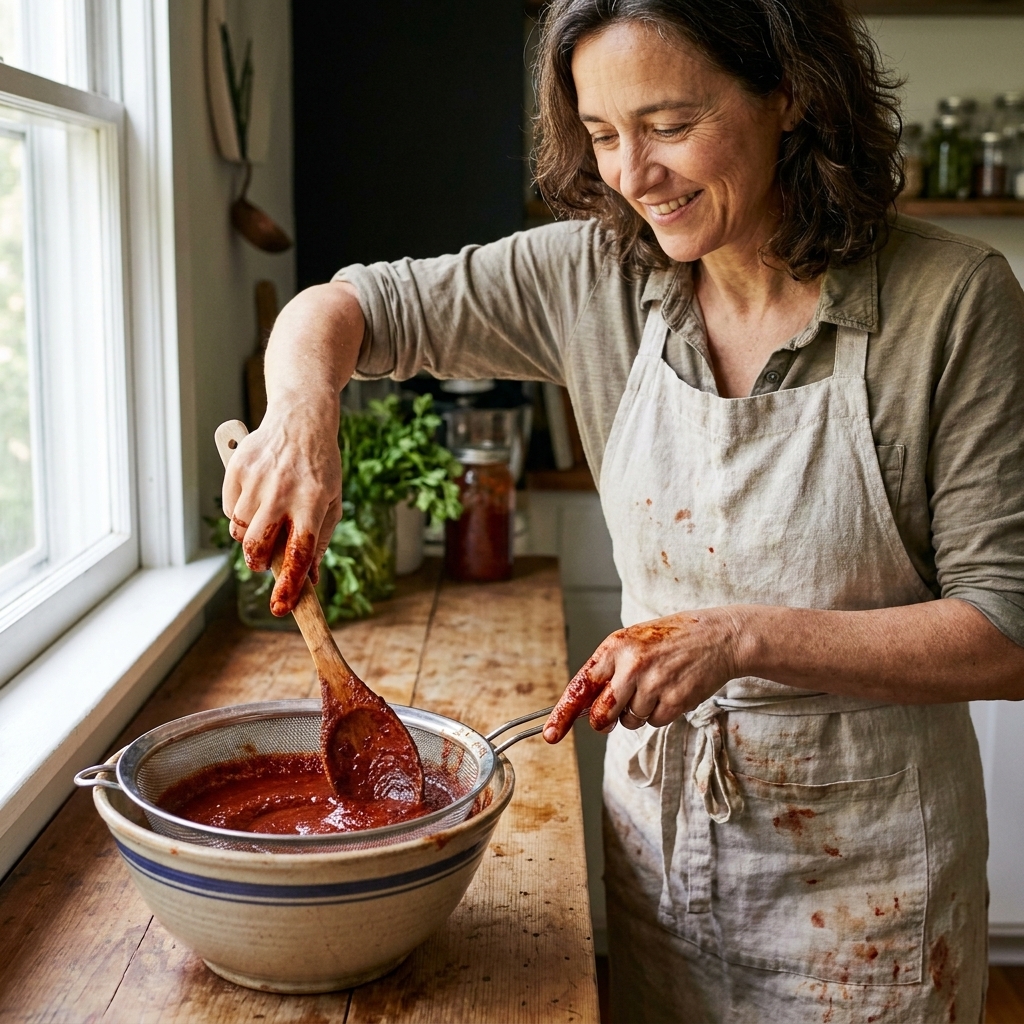
Do not skip this: Strain the sauce through a fine-mesh sieve into a bowl, pressing with a spoon. This removes tough skins and gives you that silky, restaurant-style broth.
4) Fry the sauce
You have two options here:
- One-pot method (fewer dishes): Transfer the cooked pork and broth to a large bowl. Give the pot a quick rinse and wipe it dry, then use it to fry the sauce.
- Two-pot method (my usual when cooking a big batch): Fry the sauce in a second large pot or Dutch oven while the pork finishes.
Heat 1 to 2 tablespoons oil over medium heat. Carefully pour in the strained chile sauce. It may sputter a bit, so pour slowly.
Cook, stirring often, for 5 to 7 minutes. You will notice the sauce darken slightly and smell sweeter and more rounded. That is the flavor blooming.
5) Combine, add hominy, and simmer
Remove and discard the bay leaves, onion, and garlic from the pork broth.
Stir the pork and broth into the pot with the fried chile sauce. Add the drained and rinsed hominy.
Bring everything back to a gentle simmer and cook 30 to 45 minutes so the flavors marry and the hominy soaks up that red broth.
If the pozole gets too thick, add a splash of water or broth. Taste and adjust salt.
Tip from my abuela: The pozole is ready when the broth tastes like one thing, not like broth plus sauce. Give it that extra 10 minutes if you are unsure.
Optional but worth it: If your pot looks a little oily on top, skim off a few spoonfuls of fat. Or chill the pozole overnight and lift the solidified fat off the top before reheating.
How to serve
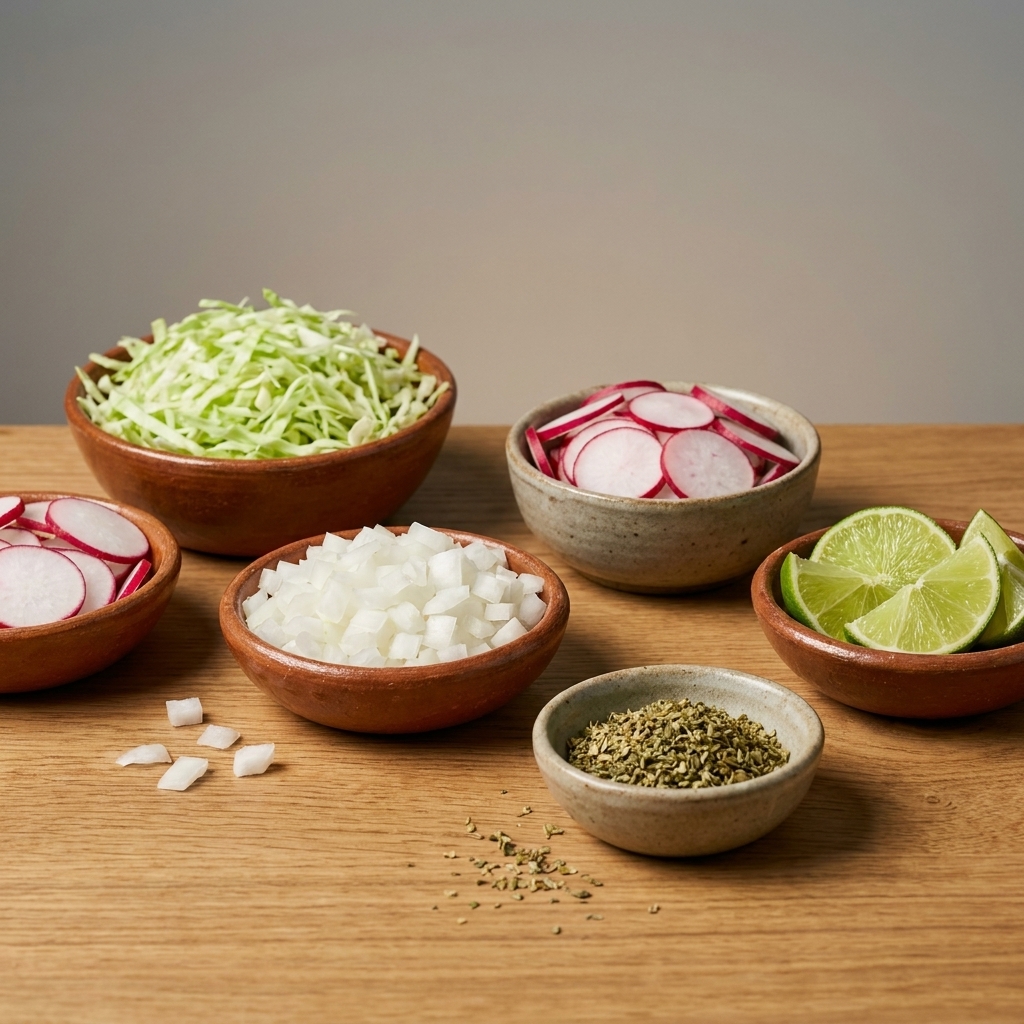
Pozole is meant to be topped at the table. I like to set everything out family-style so everyone builds their perfect bowl.
- Cabbage: finely shredded, lots of it for crunch
- Radishes: thin slices for peppery bite
- Onion: a small handful adds snap
- Mexican oregano: crush between your palms right over the bowl
- Lime: squeeze generously to brighten the whole pot
- Tostadas: for scooping pork and sipping broth in between
Timing and make-ahead
Total time
Plan for about 2 1/2 to 3 1/2 hours total, mostly hands-off simmering.
- Pork simmer: 1 1/2 to 2 hours
- Chile prep and blending: 30 minutes
- Final simmer with hominy: 30 to 45 minutes
Make ahead
Pozole rojo is even tastier the next day. The chiles mellow and the broth thickens slightly in the best way.
- Make the whole pot 1 day ahead and reheat gently.
- Prep toppings ahead and keep them chilled, covered, and crisp.
Storage and freezing
- Fridge: 4 to 5 days in an airtight container.
- Freezer: up to 3 months. Freeze the stew without toppings, and thaw overnight in the fridge.
Ingredient swaps
- No pork shoulder? Use pork country-style ribs or pork loin plus a bone-in piece for richness. Loin alone can be a bit lean, so watch the simmer time so it stays tender.
- Cannot find ancho? Use pasilla (chile negro) for a similar deep, raisiny flavor.
- Want it spicier? Add more chile de árbol, or serve with a spicy salsa on the side so everyone controls the heat.
- Want chicken pozole rojo? Use bone-in thighs and drumsticks. Simmer until tender, shred, and proceed the same way. The cook time is shorter, usually 45 to 60 minutes.
Troubleshooting
My broth tastes bitter
This usually comes from chiles that were toasted too long or burned. For this batch, add a little more hominy and a squeeze of lime to each bowl to soften the edge. Next time, toast quickly and stop the moment you smell that warm chile aroma.
My pozole is not red enough
Guajillo brings the bright red color. If your guajillos are old, they can look brownish. Use fresher chiles, and do not skip frying the sauce. That step deepens the color.
My sauce is gritty
Strain it. This is the secret to a smooth bowl. Even a powerful blender leaves tiny flecks of chile skin.
The pork is tough
It just needs more time at a gentle simmer. Tough pork is usually undercooked, not overcooked. Keep simmering until it relaxes and shreds easily.
My go-to bowl
If you are wondering how I top mine: a big handful of cabbage, 4 or 5 radish slices, onion, oregano, and a very serious squeeze of lime. Then I grab a tostada, take one crunchy bite, and follow it with a spoonful of broth. That contrast is the whole magic.
When you make this pozole rojo, take your time with the chiles. Once you learn that part, you can make a pot of pozole that tastes like it came from your favorite Mexican fonda, right in your own kitchen.
FAQ
Do I have to use hominy?
If you want pozole, yes. Hominy is what separates pozole from other Mexican stews. If you cannot find it, you can make the same red chile pork stew and serve it with rice, but it will not be pozole.
Is pozole rojo spicy?
Not necessarily. Guajillo and ancho are usually more flavorful than fiery, but heat can vary by batch and by palate. Heat mostly comes from chile de árbol or spicy toppings. Start mild, then let everyone add heat at the table.
Can I make it in a pressure cooker?
Yes. Cook the pork with onion, garlic, bay, salt, and water on High pressure for about 35 to 45 minutes (depending on your cooker and the size of your pieces). Let the pressure release naturally for 10 to 15 minutes, then quick release the rest. Fry the chile sauce on sauté in the pot (or in a separate pan), then stir in the pork cooking liquid and hominy and simmer 15 to 20 minutes on sauté to bring it all together.