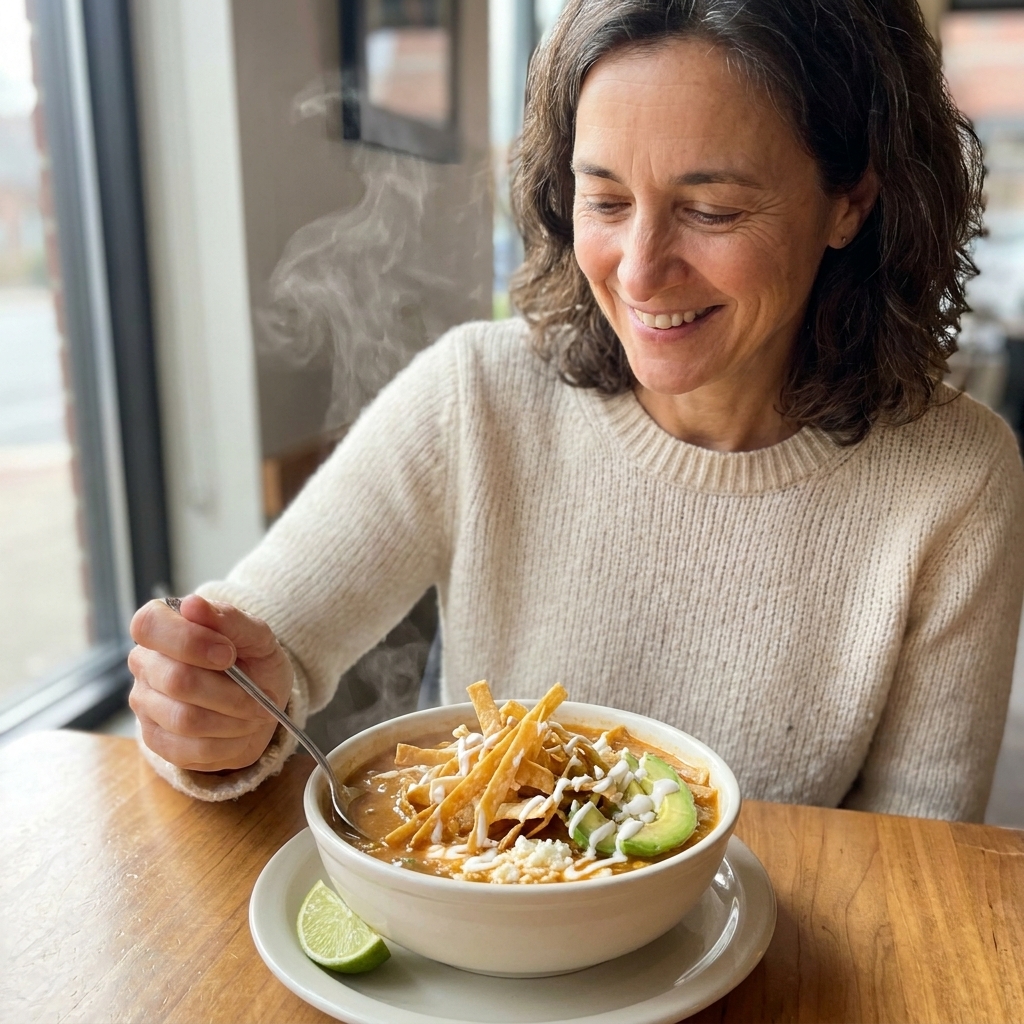
A weeknight-friendly sopa de tortilla with a rich tomato chile broth and crunchy tortilla strips. Simple ingredients, big flavor, plus toppings and shortcuts...
The Mexi Plate
Sopa de Albóndigas

Elena Valdés
Elena Valdés is a Mexican-American home cook and the culinary heart behind MexiPlate. Inspired by the bustling kitchens of her childhood in Jalisco and Texas, she specializes in translating authentic Mexican flavors into approachable recipes for everyday cooks. Whether she is sharing her grandmother's secret for the perfect tamale masa or a quick 30-minute weeknight enchilada bake, Elena believes that good food is the best way to bring people together.
Published October 17, 2026
Updated October 17, 2026
Sopa de albóndigas is one of those bowls that feels like someone is taking care of you. In my family, it showed up on cool San Antonio nights, or when someone needed “something light” that still tasted like home. The broth is tomato-forward but not heavy, the vegetables make it feel like a full meal, and the mint is the little whisper at the end that makes you go back for another spoonful.
This is my most dependable method for tender, rice-stuffed Mexican meatballs simmered in a light tomato and mint broth. I will walk you through the ingredients, the why behind key steps, and the small moves that keep your albóndigas from turning dense or falling apart.
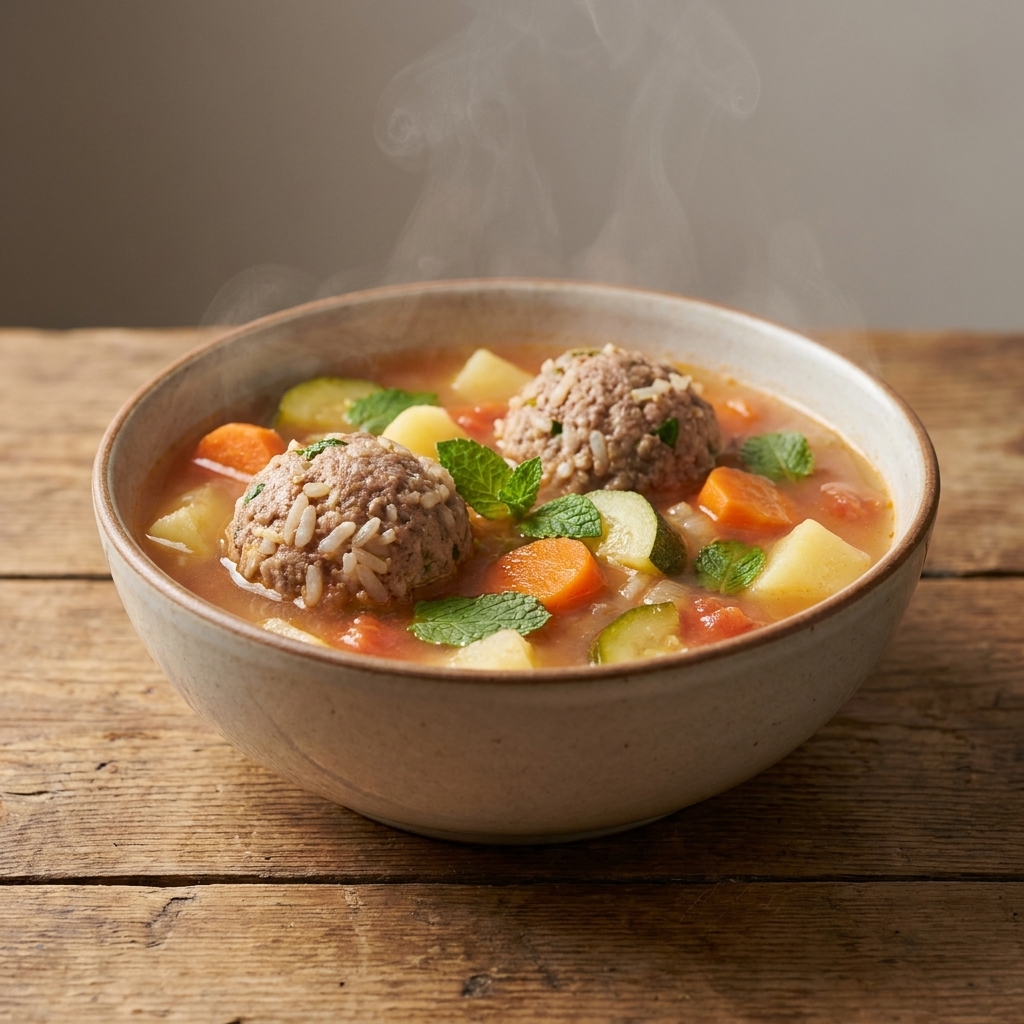
What makes it special
Every region and every family has their own version, but most classic Mexican sopa de albóndigas has a few signatures:
- Meatballs bound with rice (often raw rice), which cooks as the soup simmers and helps keep the albóndigas tender without feeling bready.
- A simple tomato broth built from blended tomato, onion, and garlic, then diluted into a light caldo.
- Vegetables that cook right in the pot, so the soup becomes dinner with almost no extra sides.
- Fresh mint, added at the end or simmered briefly, for that unmistakable “albondigas” aroma.
If you grew up with albóndigas, you probably recognize that mint moment instantly. If you did not, trust me. It is not “minty” like dessert. It is herbal and savory, like a bright green finish that wakes up the tomatoes.
Ingredients (and why)
For the albóndigas
- Ground beef: I like 85 to 90 percent lean. Too lean can get dry; too fatty can make the broth greasy.
- White rice: Traditionally raw, long-grain. It cooks inside the meatball as the soup simmers.
- Egg: Helps bind without packing the meat too tight.
- Onion and garlic: Finely grated or minced very small so the meatballs hold together.
- Fresh herbs: Mint is classic; many families also add cilantro. A little chopped mint in the meatballs is optional but lovely.
- Salt: Season the meat mixture generously. Albóndigas taste bland if the seasoning is timid.
- Optional: ground cumin and black pepper: Not required, but I often add a pinch of cumin for warmth.
- Optional: fine breadcrumbs: Not traditional in every home, but 1 to 2 tablespoons can help if your mixture feels loose (especially with very lean meat).
For the broth and vegetables
- Roma tomatoes or canned tomato sauce: Fresh is bright; canned is weeknight-easy.
- Onion and garlic: The base of so many caldos in my kitchen.
- Chicken broth (or water plus bouillon): Use what you have. Homemade broth is amazing here.
- Carrots, potatoes, zucchini: My go-to trio. Chayote is also traditional and delicious.
- Mint sprigs: Stir in at the end, or simmer briefly for a more infused broth.
- Optional: serrano: One small pepper simmered whole adds gentle heat without turning the soup into “spicy soup.”
Ingredient swap corner (because real life happens):
- No fresh mint? Use a small amount of dried mint (start with 1/2 teaspoon) or do cilantro only. It will still be good, just different.
- No zucchini? Use yellow squash or chayote.
- No fresh tomatoes? Use 15 oz tomato sauce plus 1 cup water to blend with onion and garlic.
Step-by-step
We are going to build the broth first, then form the meatballs while it comes to a simmer. That way you are not rushing, and the meatballs go into hot liquid (which helps them set on the outside).
1) Blend the tomato base
In a blender, combine raw tomatoes (or tomato sauce), a chunk of onion, and garlic with a splash of broth or water. Blend until smooth.
Pour into a large pot and cook it for a few minutes until it deepens in color and smells less raw. This quick sauté step makes the soup taste like it simmered longer than it did.
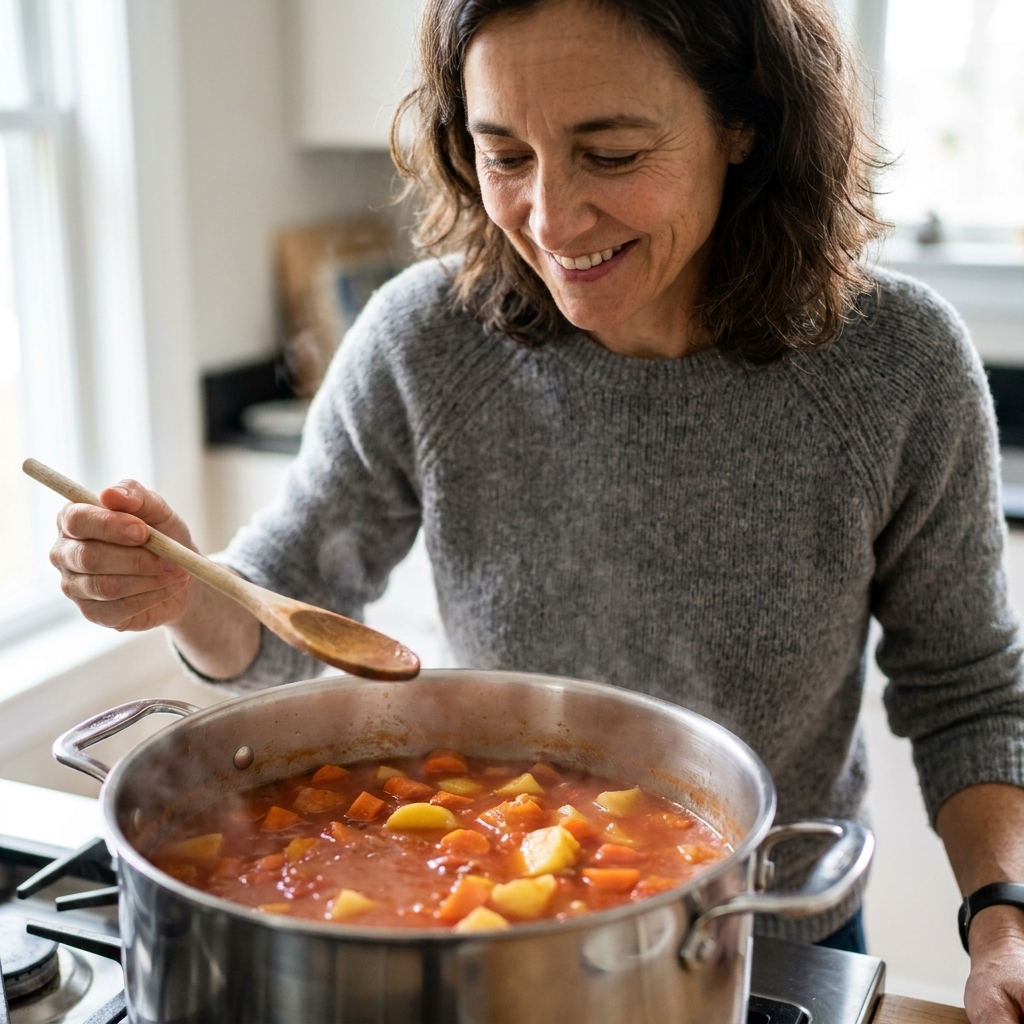
2) Add broth and longer-cooking vegetables
Add chicken broth and bring to a gentle simmer. Add carrots and potatoes first since they take longer. If you are using a whole serrano, add it now.
Keep the pot partially covered so it stays at an easy simmer without reducing too fast. If it starts to evaporate more than you want, cover it a bit more. If it looks too thin, leave it a touch more open.
3) Mix the meat gently
In a bowl, combine ground beef, rinsed raw rice, egg, onion, garlic, salt, and any herbs and spices you are using.
My biggest tip: Mix with your hands just until everything is combined. Overmixing is the fastest way to tough meatballs.
4) Shape and add meatballs
With damp hands, roll meatballs about the size of a golf ball. You should end up with roughly 16 to 20 meatballs, depending on how big you roll them.
Drop them into the simmering soup one by one. Keep the broth at a gentle simmer, not a rolling boil.
Once all the albóndigas are in, resist stirring for the first 8 to 10 minutes. Let them firm up so they do not break.
5) Add zucchini later
Zucchini cooks fast. Add it during the last 10 to 12 minutes so it stays tender, not mushy.
6) Finish with mint
When the rice is tender and the meatballs are cooked through, add mint. Mint varies in strength, so start a little lighter if you are unsure and add more to taste.
For a brighter finish, stir in chopped mint and turn off the heat. For a more infused broth, simmer mint sprigs for 2 to 3 minutes, then remove the stems if you want.
How long should it simmer? Usually 25 to 35 minutes after the meatballs go in, depending on their size and your potato chunks. For ground beef, a sure doneness check is 160°F / 71°C in the center of a meatball.
Tips for tender albóndigas
- Rinse the rice: This can help remove surface starch so the meatballs stay tender and not gummy.
- Do not pack the meat: Loose, gentle shaping makes a huge difference.
- Keep the simmer gentle: Boiling can break meatballs and make the broth cloudy.
- Wait to stir: Give the meatballs time to set before you move them around.
- Season the mixture, not just the broth: The albóndigas need their own salt.
- Skim if needed: If a little foam rises early on, skim it off for a cleaner-looking caldo.
Variations
Beef, pork, or mixed
Some families use all beef, others use half beef and half pork for extra tenderness. Turkey also works, especially if you add a tablespoon of oil to the meat mixture to prevent dryness.
Chipotle or guajillo
If you want a deeper, slightly smoky broth, blend in a little chipotle in adobo, or soak a guajillo chile and blend it with the tomatoes. It will still be sopa de albóndigas, just with a richer backbone.
Chayote and green beans
This is one of my favorite “Jalisco-meets-Texas” combos: chayote for a clean, crisp bite and green beans for sweetness. Add them when you add the carrots and potatoes.
Masa instead of rice
Less common in my family, but it exists. A small amount of masa harina can bind meatballs beautifully. If you go this route, reduce or skip the rice and add 2 to 4 tablespoons masa harina, plus a splash of broth if the mixture feels dry.
What to serve with it
This soup is already a full meal, but a few simple sides make it feel like a proper spread.
- Warm corn tortillas for dipping and scooping vegetables.
- Lime wedges for the table. A squeeze at the end brightens everything.
- Mexican rice if you have big appetites, or if you want leftovers to stretch further.
- Salsa on the side for heat, especially salsa verde.
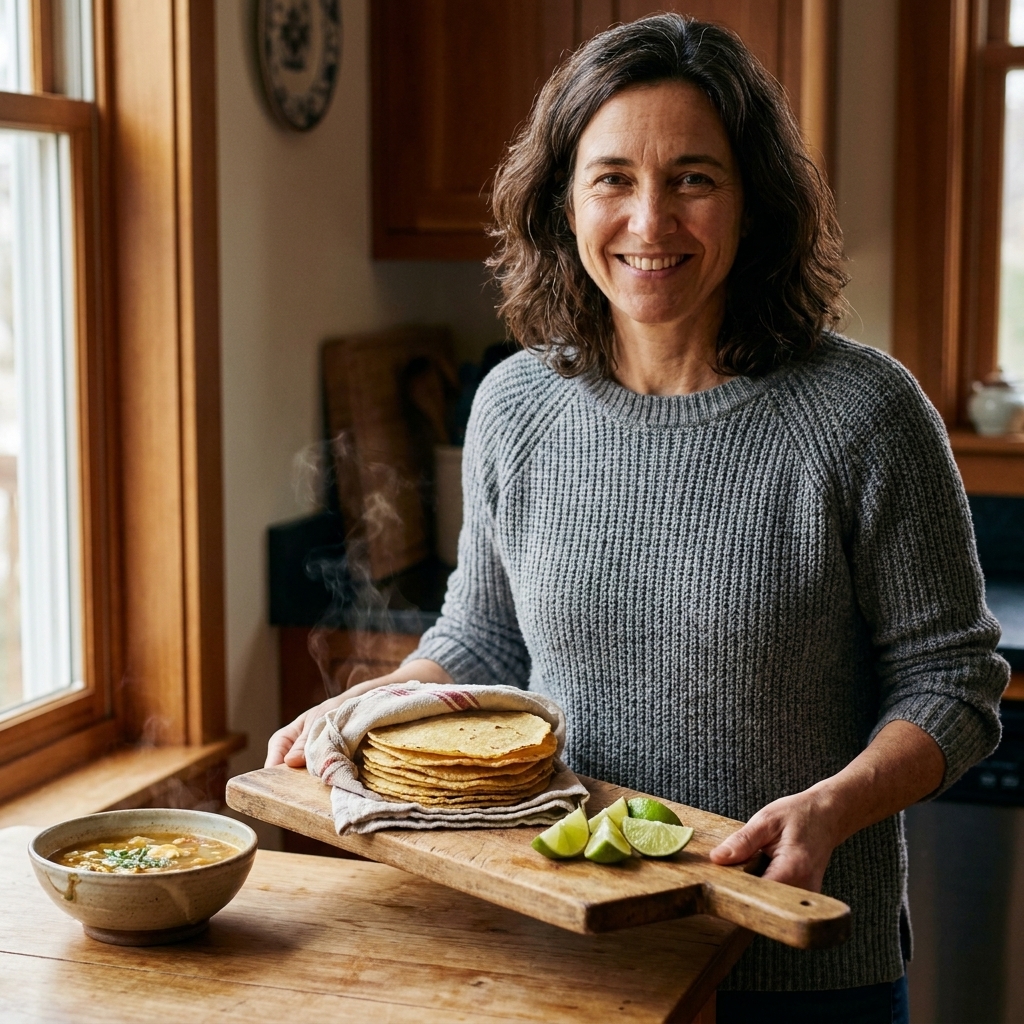
My favorite topping: a little chopped cilantro and a squeeze of lime right before eating. If you like heat, add sliced serrano or a spoon of salsa to your bowl, not the whole pot. That way everyone can customize.
Make-ahead and storage
Make-ahead
You can mix and roll the meatballs up to 1 day ahead. Keep them covered in the refrigerator. I like to set them on a plate or tray so they are ready to drop in.
Storage
Store leftovers in an airtight container for up to 4 days. The rice inside the meatballs will keep absorbing broth, so the soup may thicken.
Reheating
Reheat gently on the stove over medium-low heat. Add a splash of broth or water if needed and taste for salt.
Freezing
Sopa de albóndigas freezes well, especially if you slightly undercook the zucchini or leave it out and add fresh zucchini when reheating. Freeze up to 3 months. Thaw overnight in the refrigerator, then warm slowly.
Troubleshooting
Why are my meatballs falling apart?
- The broth may be boiling too hard. Lower to a gentle simmer.
- The meat mixture may be too wet or under-bound. Next time, try a bit more rice, make sure your onion is finely minced (not chunky and watery), or add 1 to 2 tablespoons fine breadcrumbs.
- You may be stirring too early. Let them set before moving them.
Why are my albóndigas tough?
- Overmixing is the most common reason. Mix just until combined.
- Meat that is too lean can turn dry. Use 85 to 90 percent lean, or add a teaspoon of oil.
- Simmering too aggressively can tighten the proteins. Keep it gentle.
Why is my soup bland?
- Salt the meat mixture and the broth. They both matter.
- Add a squeeze of lime at the end.
- If the tomatoes taste flat, a small pinch of sugar can help, or sauté the blended tomato base a bit longer.
Recipe
Yield: About 6 servings
Time: 20 minutes prep, 35 minutes simmer (varies by veggie size)
Ingredients
- Broth: 6 to 8 Roma tomatoes (or 15 oz tomato sauce), 1/2 white onion, 2 garlic cloves, 8 cups chicken broth (or water plus bouillon), 2 medium carrots (sliced), 2 medium potatoes (cubed), 2 zucchini (chunked), 1 small serrano (optional), 2 to 4 mint sprigs or 2 tablespoons chopped mint (plus more to taste), salt to taste
- Albóndigas: 1 1/2 pounds ground beef, 1/3 cup long-grain white rice (rinsed and drained), 1 egg, 1/4 cup very finely minced onion, 2 garlic cloves minced, 1 1/2 teaspoons kosher salt (adjust to taste), 2 tablespoons chopped cilantro (optional), 1 tablespoon chopped mint (optional), black pepper and a pinch of cumin (optional), 1 to 2 tablespoons fine breadcrumbs (optional)
Instructions
- Blend raw tomatoes, onion, and garlic with a splash of broth until smooth.
- In a large pot, cook the tomato mixture over medium heat for 4 to 6 minutes, stirring, until slightly darker and fragrant.
- Add broth and bring to a gentle simmer. Add carrots and potatoes (and whole serrano if using). Keep partially covered at a steady simmer while you form meatballs.
- In a bowl, gently mix ground beef, rice, egg, onion, garlic, salt, and herbs (and breadcrumbs if using).
- Roll into golf ball-sized meatballs (about 16 to 20). Drop into the simmering broth. Do not stir for 8 to 10 minutes.
- Simmer 20 minutes, then add zucchini. Continue simmering until potatoes are tender and rice in meatballs is cooked through, about 10 to 15 minutes more. For a sure doneness check, the center of a meatball should reach 160°F / 71°C.
- Turn off heat and stir in chopped mint, or simmer mint sprigs for 2 to 3 minutes then remove stems. Taste and adjust salt. Serve hot with tortillas and lime.
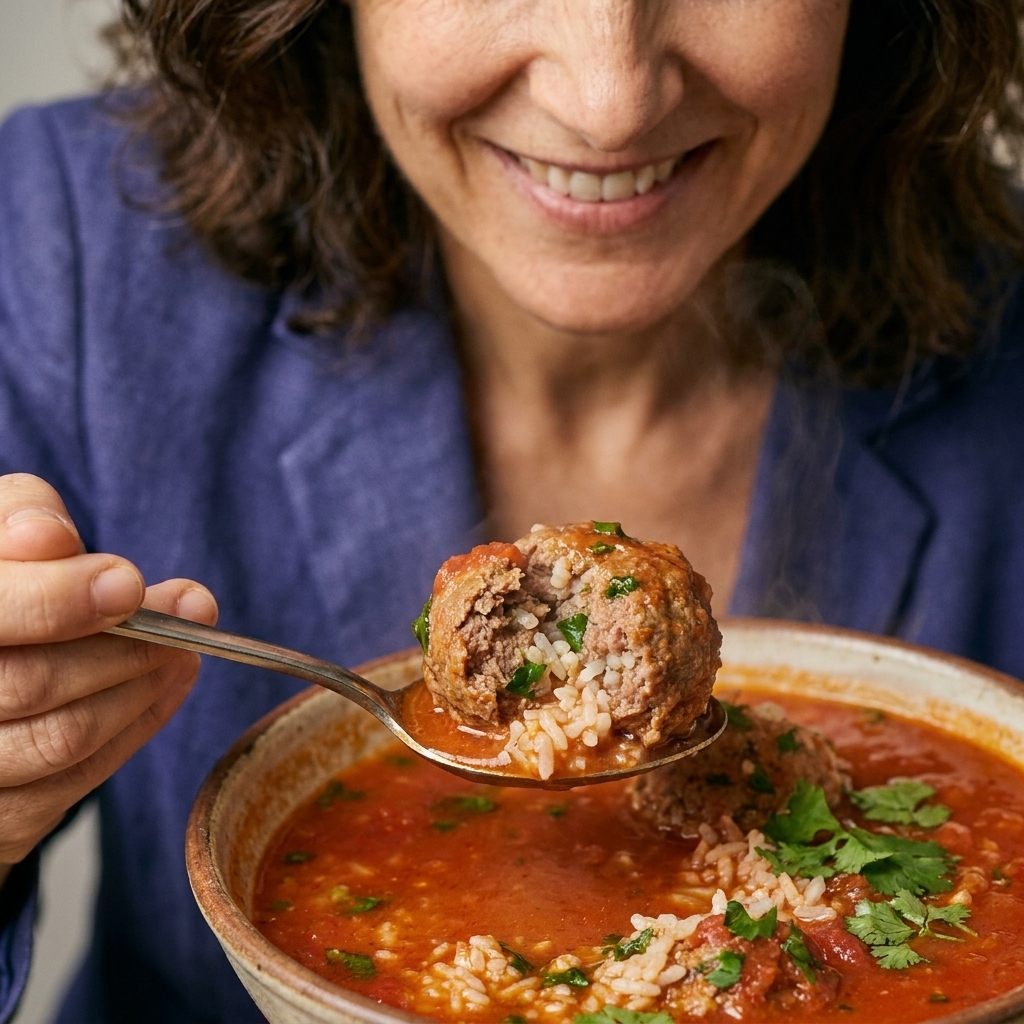
If you make this sopa de albóndigas, serve it with warm tortillas and call someone you love to the table. This is the kind of soup that tastes even better when you share it.