A home cook’s guide to two iconic fried dough desserts, with clear differences in ingredients, texture, toppings, and difficulty so you can pick the perfec...
The Mexi Plate
7 Pro Tips for Perfect Holiday Buñuelos

Elena Valdés
Elena Valdés is a Mexican-American home cook and the culinary heart behind MexiPlate. Inspired by the bustling kitchens of her childhood in Jalisco and Texas, she specializes in translating authentic Mexican flavors into approachable recipes for everyday cooks. Whether she is sharing her grandmother's secret for the perfect tamale masa or a quick 30-minute weeknight enchilada bake, Elena believes that good food is the best way to bring people together.
Published October 17, 2026
Updated October 17, 2026
In my family, buñuelos mean the holidays have officially arrived. I can still hear the whisper of rolling pins and the crackle of dough hitting hot oil, usually while someone is “just checking” the cinnamon-sugar for quality control. If you have ever made them and thought, Why are mine tough? or Why won’t they puff?, you are not alone. Buñuelos are simple, but they reward a few very specific techniques.
A quick note on style: This guide is for Mexican-style thin, crisp buñuelos (often called buñuelos de viento), the kind you roll very thin and fry quickly. Some regional buñuelos are thicker and more bread-like on purpose, and some doughs include egg or a touch of baking powder for a different kind of puff. If you are making a thicker version, do not panic if yours do not shatter like glass.
Here are my seven most reliable, abuela-approved tips for buñuelos that turn out thin, crisp, golden, and generously coated, the kind that shatter delicately when you bite in.
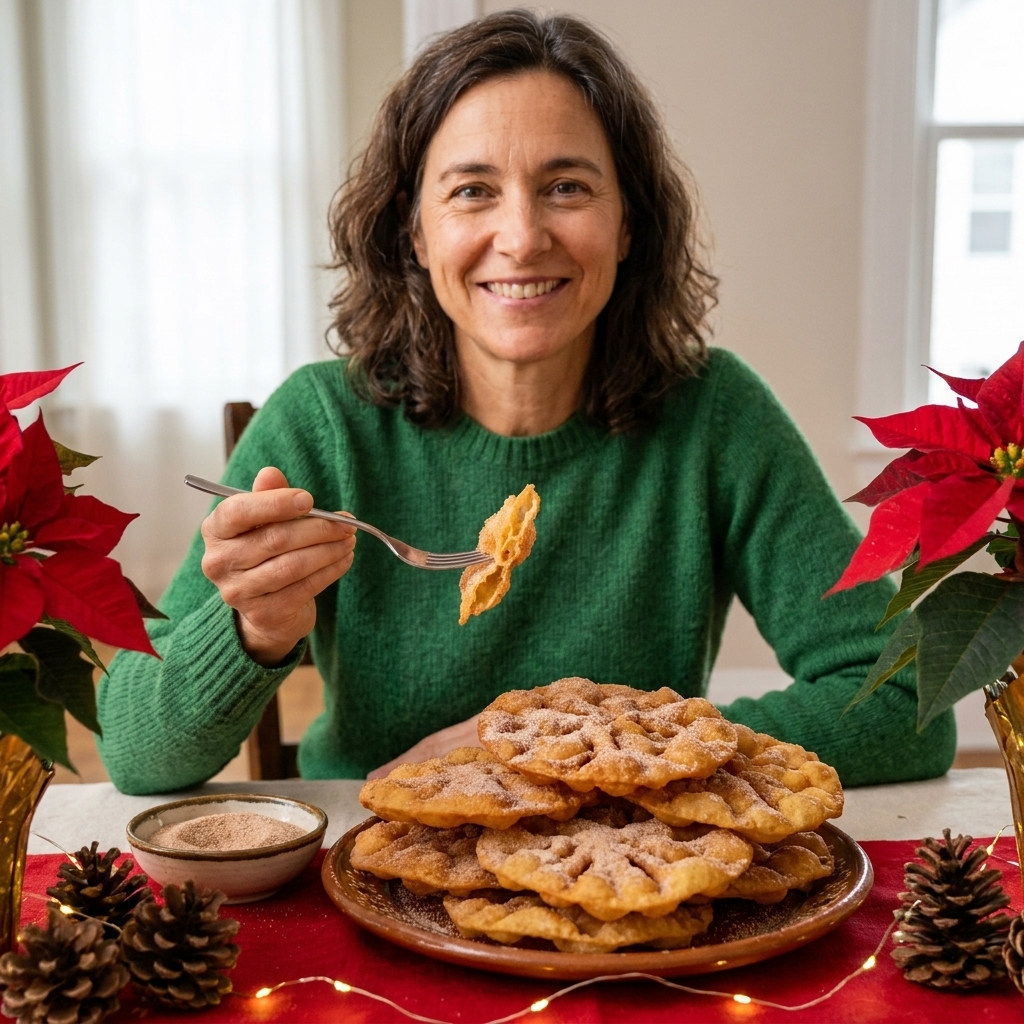
1) Mix for crisp, not chew
The best buñuelos are light and crisp, not bready. That starts with how you treat the dough.
- Do not overwork it. Mix and knead only until the dough looks smooth and feels supple, with just a little spring. Too much kneading develops extra gluten, which can make buñuelos turn out tougher.
- Use enough fat. Traditional recipes often include butter, shortening, or oil. Fat tenderizes the dough and helps keep the texture delicate after frying.
- Mind your flour. Spoon and level your flour if you measure by cups. Packed flour makes a stiff dough, which is harder to roll thin and more likely to fry up dense.
If your dough feels dry or cracks when you press it, add a teaspoon of warm water at a time until it feels pliable. You want a dough that yields easily, like soft playdough.
2) Rest twice
Resting helps the flour fully hydrate and relaxes the gluten, which makes rolling much easier. It can also help you get a more even, blistery surface once the dough hits hot oil.
- First rest: After kneading, cover and rest 20 to 30 minutes at room temperature.
- Second rest: After dividing into balls, cover again and rest 10 to 15 minutes. Those little dough balls roll thinner with less spring-back.
Cover well so the surface does not dry out. A slightly damp kitchen towel or plastic wrap works beautifully.
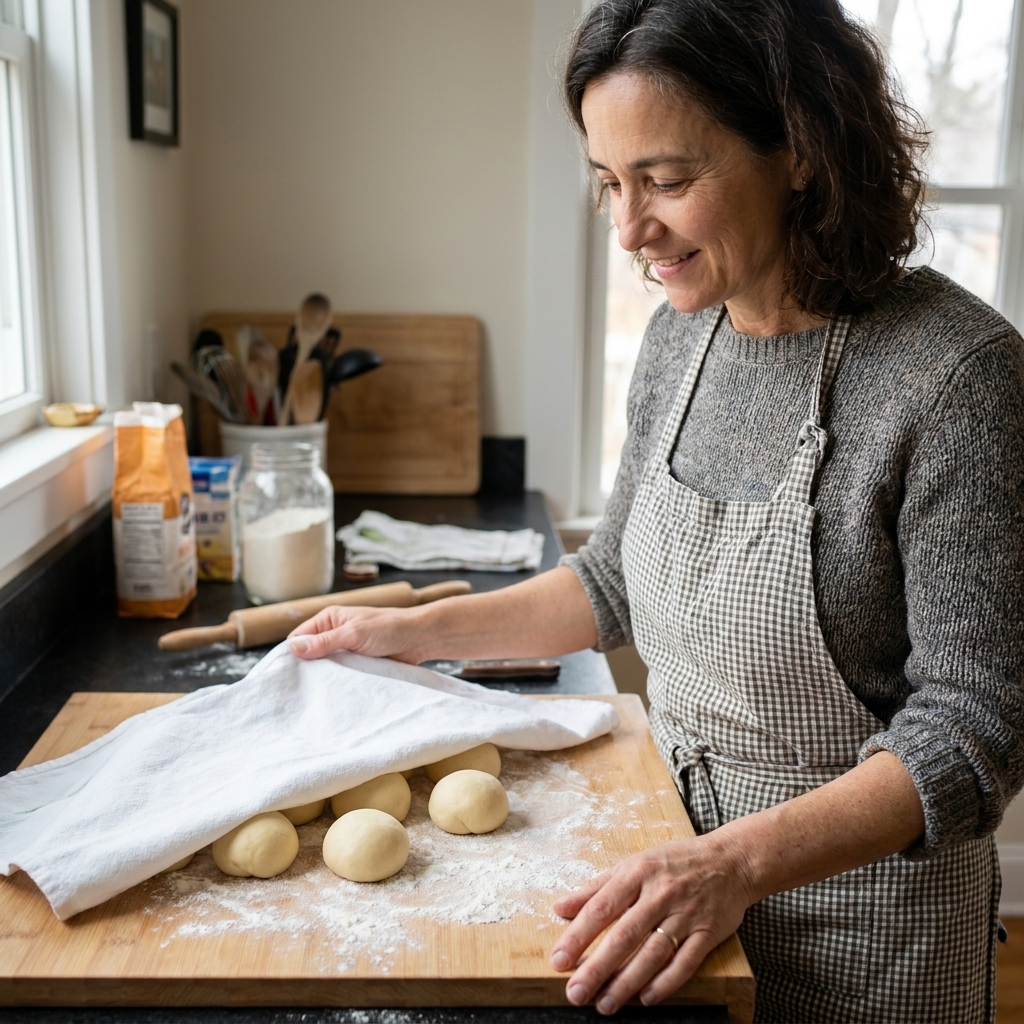
3) Roll very thin
If you want that shattery crunch, the dough must be thin. In my kitchen, the rule is: if it looks thin, go a little thinner.
- Aim for near-translucent. You should almost be able to see light through it when you lift an edge.
- Rotate as you roll. Turn the dough often so it stays round and even.
- Use light flouring. Too much bench flour can make the surface dusty and prevent the dough from stretching smoothly.
My favorite trick: Roll one dough round, set it aside on a lightly floured surface, and roll the next. By the time you fry the first one, it has relaxed even more, which can help it puff and blister.
4) Manage moisture
That gorgeous bubbled surface comes from thin dough meeting properly heated oil. Moisture and timing help too.
- Keep dough covered. Dry skin on the dough can lead to cracking and uneven frying.
- Avoid wet toppings before frying. Save syrups, honey, or piloncillo drizzle for serving, not for the frying stage.
- Let rolled rounds sit briefly. A short rest of a few minutes can help the dough relax and blister more evenly in the oil.
If your buñuelos are coming out slightly leathery, it is often because they are not rolled thin enough or the oil temperature is too low. Which brings us to the most important tip of all.
5) Keep oil around 350°F
Buñuelos should fry fast. If the oil is too cool, the dough absorbs oil and turns greasy and tough. If it is too hot, it can brown before it crisps through, especially if your dough has any sugar.
- Target temperature: about 350°F to 360°F (175°C to 182°C).
- Use a thermometer if you can. It takes the guesswork out, especially when you are frying batch after batch.
- Do a quick test: Drop in a tiny scrap of dough. It should sizzle immediately and rise, but not smoke or darken instantly.
Batch size matters: Fry one at a time (or two only if your pot is wide) so the oil temperature does not crash.
Oil choice: Use a neutral, high smoke point oil like canola, vegetable, peanut, or avocado oil.
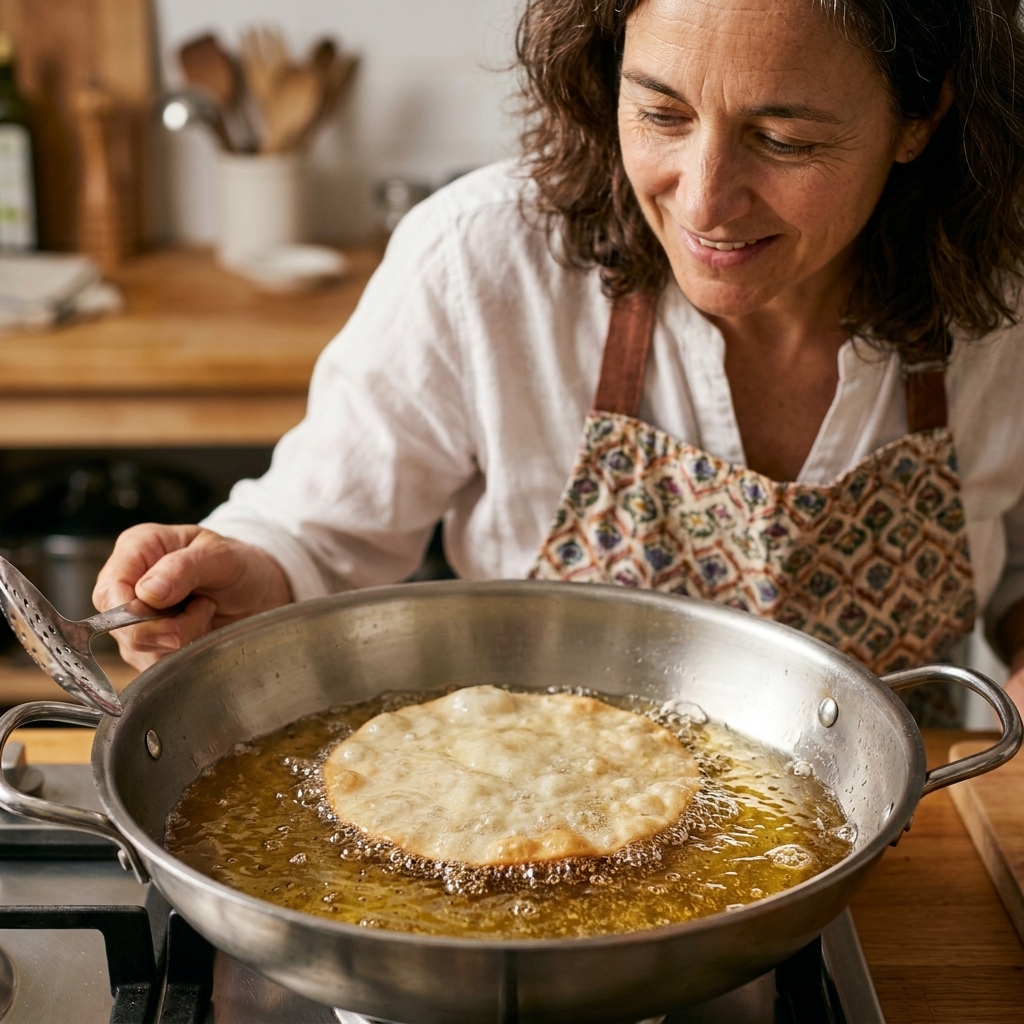
6) Flip and press gently
This is the move I learned watching my abuela: as soon as the dough hits the oil, it starts to puff in spots. Help it along.
- First side: Fry until you see bubbles and light golden patches, usually 20 to 40 seconds.
- Flip: Turn it over with tongs.
- Press gently: Use a spider or slotted spoon to lightly press the buñuelo under the oil for a second or two in different spots. This encourages more blistering and helps it cook evenly.
You are not smashing it flat. Think gentle dips and presses, like coaxing the dough to fry evenly.
Safety note: Pressing can increase splatter. Keep your face back, use long tools, and lower the dough into the oil carefully.
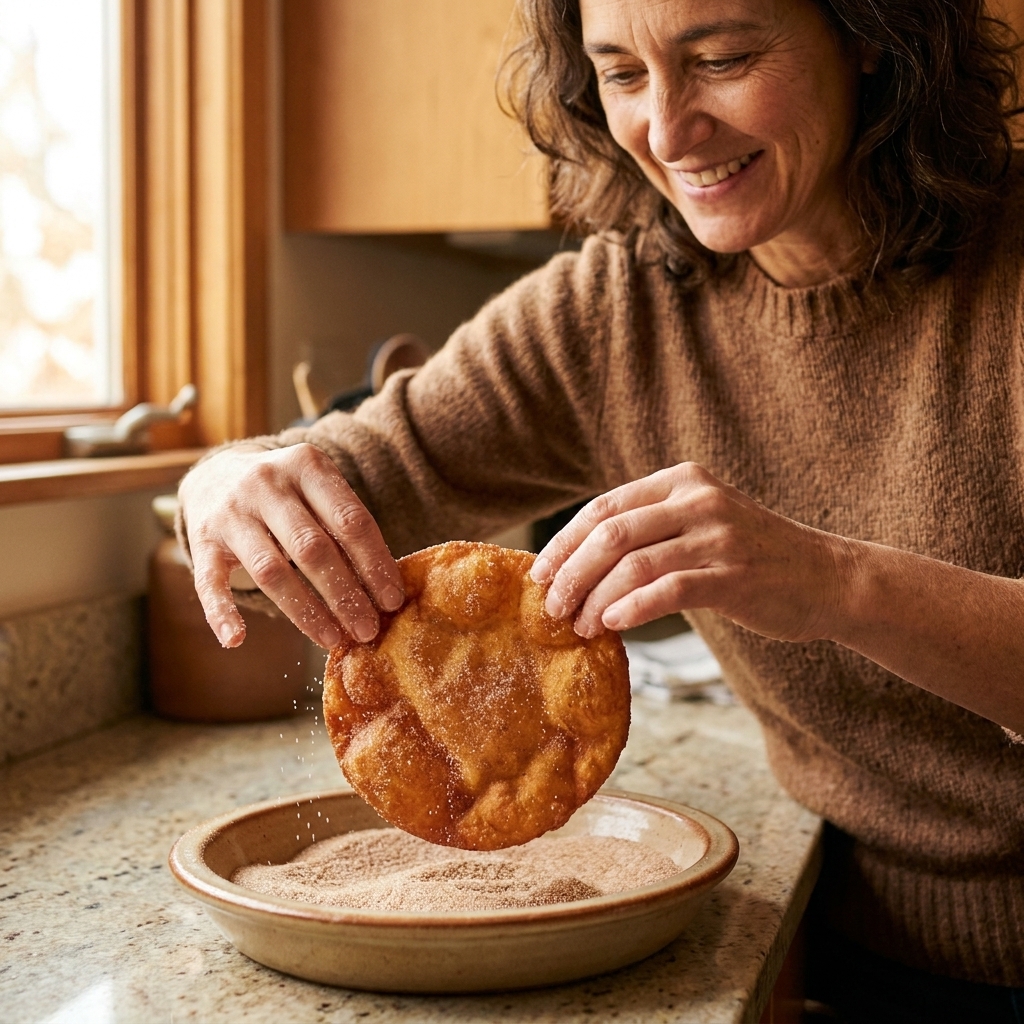
7) Coat while warm
The dream is a buñuelo that is crisp and evenly coated, with cinnamon-sugar clinging to every bubble. Timing is everything.
- Drain briefly: Let the buñuelo drip for 10 to 15 seconds over the pot, then move to a rack or paper towels.
- Coat while warm: Toss in cinnamon-sugar while the surface is still hot enough to grab the crystals.
- Use a shallow dish: A pie plate or wide bowl makes tossing easier without breaking the buñuelo.
My ratio: 1/2 cup sugar to 2 teaspoons ground cinnamon, plus a tiny pinch of salt. The pinch makes the cinnamon taste louder and the sweetness taste cleaner.
Quick fixes
My buñuelos are tough
- Dough was kneaded too long or too stiff. Next time, knead just until smooth and supple, and add a teaspoon of water if it feels tight.
- Rolled too thick. Go thinner.
- Oil was too cool. Keep it near 350°F to 360°F.
My buñuelos are greasy
- Oil temperature was too low or you crowded the pan.
- You left them sitting in oil too long at a low sizzle instead of a quick, lively fry.
They are browning too fast
- Oil is too hot. Lower the heat and let it settle for a minute before the next one.
- Your dough rounds may be uneven. Aim for an even thinness all around.
The cinnamon-sugar is not sticking
- Coat sooner while the buñuelo is still warm.
- If you drained too long, you can add the tiniest mist of water with your fingers and toss again. It works in a pinch, but it can soften the surface and steal a little crispness, so use a very light touch.
Holiday setup
Buñuelos go faster and feel more fun when your station is ready before the oil heats.
- Left: tray of rolled buñuelos (covered lightly)
- Center: frying pan or pot, tongs, spider
- Right: rack or paper towels, then a wide dish of cinnamon-sugar
- Final landing: a platter lined with parchment for stacking
And if you are making a big batch, keep finished buñuelos warm and crisp in a 200°F oven on a rack. Do not cover them, or the steam will soften them.
Serving ideas
Buñuelos are perfect with café de olla, champurrado, or a cozy mug of hot chocolate. For dessert, I love setting out a few options and letting everyone build their own plate.
- Classic: cinnamon-sugar only
- Old-school: drizzle of piloncillo syrup (warm it first so it pours easily)
- Bright: a squeeze of orange over the top, then cinnamon-sugar
- Party-style: serve alongside fresh fruit like sliced oranges, strawberries, or pineapple
However you serve them, the best buñuelos are the ones eaten warm, standing around the kitchen, “just tasting one” that somehow turns into three.