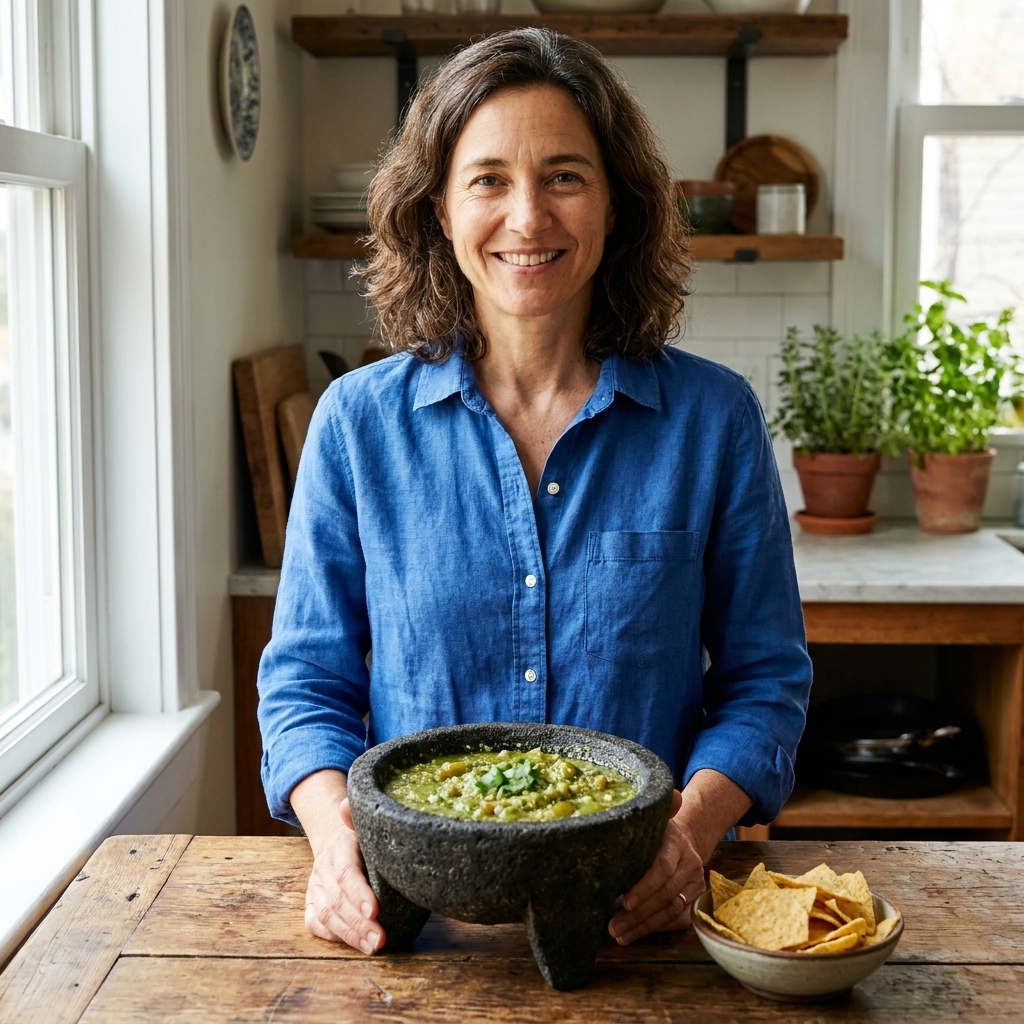
From fresh, raw tomatillos to smoky roasted chiles and creamy avocado salsa verde, these five authentic variations bring the right heat and tang to every taco.
The Mexi Plate
Authentic Pork Chile Verde

Elena Valdés
Elena Valdés is a Mexican-American home cook and the culinary heart behind MexiPlate. Inspired by the bustling kitchens of her childhood in Jalisco and Texas, she specializes in translating authentic Mexican flavors into approachable recipes for everyday cooks. Whether she is sharing her grandmother's secret for the perfect tamale masa or a quick 30-minute weeknight enchilada bake, Elena believes that good food is the best way to bring people together.
Published October 17, 2026
Updated October 17, 2026
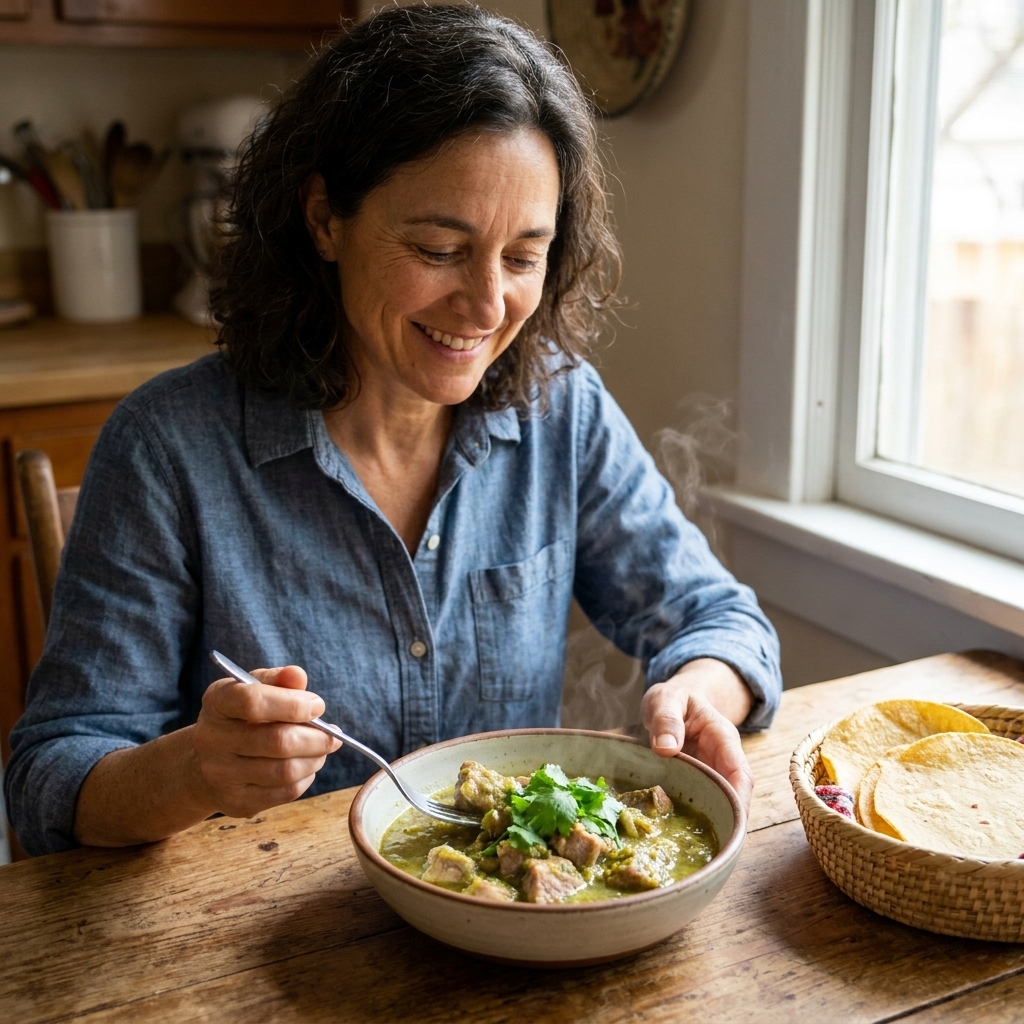
Chile verde is one of those dishes that smells like home before you even taste it. In my family, it was the “let it simmer while everyone shows up” stew, the one that turned a regular Sunday into a real gathering. The magic is not just the ingredients. It is the technique: roasting tomatillos and green chiles until they are blistered and sweet, then simmering pork low and slow until it practically sighs apart.
Today I am going to walk you through the why and how of a classic pork chile verde, the way I learned between Jalisco and Texas, with plenty of practical shortcuts for everyday kitchens.
What makes chile verde taste right
Good chile verde is bold and bright, not flat or overly creamy. These are the big flavor pillars you are building:
- Roasted tomatillos for tartness plus a subtle sweetness once blistered.
- Roasted green chiles for depth and heat. Think poblano for body, serrano or jalapeño for sparkle.
- Aromatic base of onion, garlic, and cilantro stems (yes, stems) simmered into the sauce.
- Proper simmer so the pork becomes tender and the sauce thickens naturally.
- Finishing acid (usually lime) to wake the whole pot up right before serving.
If you have ever had chile verde that tasted sour, bitter, or grassy, it is often a technique issue: tomatillos that did not roast long enough, a sauce that did not get time to simmer and mellow, or simply a balance problem (too many tomatillos for the amount of chile and aromatics). The fix is usually patient cooking and a few small adjustments, not starting over.
Choosing your ingredients
Best cut of pork
My favorite is pork shoulder (also sold as pork butt). It has enough fat and connective tissue to turn silky after a long simmer. You can use pork loin in a pinch, but it cooks faster and can go dry if you push it too long.
- Ideal: Pork shoulder, cut into 1 1/2-inch chunks
- Also good: Country-style ribs (boneless or bone-in)
- Not my first pick: Pork loin (reduce simmer time)
Tomatillos: fresh is best
Look for tomatillos that feel firm and heavy for their size. Sticky is normal. Remove the husks and rinse well to get rid of the natural tacky residue.
Shopping note: Tomatillos are usually sold with husks on. If your scale is at the store, aim for about 2 pounds with husks to land near 1 1/2 pounds once husked and rinsed.
Which green chiles to use
For a chile verde that tastes layered, I like using two types of chiles:
- Poblano: Roasty, earthy, mild, gives the sauce body.
- Serrano: Bright, sharp heat that tastes “green” in the best way.
If serranos feel risky, use jalapeños. If you want it spicier, add 1 to 2 extra serranos and keep some seeds.
Roasting (the flavor key)
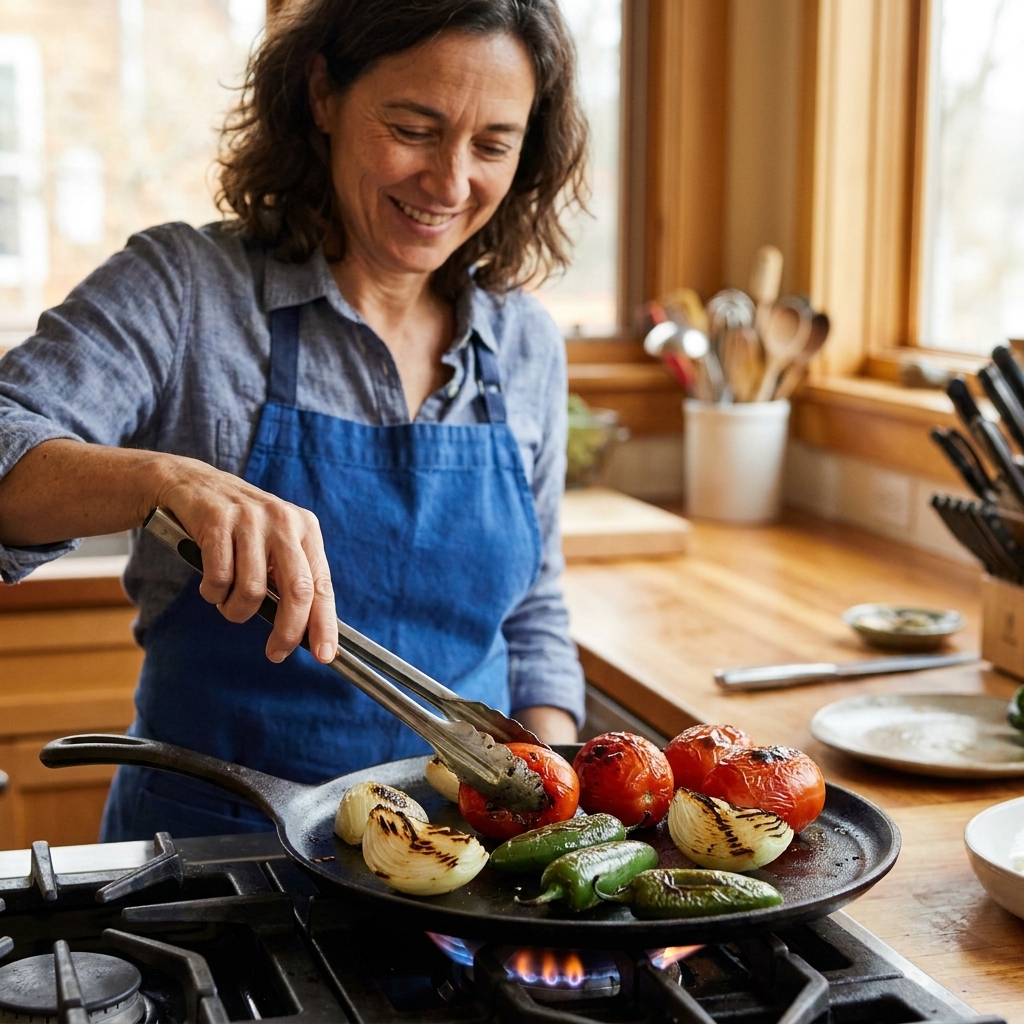
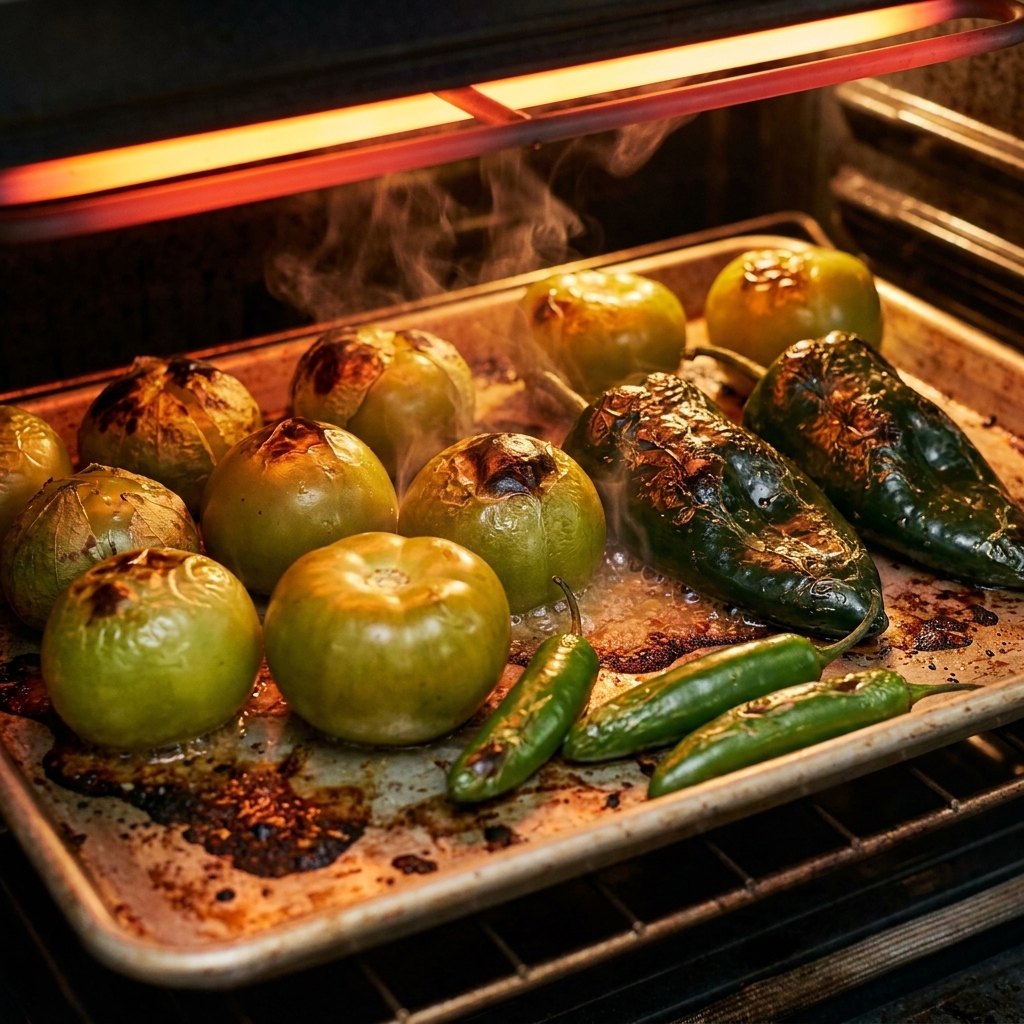
Roasting does two important jobs: it concentrates flavor by driving off water, and it adds that subtle smoky sweetness from blistered skins. You can roast on a comal, grill, or under the broiler. At home, the broiler is the fastest and most consistent.
Broiler method
- Set your oven rack 4 to 6 inches from the broiler and preheat the broiler.
- Line a sheet pan with foil for easy cleanup.
- Add tomatillos (whole), poblanos, and serranos. Lightly oil the poblanos and serranos if you want more even blistering.
- Broil about 5 to 8 minutes, then flip. Broil another 4 to 7 minutes, until tomatillos are blistered and starting to collapse and peppers are well charred in spots.
Ventilation tip: Broiling chiles can get smoky. Turn on the vent hood, crack a window, and do not walk away. The line between charred and burnt is fast.
What you are looking for: Tomatillos with deep golden spots and little bursts of juice, and peppers with blackened patches. Do not be shy about char. That is where the complexity comes from.
Peeling poblanos (optional)
After roasting poblanos, place them in a bowl and cover (or put them in a bag) for 10 minutes. The steam loosens the skin. Rub off the loose charred skin. You do not need them perfectly peeled. A little char is delicious.
If you are sensitive to bitterness, peel them a bit more thoroughly. If you love that rustic roasted flavor, leave a little more on.
Tip from my abuela’s kitchen: Do not rinse peppers under water to peel them. You wash away flavor. Use your fingers and a paper towel if needed.
The green sauce
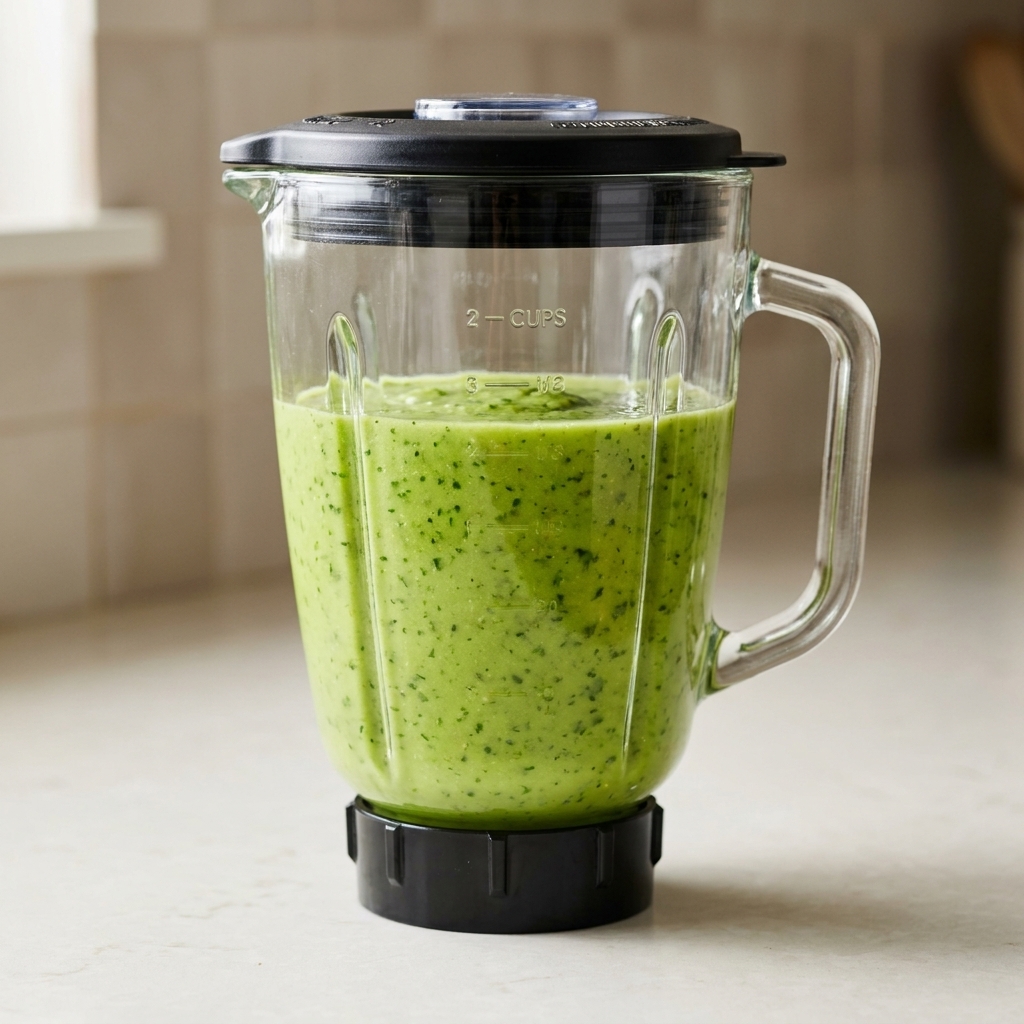
Once your tomatillos and peppers are roasted, you are minutes away from that bright green sauce. I build the blender base like this:
- Roasted tomatillos
- Roasted poblanos (peeled if you want, seeded if you prefer milder)
- Serranos (start with fewer, you can always add)
- White onion
- Garlic
- Cilantro (include tender stems)
- Mexican oregano (optional, but beautiful)
- Salt
- A splash of broth or water to get the blender moving
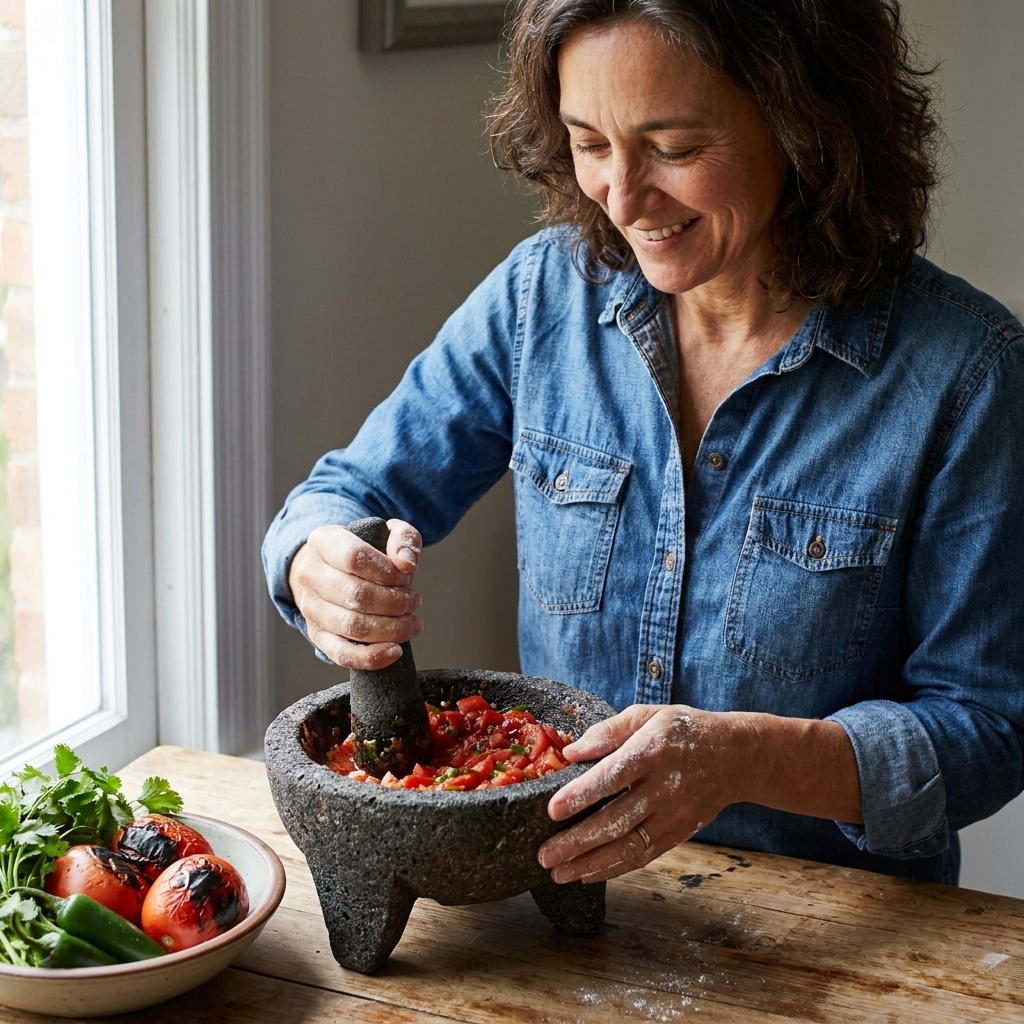
Blend until smooth. Then taste it. It should taste a little sharp and intense right now. That is perfect, because it will mellow as it simmers with the pork.
Optional, but common additions: A small pinch of cumin or ground coriander can be lovely here, especially if you grew up with a slightly warmer, spice-forward chile verde. Keep it light. The green flavors should still lead.
Tender pork
Step 1: Brown the pork
Season pork generously with salt. Heat a heavy pot or Dutch oven with a thin layer of oil until the oil is shimmering. Brown the pork in batches, about 3 to 5 minutes per side, until you get real color. You are not trying to cook it through. You are building a foundation of flavor at the bottom of the pot.
Do not rush this: If you crowd the pot, the pork steams instead of browns.
Step 2: Simmer low and steady
Pour in the blended green sauce and enough broth to just barely cover the pork. Bring it up to a gentle simmer, then lower the heat.
- Covered simmer: 60 to 75 minutes, stirring occasionally
- Uncovered simmer: 15 to 30 minutes to thicken at the end
As it cooks, the sauce turns from loud and sharp to rounded and savory. The pork becomes tender, and the stew thickens naturally from the tomatillos and the collagen in the meat.
How to know it is done
Perfect chile verde pork breaks apart with a spoon but still feels juicy. If it is chewy, it simply needs more time. Keep the simmer gentle and be patient.
My go-to chile verde
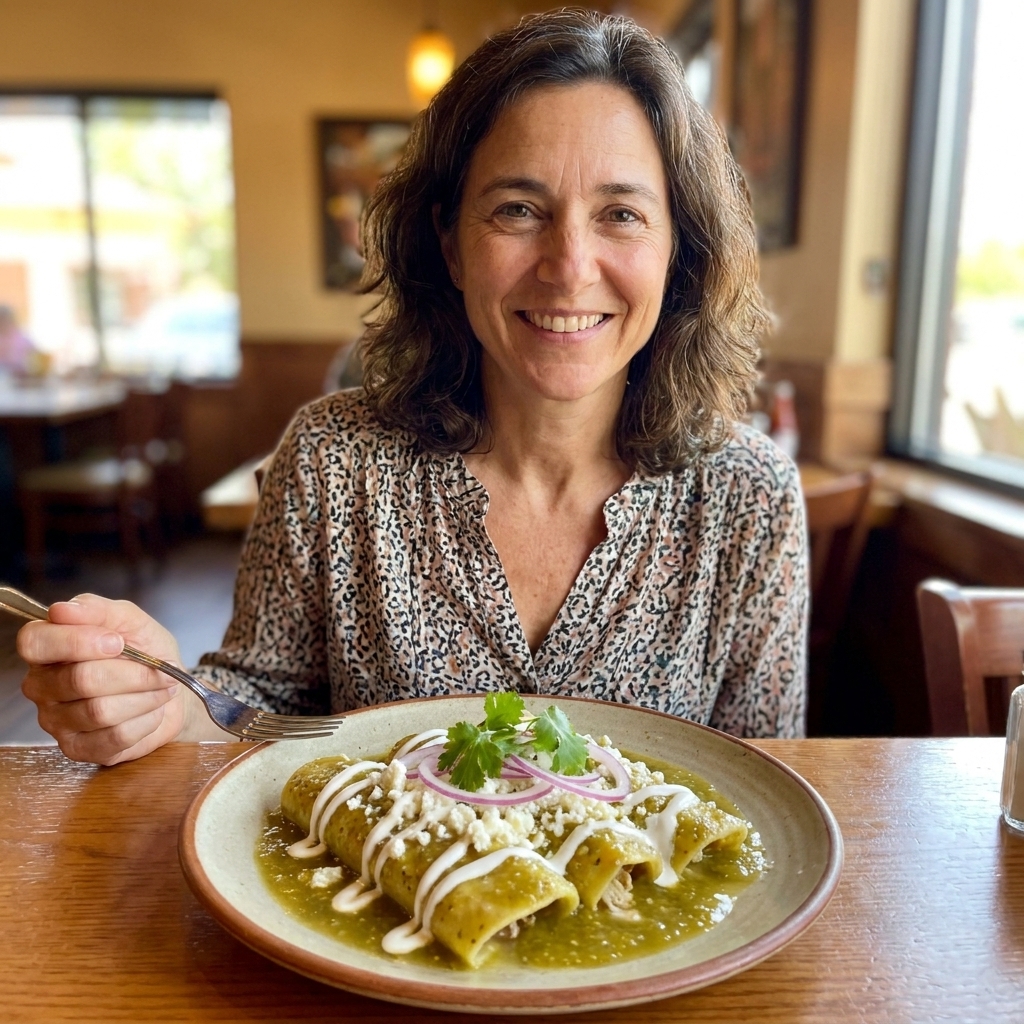
This is the version I make most often. It is not fussy, but it hits the right notes: roasty, tangy, savory, and comforting. When I serve it, I do it the way my people do: a pot in the middle of the table, a stack of warm tortillas, and everyone building their own perfect bite with lime and a little extra onion.
Ingredients
- 3 to 3 1/2 lb pork shoulder, cut into 1 1/2-inch chunks
- Salt
- 2 tbsp neutral oil (avocado, grapeseed, or canola)
- 1 1/2 lb tomatillos, husked and rinsed
- 2 poblano peppers
- 2 to 4 serrano chiles (start with 2 for mild-medium)
- 1 medium white onion, peeled and quartered
- 4 garlic cloves, peeled
- 1 packed cup cilantro (leaves and tender stems)
- 1 tsp Mexican oregano (optional)
- 2 to 3 cups low-sodium chicken broth (or pork broth)
- 1 bay leaf (optional)
- Lime wedges, for serving
Instructions
- Roast: Broil tomatillos, poblanos, and serranos until blistered and charred in spots, about 9 to 15 minutes total, flipping once. Steam poblanos 10 minutes, then peel as much as you like and remove seeds if you prefer milder.
- Blend: Blend tomatillos, poblanos, serranos, onion, garlic, cilantro, oregano (if using), and 1/2 cup broth until smooth. Season the sauce with salt.
- Brown pork: Season pork with salt. Heat oil in a Dutch oven over medium-high heat until shimmering. Brown pork in batches, then return all pork to the pot.
- Simmer: Pour in green sauce and add enough broth to barely cover pork. Add bay leaf (if using). Bring to a gentle simmer, then lower heat. Cover and cook 60 to 75 minutes, stirring occasionally.
- Thicken: Uncover and simmer 15 to 30 minutes, until the sauce clings to the pork and tastes mellow and rounded. Taste and adjust salt.
- Finish: Turn off heat. Squeeze in lime to taste right before serving.
Stove temperature note: You want a quiet simmer, not a rolling boil. High heat and hard bubbling can make the meat cook less evenly, push moisture out, and agitate the sauce so it tastes harsher instead of rounded.
Fix common problems
“It is too sour”
- Tomatillos may be under-roasted. Next time, blister them more deeply.
- It may need more simmer time. Sharpness softens with cooking.
- It may be a balance issue (tomatillos were extra tart, or the ratio leaned heavy). Try another pinch of salt first, then a squeeze of lime at the end only if it tastes dull. If it still feels aggressive after simmering, a tiny pinch of sugar can help.
“My sauce is bitter”
- Too much black char blended in can read bitter. Peel poblanos a bit more next time, or char a little less aggressively.
- Garlic can turn bitter if it is burnt. If your garlic blackened under the broiler, discard and use fresh raw cloves in the blender.
“My pork is tough”
- It is almost always undercooked for this style. Keep simmering until tender.
- If you used pork loin, shorten total cook time and keep the simmer gentle.
“It is too thin”
- Uncover and simmer longer to reduce.
- Next time, use a touch less broth at the start. You can always thin it later.
- If you need an emergency fix, mash a few pieces of cooked potato into the pot or whisk 1 to 2 teaspoons of masa harina with a little broth, then stir it in and simmer 5 minutes.
Serving ideas
Chile verde is a pot-of-gold situation. One batch feeds you in at least three delicious directions.
- With warm tortillas: Corn tortillas, lightly warmed on a dry skillet.
- Over rice: Mexican red rice or simple steamed rice to soak up the sauce.
- With beans: Frijoles de la olla or refried beans.
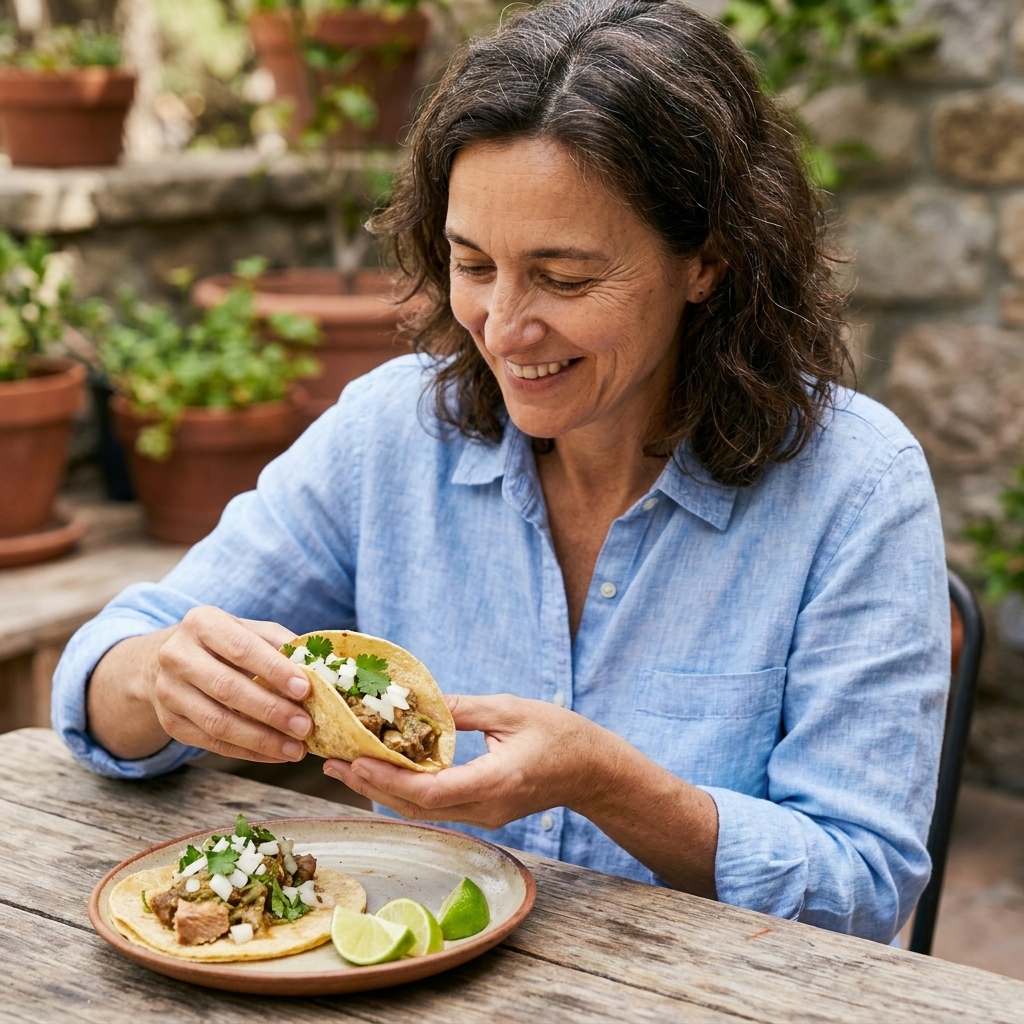
- As tacos: Spoon into tortillas, top with onion, cilantro, and lime.
- As a torta: Stuff into a bolillo with beans and avocado.
Make-ahead and storage
Chile verde is even better the next day. The sauce settles, the pork relaxes, and everything tastes more unified.
- Refrigerator: Store up to 4 days in an airtight container.
- Freezer: Freeze up to 3 months. Thaw overnight in the fridge.
- Reheat: Warm gently on the stove with a splash of broth to loosen. Taste and add a squeeze of lime at the end to refresh the green flavors.
Ingredient swaps
I am all for tradition, but I am also for dinner happening. Here are swaps that still keep the spirit of chile verde.
- No poblanos: Use Anaheim peppers or a mix of green bell pepper (for body) plus jalapeño (for heat).
- No serranos: Use jalapeños, or add a pinch of crushed red pepper at the end.
- No fresh tomatillos: Canned tomatillos can work. Simmer them in a hot pan for a few minutes to drive off canned flavor and concentrate them before blending.
- No Dutch oven: Use any heavy pot with a lid. Keep the simmer low.
- Want extra richness: You can brown the pork in a spoonful of lard instead of oil. Not required, but it does taste like somebody’s Sunday.
FAQ
Is chile verde the same as salsa verde?
They are related, but not the same. Salsa verde is a sauce, often served as a condiment. Chile verde is a stew, usually salsa verde simmered with meat until everything becomes one dish.
Should I seed the serranos?
If you want mild-medium heat, seed at least half of them. If you love spice, keep the seeds and use more serranos. The heat can taste a little stronger after resting overnight as it mingles through the pot.
Can I make chile verde in a slow cooker?
Yes. Roast and blend the sauce as written, brown the pork if you can, then cook on low 7 to 8 hours or high 4 to 5 hours. For the best texture, reduce uncovered on the stove for 10 to 20 minutes if the sauce is thin.
Can I make it with chicken?
Absolutely. Use bone-in thighs for the most flavor. Simmer until tender, then shred. Chicken cooks faster than pork, so start checking around 30 to 40 minutes.
A final kitchen blessing
If you take only one thing from this guide, let it be this: roast boldly and simmer patiently. Chile verde is forgiving, and it rewards you for giving it time. Put on music, warm the tortillas, and let that green pot do what it has done for generations, bring people to the table.