A cozy, cinnamon-kissed Mexican arroz con leche you can make on the stovetop in about 40 minutes. Creamy texture, simple pantry ingredients, and foolproof tips.
The Mexi Plate
Easy Agua de Horchata (Creamy, Not Gritty)

Elena Valdés
Elena Valdés is a Mexican-American home cook and the culinary heart behind MexiPlate. Inspired by the bustling kitchens of her childhood in Jalisco and Texas, she specializes in translating authentic Mexican flavors into approachable recipes for everyday cooks. Whether she is sharing her grandmother's secret for the perfect tamale masa or a quick 30-minute weeknight enchilada bake, Elena believes that good food is the best way to bring people together.
Published November 15, 2026
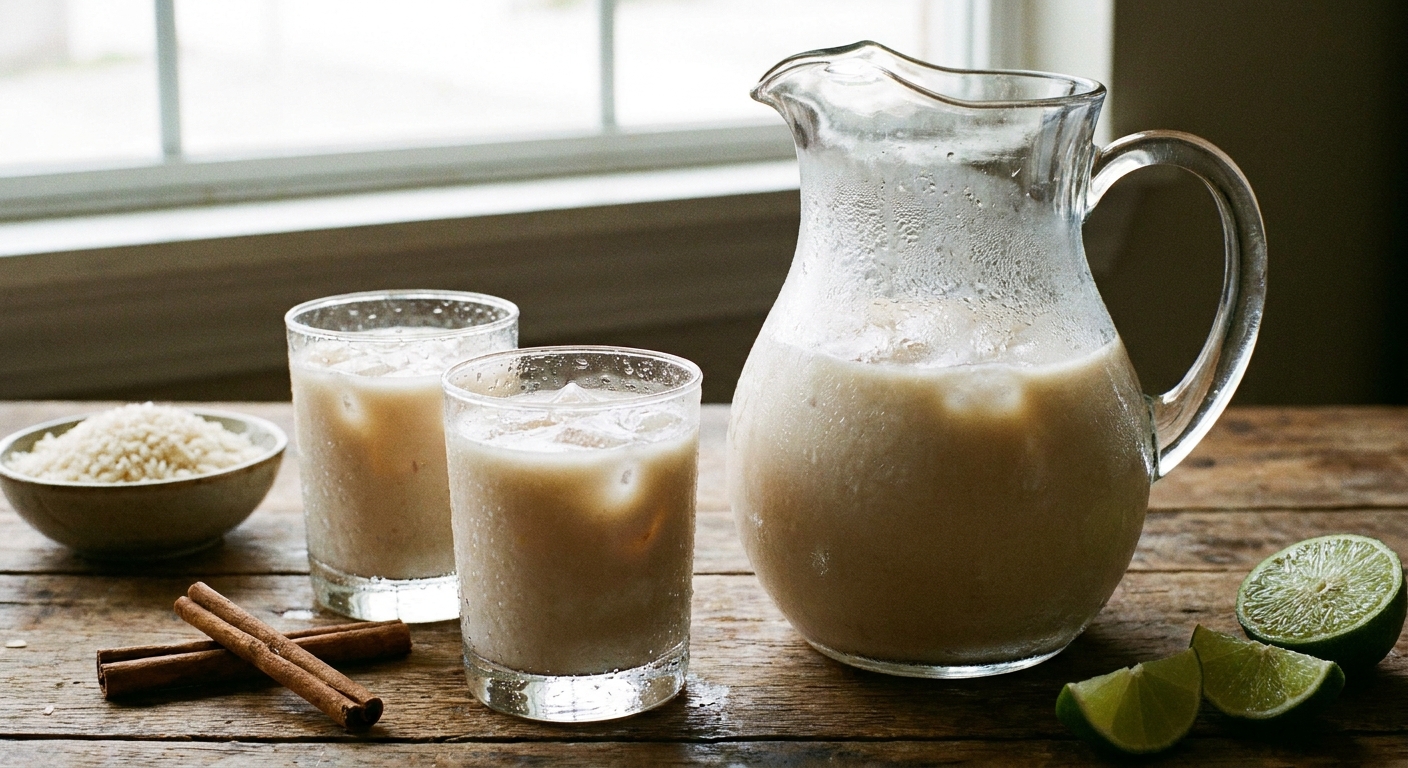
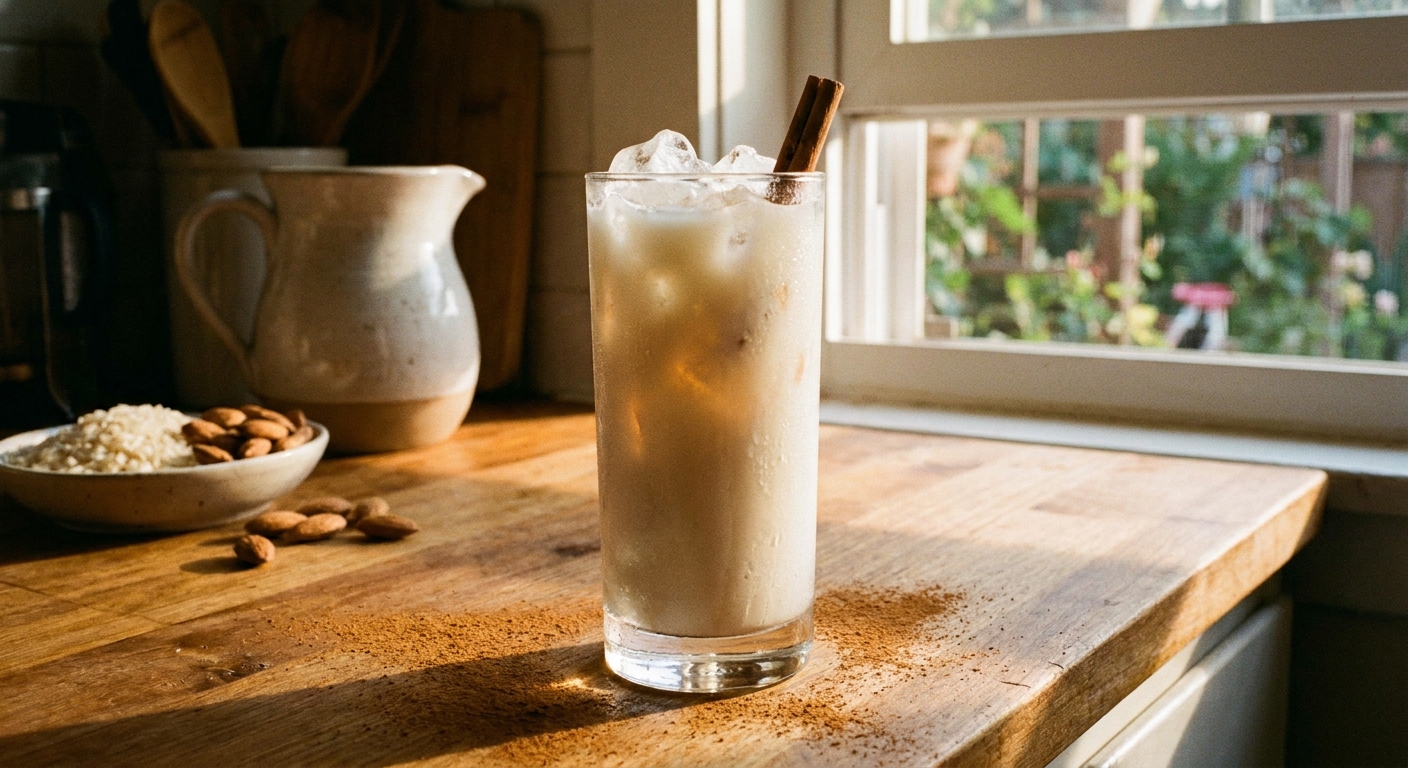
When I was growing up between Jalisco and San Antonio, horchata was the ultimate “cool down” drink. At the loncheras (little lunch counters) and aguas frescas stands, it always looked like a tall, frosty glass of comfort: milky white, cinnamon-kissed, and so cold it made the outside sweat. But the first time I tried making it at home, I learned the hard truth: horchata can turn gritty fast if you rush the soak, under-blend, or skip a proper strain.
This is my everyday, beginner-friendly method for creamy, not gritty agua de horchata using white rice, cinnamon, and sugar or piloncillo. You will soak, blend, strain, and serve it over a mountain of ice, just like at an aguas frescas stand.
Why horchata gets gritty
A common Mexican-style rice horchata is basically a rice-and-cinnamon infusion that gets blended and strained. That “grit” comes from tiny rice particles that either never softened enough or never got blended fine enough, then slip through the strainer.
- Soak long enough so the rice softens (this is non-negotiable for smooth horchata).
- Blend long enough so the rice becomes ultra-fine in the liquid.
- Strain properly using the right tool, without forcing grit through.
- Use the right water ratio so it tastes like a stand: milky, lightly sweet, and refreshing.
Ingredients
This makes about 7 to 8 cups, enough for a family dinner or a weekend pitcher.
- 1 cup long-grain white rice (regular, not parboiled)
- 1 (3 to 4-inch) Mexican cinnamon stick (canela) or 1 regular cinnamon stick
- 5 cups water, divided (2 cups for soaking + 3 cups for blending)
- 2 to 3 cups cold water to dilute at the end (to taste)
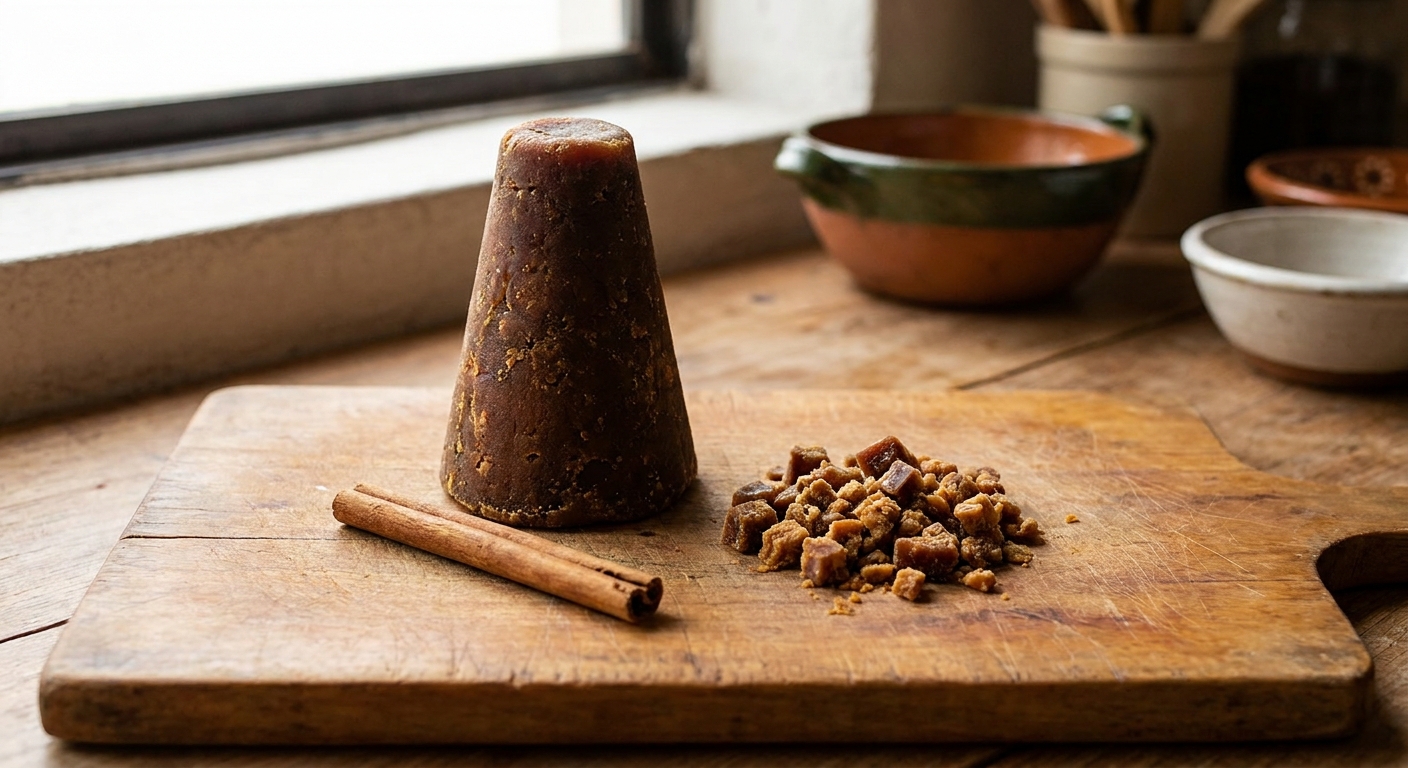
- 1/2 to 3/4 cup piloncillo, finely chopped or grated, or 1/2 to 2/3 cup granulated sugar (to taste)
- 1/2 teaspoon vanilla extract (optional but very classic in many homes)
- Tiny pinch of salt (brings the cinnamon forward)
- Ice, for serving
About piloncillo: If your piloncillo is very hard, chop it with a sturdy knife or grate it. For the easiest dissolve, make a quick piloncillo syrup (I explain that below).
Stand-style ratio
If you want that light, drinkable aguas frescas stand flavor (not rice pudding), the key is what you do after straining. I start with 2 cups cold water to dilute, then adjust from there.
How to make horchata
1) Rinse the rice
Rinse 1 cup rice under cool water until the water runs mostly clear. This removes surface starch and helps keep the finished horchata cleaner-tasting.
2) Soak (for the smoothest result)
Add the rinsed rice and the cinnamon stick to a bowl or blender jar with 2 cups water. Cover and soak.
- Minimum: 6 hours
- Best (my preference for zero grit): 8 to 12 hours (overnight)
If your kitchen is warm, soak in the refrigerator.
3) Blend (this is where smooth happens)
Remove the cinnamon stick. Add the soaked rice and soaking water to a blender, then add 3 more cups water.
Blend time: 2 full minutes on high. Stop, let the foam settle for 10 seconds, then blend 30 more seconds.
You want it to look like a very cloudy, milky liquid with no obvious grainy movement. If you rub a drop between your fingers, it should feel mostly smooth (not sandy).
4) Strain without pushing grit through
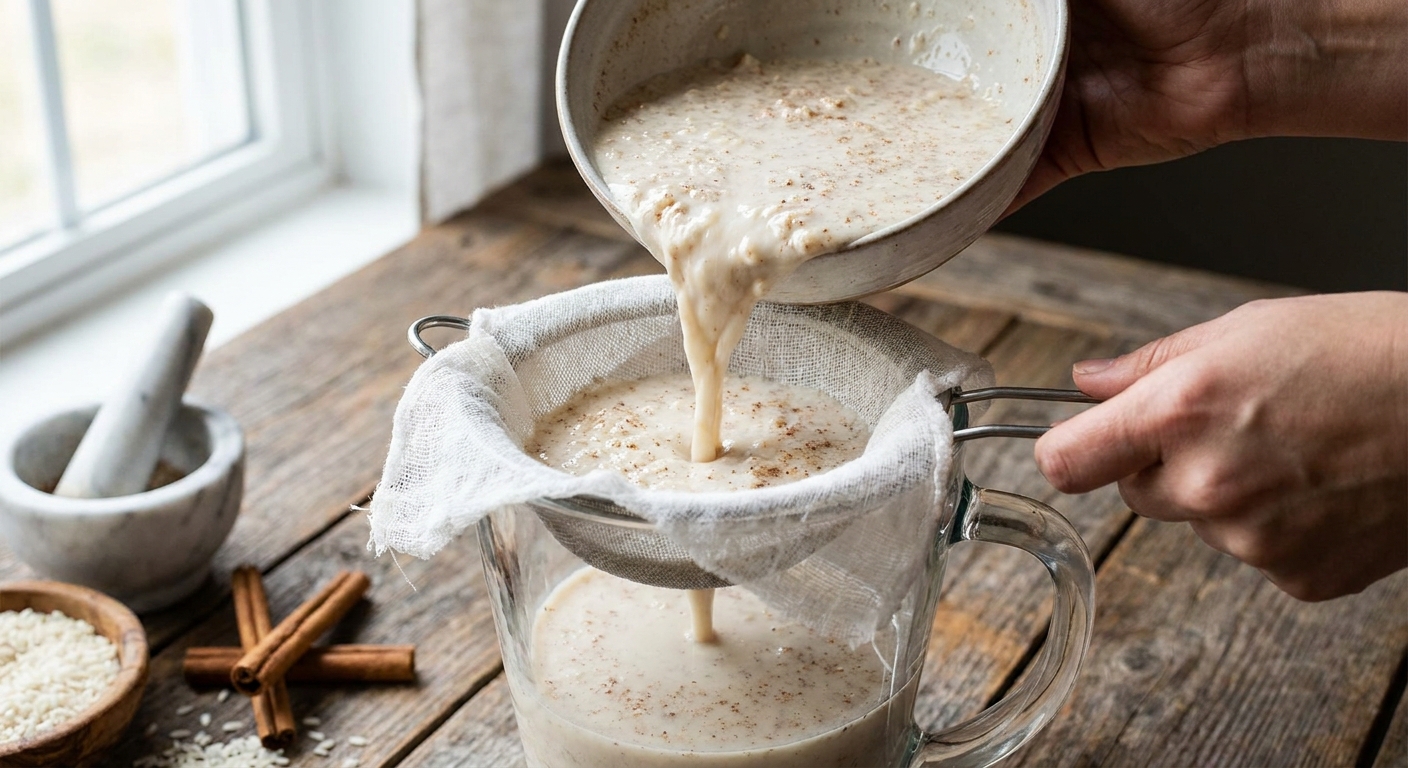
Set a fine-mesh strainer over a large pitcher and strain the blended mixture. For extra-smooth horchata, line the strainer with two layers of cheesecloth (or use a nut-milk bag if you have one). A standard colander is not fine enough.
- Let it drain naturally for a minute or two.
- If needed, stir gently with a spoon to help it pass through.
- Do not press hard on the pulp. Pressing forces fine grit through the mesh.
Discard the solids.
5) Sweeten and finish
While the horchata base is still room temperature (or slightly cool), stir in:
- Piloncillo (start with 1/2 cup) or sugar
- Vanilla, if using
- Pinch of salt
Stir well until fully dissolved.
If your piloncillo is stubborn: Make a quick syrup. Warm 1/2 cup water on the stove, add the piloncillo, and stir until dissolved. Cool, then stir the syrup into the horchata. (This is my go-to when I want it perfectly smooth.)
6) Dilute, chill, and serve over ice
Add 2 cups cold water, stir, then taste. Add more cold water, 1/2 cup at a time, until it hits that stand-style sweetness and strength. In my kitchen it is usually 2 to 3 cups total, depending on ice and how strong I want it.
Chill at least 2 hours. Serve in glasses packed with ice. If you like, dust the top with a tiny pinch of ground cinnamon right before serving.
Elena’s smooth tips
- Use long-grain white rice. Short-grain can read thicker and sometimes feels heavier on the tongue.
- Do not shortcut blending. Two minutes feels long, but it is the difference between “wow” and “why is this sandy?”
- Cheesecloth (or a nut-milk bag) is the secret weapon. A fine-mesh strainer alone works, but lining it makes it luxuriously smooth.
- Sweeten after straining. If you sweeten before, the mixture can thicken slightly and strain slower.
- Always stir before pouring. Natural settling is normal. A quick stir brings it back together.
Flavor options
I love classic cinnamon-rice horchata, but these are still very “home style” and not fussy.
- With evaporated milk: Replace 1 cup of the final cold water with 1 cup evaporated milk for a richer, creamier sip.
- With almonds: Add 1/4 cup blanched almonds to the soak for a slightly nuttier horchata.
- Extra cinnamon: Add a second small cinnamon stick during soaking, then remove before blending. Do not blend the stick.
If you add evaporated milk, keep the pitcher refrigerated and enjoy within 2 days.
Storage
- Refrigerate: 3 to 4 days in a covered pitcher.
- Separation is normal: Stir or shake before serving.
- Do not freeze: The texture can get odd once thawed.
Troubleshooting
My horchata is still gritty
Most often it is one of these:
- Too short a soak: If you want the smoothest result, go overnight next time.
- Under-blended: Blend a full 2 minutes on high.
- Strainer too wide: Use a finer mesh, and line with cheesecloth (or use a nut-milk bag) for the smoothest result.
- Pressed the pulp: Let it drain and stir gently instead of pressing.
It tastes too strong
Add more cold water, 1/2 cup at a time, and a small pinch more salt if it tastes flat.
It tastes watery
Next time, dilute less at the end. For now, you can blend a small amount of the strained solids with a splash of water, strain again, and add back to the pitcher to strengthen it.
My piloncillo will not dissolve
Make a quick syrup: dissolve the piloncillo in a small amount of warm water on the stove, cool it, then stir into the horchata.
Serve it cold
Horchata is at its best ice-cold. I like to chill the pitcher, then fill each glass all the way with ice so the drink stays frosty while you sip. It is the kind of simple treat that makes any Tuesday feel like a little celebration.