A warm, step-by-step guide to thick Mexican drinkable desserts, from classic champurrado to cozy vanilla atole, plus tips for smooth texture every time.
The Mexi Plate
Ponche Navideño (Mexican Christmas Fruit Punch)

Elena Valdés
Elena Valdés is a Mexican-American home cook and the culinary heart behind MexiPlate. Inspired by the bustling kitchens of her childhood in Jalisco and Texas, she specializes in translating authentic Mexican flavors into approachable recipes for everyday cooks. Whether she is sharing her grandmother's secret for the perfect tamale masa or a quick 30-minute weeknight enchilada bake, Elena believes that good food is the best way to bring people together.
Published November 17, 2026
Every December, the smell that takes me straight back to my childhood is not cookies. It is ponche navideño bubbling on the stove, cinnamon perfume in the air, and someone hovering nearby “just to taste” every few minutes. In my family, ponche meant the night officially started. You could hear the laughter, the villancicos, and the clink of mugs before the first tamal ever hit the plate.
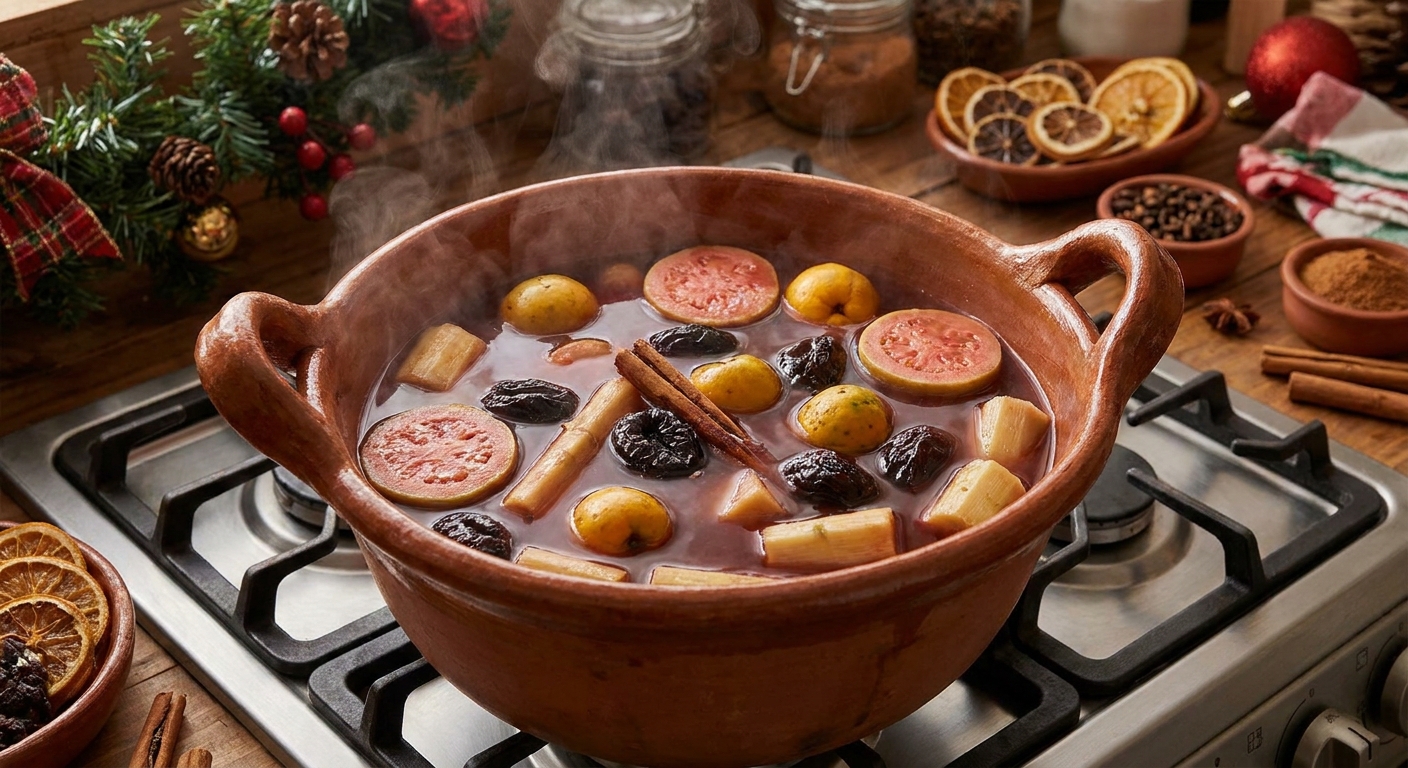
This is the classic, cozy Mexican Christmas fruit punch made with tejocotes (or an easy apple swap), guava, sugarcane, hibiscus (jamaica), prunes, cinnamon, and piloncillo. I will also show you where to find the harder-to-source ingredients in US stores, plus an optional spiked version, posada-size batching tips, and the best way to reheat it so it still tastes fresh.
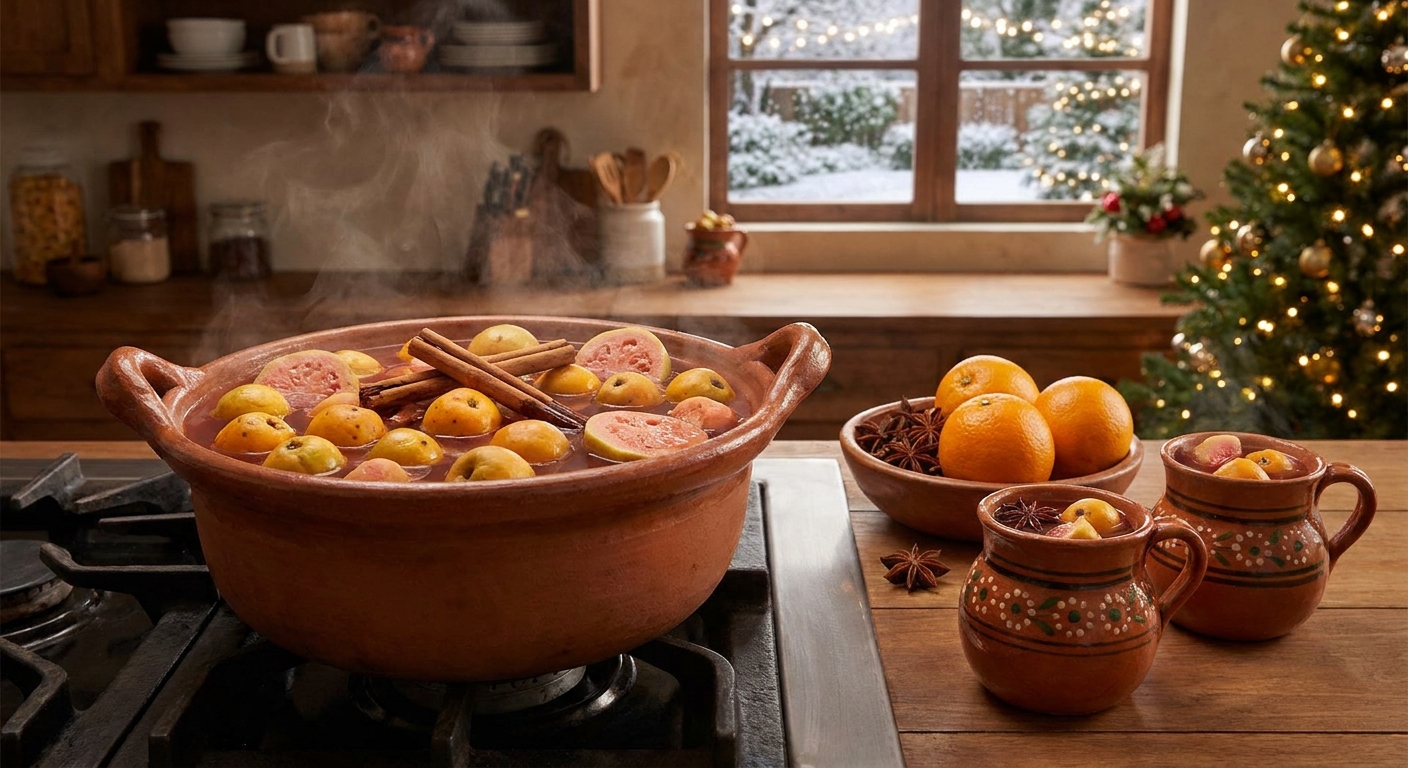
What is ponche navideño?
Ponche navideño is a warm Mexican fruit punch traditionally served during December, especially at posadas and Christmas gatherings. It is lightly tart from hibiscus, naturally sweet from fruit, and deeply aromatic thanks to cinnamon and piloncillo.
The best part is the fruit at the bottom of the mug. In Mexico, it is totally normal to eat the tender fruit pieces with a spoon after you drink the punch.
Ponche navideño ingredients
Here is what you want for a traditional pot, plus a few notes from my own kitchen.
- Water: The base. Some families use part water and part apple cider. I stick with water so the fruit flavor stays in charge.
- Piloncillo: Unrefined cane sugar, usually sold in cones. It gives a caramel, molasses-like warmth that white sugar cannot mimic. Cones vary a lot in size, so think of it as “to taste.”
- Cinnamon sticks: If you can find Mexican canela, grab it. Those sticks are typically lighter, softer, and often Ceylon-type cinnamon. Any cinnamon sticks work.
- Hibiscus (flor de jamaica): Adds color and a gentle tang that keeps the ponche from tasting flat.
- Prunes: For body and a deeper fruit sweetness.
- Guava: Floral and fragrant, it makes the kitchen smell like Navidad. I leave the seeds in. They are edible, and they soften as it simmers.
- Tejocotes (Mexican hawthorn) or apples: Tejocotes are classic and slightly tart. If you cannot find them, apples are the easiest swap.
- Sugarcane (caña): Adds a clean, juicy sweetness. It is optional, but very traditional.
- Optional extras: Orange slices, a couple of whole cloves, or a small piece of star anise. Keep it light so it does not overpower the fruit.
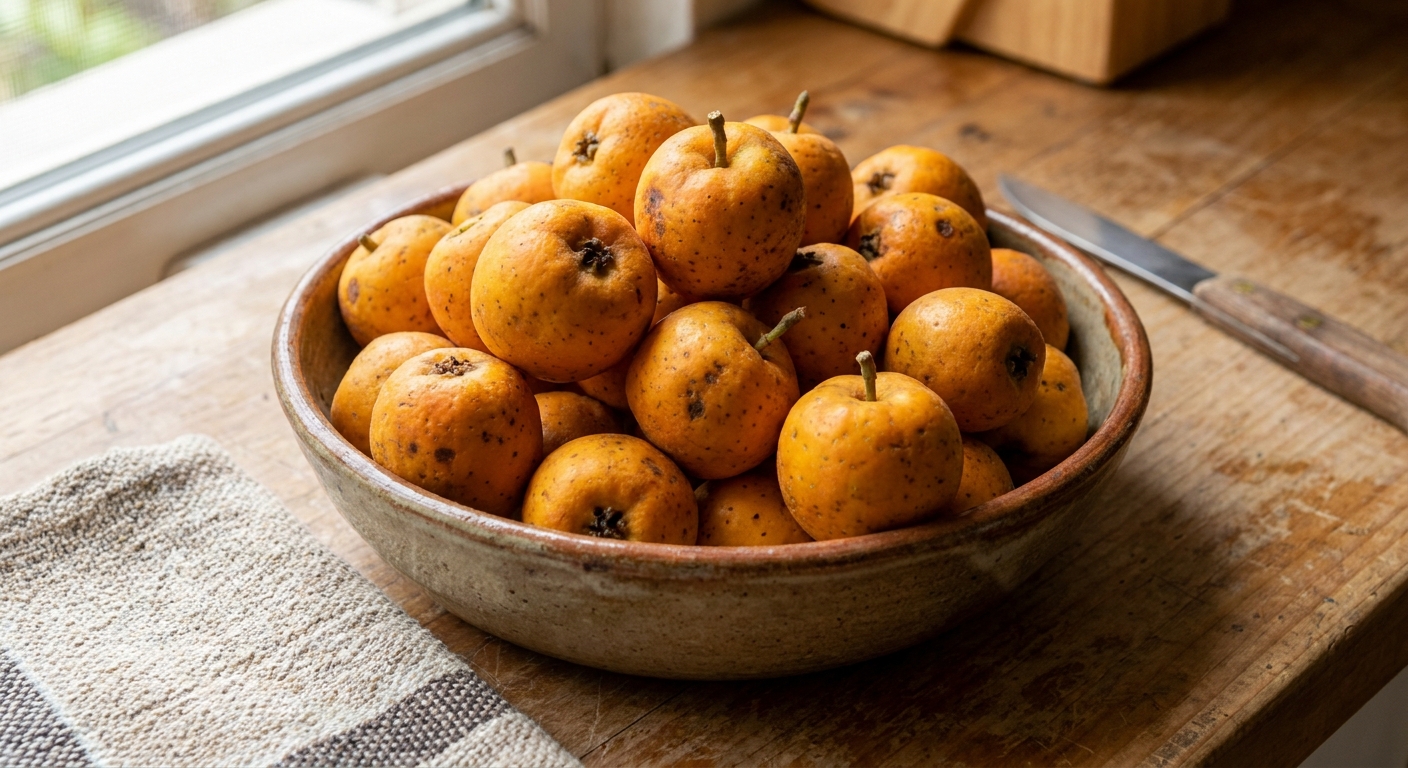
Where to find tejocotes and sugarcane in the US
Tejocotes
Best places to look:
- Mexican and Latin grocery stores in November and December, often near the produce or in a seasonal endcap.
- Frozen aisle: Some stores sell frozen tejocotes, sometimes labeled “tejocote” or “hawthorn.” Frozen is honestly a great option for ponche.
- Panaderías or mercados that set up holiday displays for tamales, hoja de maíz, and piloncillo.
If you see fresh tejocotes: choose fruit that feels firm, not mushy. A little wrinkling is okay. They will soften as they simmer.
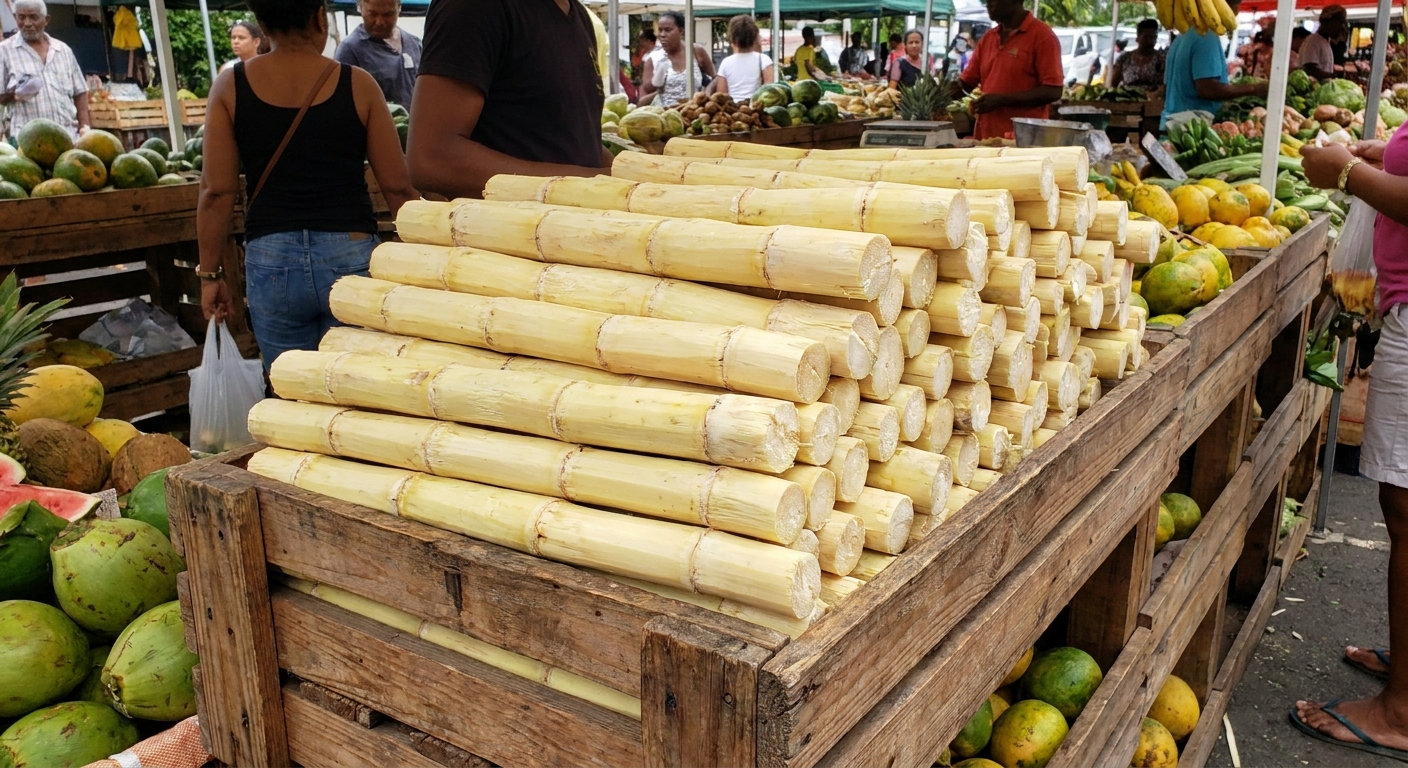
Sugarcane (caña)
Best places to look:
- Latin markets, often near tropical produce like yuca and plantains.
- Asian markets: Many carry peeled sugarcane segments in the produce section.
- Some larger US supermarkets with strong international produce sections during the holidays.
Quick heads up: sugarcane is fibrous and not meant to be eaten like a tender fruit. It is there to flavor the ponche. People sometimes chew it like a sweet stick, but serve it with a spoon and let guests decide. If you are buying unpeeled cane, wash it well and peel it fully before adding it to the pot.
Substitutions if you cannot find tejocotes or sugarcane
Tejocote substitutes
If tejocotes are not available, use:
- Apples (best and easiest): Honeycrisp, Gala, or Granny Smith for a little tartness.
- Pears: Softer, sweeter vibe.
- Extra guava: If guava is easy for you to find, just add a bit more.
How much apple to use: for every 1 pound of tejocotes, use about 3 medium apples, cored and chopped.
Sugarcane substitutes
If you cannot find caña, you have options:
- More piloncillo: Add a little extra to taste.
- Dark brown sugar: Not identical, but it gets you close.
- Apple juice: Replace 2 to 3 cups of the water with apple juice for sweetness and body.
Recipe: Traditional ponche navideño
This recipe makes a generous pot for a small gathering, about 10 to 12 cups depending on simmer time and how much fruit you add. Use a pot that holds at least 6 quarts so you have room to stir without splashing.
Ingredients
- 12 cups water
- 1 piloncillo cone (about 6 to 8 ounces) or 1 cup packed dark brown sugar, plus more to taste
- 2 to 3 cinnamon sticks
- 1/2 cup dried hibiscus (flor de jamaica), rinsed
- 6 to 8 prunes
- 6 guavas, halved (or quartered if large)
- 1 pound tejocotes (fresh or frozen) or 3 medium apples, chopped
- 8 to 12 ounces sugarcane, peeled and cut into 3 to 4 inch pieces (optional)
- 1 orange, sliced (optional but lovely)
- Pinch of salt (yes, just a pinch helps everything taste brighter)
Instructions
- Build the base. In a large pot, add the water, piloncillo, cinnamon sticks, hibiscus, and prunes. Bring to a boil over medium-high heat.
- Simmer for flavor. Reduce to a steady simmer and cook 10 minutes, stirring occasionally to help the piloncillo dissolve.
- Add the fruit. Add guava, tejocotes (or apples), sugarcane (if using), and orange slices (if using).
- Simmer until tender. Simmer gently, partially covered, for 25 to 35 minutes, until the fruit is tender and the punch tastes fragrant and balanced.
- Season and adjust. Add a pinch of salt. Taste, then adjust sweetness if needed with more piloncillo or brown sugar. If it tastes too strong, add a splash of water.
- Serve. Ladle into mugs, making sure each mug gets some fruit. Serve hot. If you prefer a smoother sip, fish out the cinnamon sticks and most of the hibiscus before serving, then ladle as usual.
My favorite serving tip: set out small spoons. Everyone will want to fish out a guava or two.
Tejocotes prep notes
If using frozen tejocotes
No special prep needed. Add them straight to the pot. They soften beautifully and taste very close to fresh.
If using fresh tejocotes
Rinse well. Some batches have a little natural residue. If you want to be extra traditional, you can:
- Simmer fresh tejocotes in water for 5 minutes
- Drain and rub them gently to help loosen the skins
- Add them to the ponche pot
I will be honest, on a busy holiday night I skip the peeling. A good simmer gets you most of the way there.
Optional spiked ponche
For grown-ups, a splash of liquor turns ponche into the coziest holiday cocktail. My favorite is dark rum, but brandy is also classic.
How to spike it
- Per mug: add 1 to 1 1/2 ounces rum or brandy, then ladle hot ponche over it.
- For the whole pot: turn off the heat first, then stir in 1 to 1 1/2 cups rum or brandy for a 12-cup batch.
Safety and flavor note: add alcohol off heat and avoid a hard boil. This helps preserve the flavor and keeps more of the potency in the mug.
Tips for a big posada batch
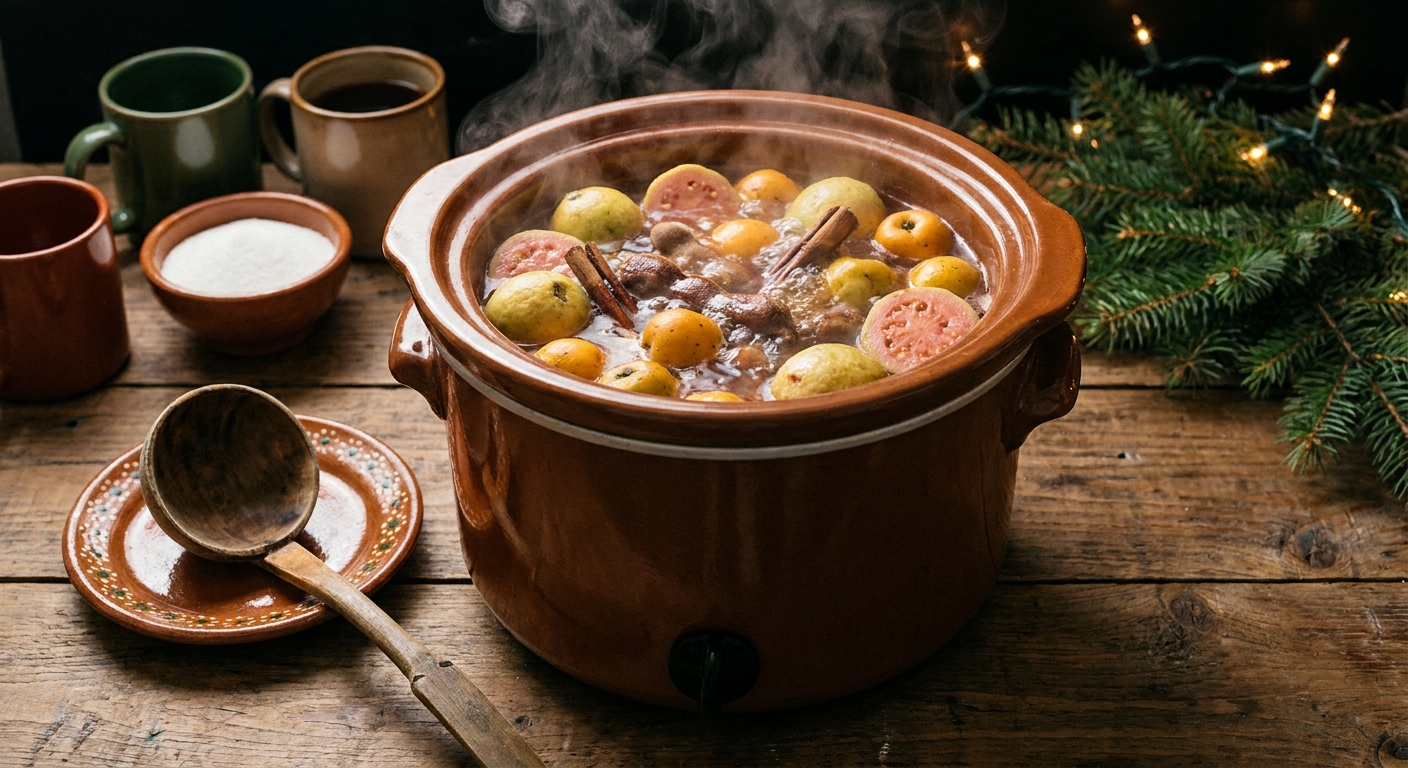
If you are serving a crowd, ponche is your best friend because it scales easily and stays warm in a slow cooker.
How much to make
- For 10 to 12 people: 1 batch (this recipe)
- For 20 to 25 people: double the recipe
- For 35 to 40 people: triple the recipe, or make two separate pots so you can control sweetness
Batching tips
- Make the base early. Simmer water, piloncillo, cinnamon, jamaica, and prunes first. You can do this a few hours ahead.
- Add fruit later. Add guava, tejocotes or apples, and sugarcane closer to serving so the fruit stays intact and pretty.
- Use a slow cooker. After simmering on the stove, transfer to a slow cooker on LOW for serving. Keep the lid on as much as possible so it stays hot.
- Serve with a ladle and a slotted spoon. This makes it easy to give everyone fruit without draining your pot too fast.
How to reheat ponche
Ponche reheats beautifully, but the fruit can get very soft if it sits on high heat too long.
Stovetop reheating
- Reheat over medium-low until steaming.
- Do not boil hard. Gentle heat helps the fruit stay in pieces.
- If it thickened, add a splash of water and taste for sweetness again.
Slow cooker reheating
- Use LOW and give it 30 to 60 minutes.
- Stir carefully so the fruit stays intact.
Microwave (single mug)
- Heat in 30-second bursts, stirring between, until hot.
Storage
Cool it down quickly, cover, and refrigerate for 3 to 4 days. The flavor gets even more blended overnight, which I love. If you used sugarcane and plan to store leftovers, you can pull the pieces out after serving so it does not keep extracting sweetness.
Adjustments and troubleshooting
If it is too tart
- Add more piloncillo or brown sugar a little at a time.
- Let it simmer 5 to 10 more minutes. Fruit sweetness blooms with time.
If it is too sweet
- Add a bit more water.
- Add a small handful more hibiscus and simmer 5 minutes, then taste again.
If it tastes flat
- Add a tiny pinch more salt.
- Squeeze in a little orange juice right before serving.
If the fruit is falling apart
- Your simmer is too strong. Keep it at a low simmer, especially once the fruit is in the pot.
- Next time, add guava later. Guava turns jammy fast, which is delicious but soft.
Serving ideas
- Classic: hot, in mugs, with lots of fruit.
- Kids love it: strain a portion so it is mostly liquid, then serve warm.
- Extra festive: add a cinnamon stick to each mug if you have enough.
- With food: ponche is especially good alongside tamales, buñuelos, or a slice of capirotada.
FAQ
Do I have to use hibiscus (jamaica)?
For me, it is what makes ponche taste like ponche. If you absolutely cannot find it, the punch will still be tasty without it, just sweeter and less tangy. You may want to add a splash of orange juice to brighten it.
Can I make ponche navideño ahead of time?
Yes. Make it up to 2 days ahead, refrigerate, then reheat gently. If you want the fruit to look its best, make the base ahead and simmer the fruit the day you serve.
Is ponche served with the fruit inside?
Traditionally yes. The fruit is part of the treat. I like to serve with a spoon so guests can enjoy it comfortably.
Can I use tamarind or other dried fruits?
You can, but keep it subtle. A small piece of tamarind adds a nice tang. Dried apricots or raisins can work too, but prunes are the most classic in my family.